 Pocket Botanist
Plant guide
Common grape hyacinth.
Muscari botryoides
Pronounced mus-KAH-ree bot-ree-OY-deez
Also known as Common grape hyacinth, Compact Grape-hyacinth, Italian grape-hyacinth



Scan with your phone's camera to get the app
Or go to pocketbotanist.app/get on your phone
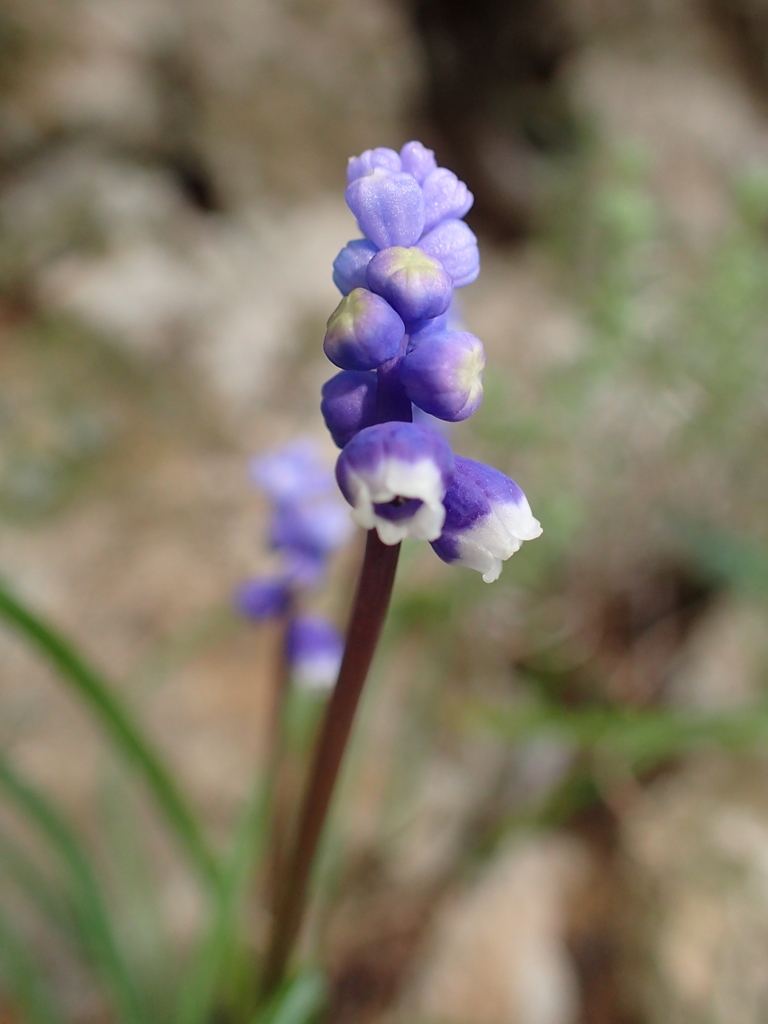
This charming bulbous perennial brings a splash of early spring color to your garden. It produces dense clusters of small, bell shaped flowers that resemble tiny grapes. These plants are quite hardy and naturalize well in lawns or rock gardens.

At a glance
- Care level
- Easy
- Plant type
- Bulbous perennial
- Light
- Full sun to partial shade
- Indoor light
- Bright indirect
- Water
- Every 7 to 14 days
- Mature size
- 6 to 8 inches
- Growth rate
- Medium
- Hardiness
- USDA 4 to 8
- Bloom time
- Early to mid spring
Care
Plant your bulbs in the fall to ensure they establish roots before winter. Watch for yellowing foliage after blooming, which is a sign the plant is storing energy for next year. Avoid overwatering during their summer dormancy to prevent bulb rot.
- Watering
- Keep the soil consistently moist during the active growing season but allow it to dry out once the foliage dies back.
- Feeding
- Apply a balanced bulb fertilizer once in the early spring as new growth emerges.
- Pruning
- Remove spent flower stalks after blooming, but leave the foliage until it turns yellow so the bulb can recharge.
- Repotting
- Divide and repot clumps every few years if they become too crowded or if flowering performance declines.
- Soil
- Well draining sandy or loamy soil
- Soil pH
- 6.0 to 7.0
- Temperature
- -25 to 30°C
- Humidity
- 40 to 70%
- Drought tolerance
- Moderate
- Lifespan
- Perennial, typically 5 to 10 years
- Fragrance
- Light
- Deer and rabbits
- High
Signs it needs repotting
- Bulbs are crowded and flowering has decreased
- Roots are growing out of the drainage holes
Safety
- People
- All parts of the plant are mildly toxic if ingested.
- Pets
- This plant is generally considered non toxic to cats and dogs.
- Children
- Keep bulbs away from small children as they can be mistaken for onions and cause digestive distress.
- Contact allergens
- Handling the bulbs may cause skin irritation in sensitive individuals.
- Airborne allergens
- The pollen is generally not a significant allergen.
- Edibility
- This plant is not considered edible and may cause stomach upset if ingested.
How to identify it
- Dense clusters of blue flowers
- Small bell shaped florets
- Narrow grass like basal leaves
- Flowers appear in early spring
- Height
- 0.15 to 0.25m
- Spread
- 0.05 to 0.1m
- Leaves
- green, deciduous
- Flowers
- blue, white, 0.5 to 1cm
Problems to watch for
- Bulb rot · Occurs when bulbs are planted in poorly drained soil.
- Aphids · Small insects that may cluster on flower stalks in spring.
Check your common grape hyacinth from a photo
Pocket Botanist looks at a photo of your plant and tells you what's wrong and what to try first.
Scan with your phone's camera to get the app
Or go to pocketbotanist.app/get on your phone
Growing it
- Propagation
- division, seed
- When to plant
- autumn
- Overwintering
- No special care is needed as the bulbs are hardy and remain dormant underground during the winter months.
- In containers
- They grow very well in pots, provided the container has good drainage and is at least 15 cm deep.
Division
- Wait until the foliage has yellowed in late spring or early summer.
- Carefully dig up the clump of bulbs.
- Gently separate the smaller offsets from the main bulb.
- Replant the offsets immediately at the same depth they were previously growing.
Plant these in groups of at least ten to create a significant visual impact in the garden.
Grows well with
Similar species
- Armenian Grape Hyacinth · It is a very similar species often sold under the same common name.
Science
- Family
- Asparagaceae
- Genus
- Muscari
- Order
- Asparagales
- Class
- Liliopsida
- Native range
- Central and southern Europe
- Conservation
- This species is common and not of conservation concern.
It thrives in open woodlands and meadows where it can complete its growth cycle before the canopy closes.
- Value to wildlife
- early nectar source
- Pollinators
- bees
- Uses
- rock gardens, naturalizing in lawns, spring borders, container planting
Through the year
Ecological indicators
- Salinity
- 1/9
- Soil reaction
- 6/9
- Light
- 6/9
- Temperature
- 4/9
- Moisture
- 5/9
- Nutrients
- 5/9
Taxonomy resolved against GBIF.
Questions people ask
- When should I plant them?
- Plant them in the fall before the ground freezes.
- Do I need to dig them up?
- No, they are perennial and can stay in the ground year round.
Where the name comes from
The genus name Muscari comes from the Greek word for musk, referring to the scent of some species, while botryoides means resembling a bunch of grapes.
Good to know
- They naturalize easily and will spread to form large carpets over time.
- The bulbs are technically hardy enough to survive very cold winters.
- They are excellent for forcing indoors in late winter.
Also in
Keep your common grape hyacinth growing
This page is a general guide. Save your plant in Pocket Botanist and you get care reminders timed for this plant, plus a care history that shows what worked.
Scan with your phone's camera to get the app
Or go to pocketbotanist.app/get on your phone
This guide was generated with AI on and checked against GBIF taxonomy. It is general information, not horticultural or veterinary advice. Read about how we build these guides.