 Pocket Botanist
Plant guide
Banana.
Musa × paradisiaca
Pronounced MYOO-suh pair-uh-dih-SEE-uh-kuh
Also known as Musa × paradisiaca, French plantain, banana, plantain



Scan with your phone's camera to get the app
Or go to pocketbotanist.app/get on your phone
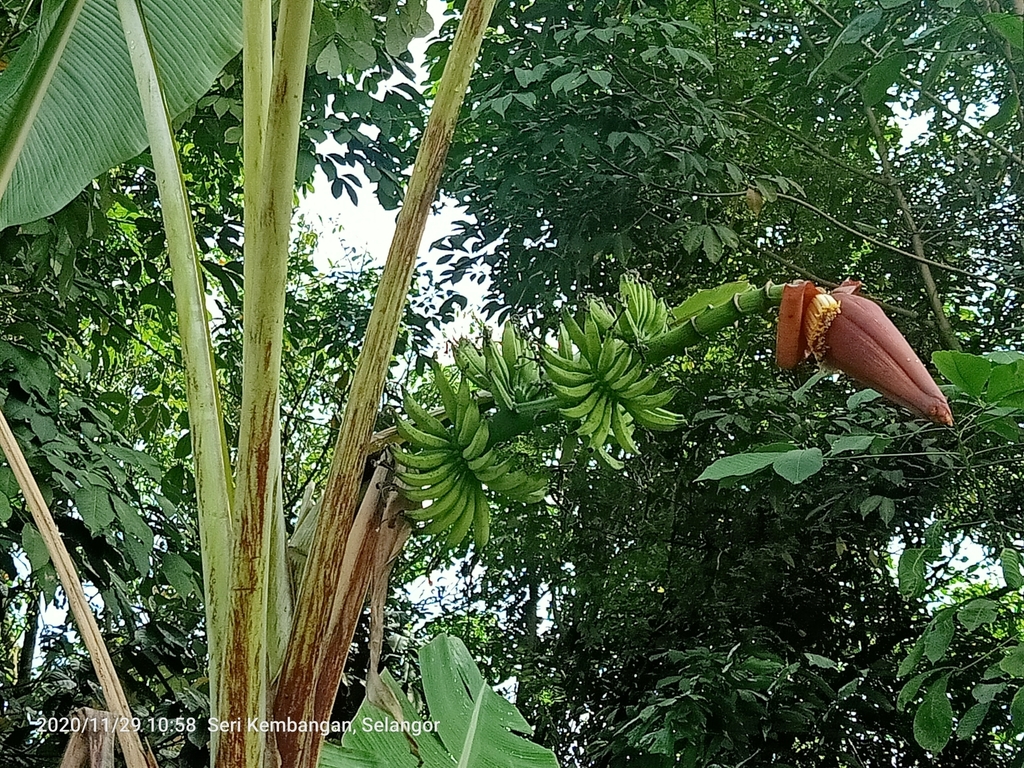
The banana plant is a fast growing tropical herb that brings a lush, jungle feel to your home. It features massive, paddle shaped leaves that unfurl from the center of the stem. While it is technically an herb, it grows into a striking, tree like structure.

At a glance
- Care level
- Moderate
- Plant type
- Tropical perennial herb
- Light
- Bright indirect light is best for healthy growth.
- Indoor light
- Bright indirect
- Water
- Every 5 to 7 days
- Mature size
- 6 to 10 feet indoors
- Growth rate
- Fast
- Hardiness
- USDA 10 to 12
- Bloom time
- Year round in tropical climates
Care
Keep the soil consistently moist but never soggy to prevent root rot. Watch for browning leaf edges, which often signal that the air is too dry or the plant needs more water. Ensure it gets plenty of bright light to keep those beautiful leaves growing strong.
- Watering
- Keep the soil evenly moist, allowing only the top inch to dry out between waterings.
- Feeding
- Feed with a balanced liquid fertilizer during the active growing season.
- Pruning
- Remove old or damaged leaves at the base of the stem to keep the plant tidy.
- Repotting
- Repot when the roots begin to fill the container or the plant becomes top heavy.
- Soil
- Well draining, nutrient rich potting mix
- Soil pH
- 5.5 to 6.5
- Temperature
- 15 to 35°C
- Humidity
- 60 to 90%
- Drought tolerance
- Low
- Lifespan
- Perennial, typically 5 to 10 years
- Fragrance
- Light
- Deer and rabbits
- Moderate
Signs it needs repotting
- Roots growing out of the drainage holes.
- Stunted growth despite regular feeding.
- Water running straight through the pot.
Safety
- People
- The plant is generally non-toxic, but the sap can cause staining and mild irritation.
- Pets
- This plant is considered non toxic to cats and dogs.
- Children
- The large, heavy leaves and fruit clusters can pose a falling hazard to small children.
- Contact allergens
- The sap may cause skin irritation in sensitive individuals.
- Airborne allergens
- There is no significant evidence of airborne allergens.
- Edibility
- Only the fruit is commonly eaten, and it must be harvested at the correct stage of maturity.
How to identify it
- Large paddle shaped green leaves
- Thick succulent pseudostem
- Leaves often have red or purple markings
- Rapid growth habit
- New leaves unfurl from the center
- Height
- 2 to 6m
- Spread
- 1.5 to 3m
- Leaves
- green, evergreen
- Flowers
- purple, yellow, 10 to 20cm
- Fruit
- yellow, green, Year round
Problems to watch for
- AphidsCommon
- Brown Leaf EdgesCommon
- Panama DiseaseCommon
- Cercospora Leaf SpotUncommon
- Root RotUncommon
- Scale InsectsUncommon
- Sooty MoldUncommon
- Spider MitesUncommon
Check your banana from a photo
Pocket Botanist looks at a photo of your plant and tells you what's wrong and what to try first.
Scan with your phone's camera to get the app
Or go to pocketbotanist.app/get on your phone
Growing it
- Propagation
- division
- When to plant
- Spring, Summer
- Overwintering
- In cooler climates, move the plant indoors or wrap the stem and mulch the base heavily to protect the corm from freezing.
- In containers
- It can grow in large containers, but requires a pot at least 50 liters in size to support its growth.
Division
- Identify a healthy sucker growing from the base of the parent plant.
- Carefully dig around the sucker to expose the roots.
- Sever the connection to the parent corm using a sharp, clean spade.
- Lift the sucker with as many roots as possible.
- Replant immediately in rich, well draining soil.
Plant low growing shade tolerant crops beneath the canopy to maximize space.
Grows well with
Similar species
- Ensete · It has a similar architectural appearance but does not produce edible fruit.
Science
- Family
- Musaceae
- Genus
- Musa
- Order
- Zingiberales
- Class
- Liliopsida
- Native range
- Southeast Asia and the South Pacific.
- Conservation
- Not of conservation concern as it is widely cultivated globally.
It grows rapidly in warm, humid forest clearings where it can access abundant water and nutrients.
- Value to wildlife
- nectar source
- Pollinators
- bees, butterflies, hummingbirds
- Uses
- ornamental, culinary, fiber production
Through the year
Ecological indicators
- Salinity
- 2/9
- Soil reaction
- 6/9
- Light
- 8/9
- Temperature
- 9/9
- Moisture
- 8/9
- Nutrients
- 7/9
Taxonomy resolved against GBIF.
Questions people ask
- Does it need full sun?
- Yes, it thrives in bright, direct sunlight for most of the day.
- How often should I water it?
- Keep the soil consistently moist but never waterlogged.
Where the name comes from
The name Musa comes from the Arabic word for banana, while paradisiaca means of paradise.
Good to know
- Bananas are botanically classified as berries.
- The plant grows from an underground corm.
- Each stalk produces fruit only once before dying back.
- Banana leaves are frequently used as natural food wrappers.
Keep your banana growing
This page is a general guide. Save your plant in Pocket Botanist and you get care reminders timed for this plant, plus a care history that shows what worked.
Scan with your phone's camera to get the app
Or go to pocketbotanist.app/get on your phone
This guide was generated with AI on and checked against GBIF taxonomy. It is general information, not horticultural or veterinary advice. Read about how we build these guides.