 Pocket Botanist
Plant guide
Drumstick tree.
Moringa oleifera
Pronounced mor-IN-gah oh-lee-IF-er-ah
Also known as Ben oil tree, Benzoil tree, Bènbòm, Drumstick Tree, Horse-Radish Tree, Horseradish tree, Horseradishtree, Miracle Tree


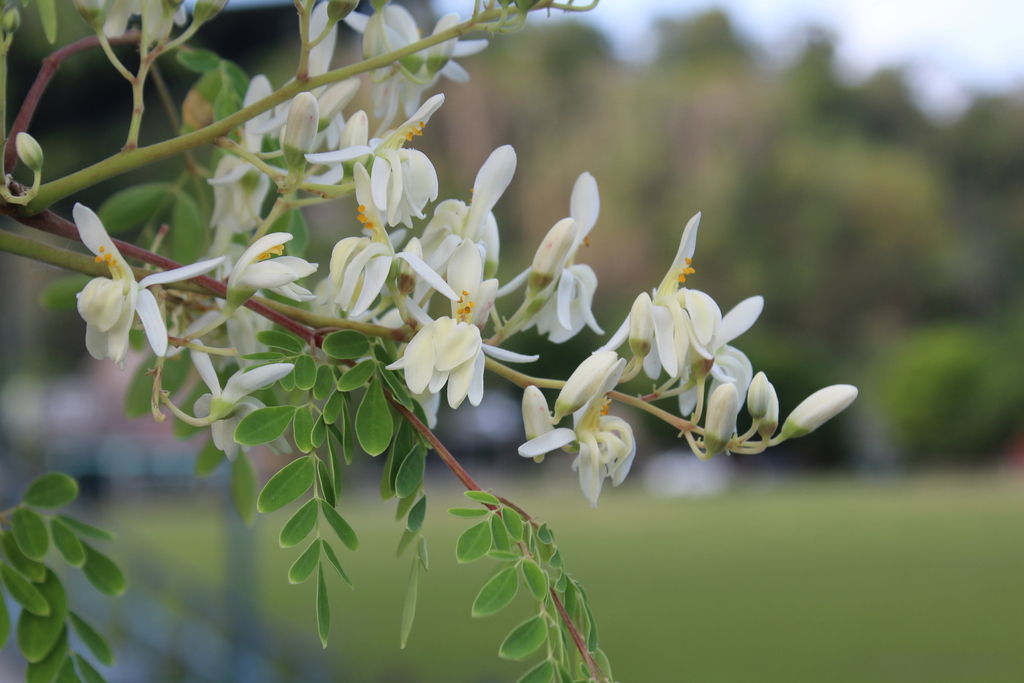
The drumstick tree is a fast growing, drought resistant plant native to parts of Africa and Asia. It is highly valued for its edible leaves, pods, and seeds which are packed with nutrients. You will find it thrives best in warm climates with plenty of sun.

At a glance
- Care level
- Easy
- Plant type
- Deciduous tree
- Light
- Full sun
- Indoor light
- Direct sun
- Water
- Every 7 to 14 days
- Mature size
- 30 to 40 feet
- Growth rate
- Fast
- Hardiness
- USDA 9 to 12
- Bloom time
- Spring to early summer
Care
This plant loves heat and needs to be kept in a spot with full sun. Let the soil dry out significantly between waterings to avoid root rot. Watch for yellowing leaves, which often signal that the soil is staying too wet.
- Watering
- Allow the top few inches of soil to dry out completely before watering again.
- Feeding
- Apply a balanced fertilizer during the active growing season to support its rapid growth.
- Pruning
- Trim back the branches regularly to keep the tree at a manageable size and encourage bushier growth.
- Repotting
- Repot when the roots begin to circle the bottom of the container or the growth slows down.
- Soil
- Well draining, sandy or loamy soil
- Soil pH
- 6.3 to 7.0
- Temperature
- 10 to 40°C
- Humidity
- 20 to 60%
- Drought tolerance
- High
- Lifespan
- Perennial, typically 10 to 20 years.
- Fragrance
- Light
- Deer and rabbits
- Moderate
Signs it needs repotting
- Roots growing out of drainage holes
- Water running straight through the pot
- Stunted growth despite proper care
Safety
- People
- The roots and bark contain spirochin, which can be toxic if ingested in large quantities.
- Children
- The long, heavy seed pods can be a falling hazard for small children if they are playing directly beneath the canopy.
- Contact allergens
- The sap may cause mild skin irritation in sensitive individuals.
- Airborne allergens
- Pollen can trigger allergic reactions in some people during the flowering season.
- Edibility
- While leaves and pods are widely consumed, consult a professional before consuming roots or bark as they contain potentially harmful alkaloids.
How to identify it
- Feathery, tripinnate compound leaves
- Fragrant, cream colored flowers
- Long, pendulous, drumstick shaped seed pods
- Soft, corky, greyish bark
- Height
- 5 to 12m
- Spread
- 2 to 6m
- Leaves
- green, deciduous
- Flowers
- white, cream, 1 to 2cm
- Fruit
- green, brown, Summer to autumn
Common problems
- Root rot — This occurs when the soil remains consistently waterlogged for too long.
- Caterpillars — Various larvae may feed on the foliage during the growing season.
Growing it
- Propagation
- seed, cuttings
- When to plant
- Spring, Summer
- Overwintering
- In cooler regions, bring the plant indoors before the first frost. Reduce watering significantly during the winter months as the plant enters dormancy.
- In containers
- It is well-suited for large containers, provided the pot has excellent drainage and is at least 40 liters in volume.
Seed propagation
- 1. Soak seeds in water for 24 hours.
- 2. Plant in well-draining potting mix.
- 3. Keep in a warm, sunny location.
- 4. Water sparingly until germination.
Plant shallow-rooted herbs beneath the tree to maximize space without competing for deep soil nutrients.
Grows well with
- Basil — Basil thrives in similar sunny, warm conditions and benefits from the light shade provided by the tree.
- Sweet Potato — This ground cover helps retain soil moisture and suppresses weeds beneath the tree.
Similar species
- Moringa stenopetala — This related species is also drought-tolerant and produces edible leaves.
Science
- Family
- Moringaceae
- Genus
- Moringa
- Order
- Brassicales
- Class
- Magnoliopsida
- Native range
- Sub-Himalayan tracts of India, Pakistan, and Afghanistan.
- Conservation
- This species is not currently listed as threatened or endangered in its native range.
It thrives in dry, sandy soils and is highly adapted to survive in arid, tropical environments.
- Value to wildlife
- nectar source
- Pollinators
- bees, butterflies
- Uses
- culinary leaves, nutritional supplement, water purification, ornamental shade
Through the year
Ecological indicators
- Salinity
- 3/9
- Soil reaction
- 6/9
- Light
- 8/9
- Temperature
- 8/9
- Moisture
- 2/9
- Nutrients
- 4/9
Taxonomy resolved against GBIF.
Questions people ask
- Can I grow this in a pot?
- Yes, it grows well in containers if you prune it regularly to manage its size.
- How often should I water it?
- Water it deeply but allow the soil to dry out completely between waterings.
Where the name comes from
The name Moringa comes from the Tamil word murungai, while oleifera refers to its oil-bearing seeds.
Good to know
- It is nicknamed the miracle tree due to its high nutrient density.
- The seeds can be crushed and used to clarify murky water.
- It grows very rapidly, sometimes reaching 3 meters in its first year.
- Every part of the tree has been used in traditional medicine systems.
Also in
Is your drumstick tree looking unwell?
This page is a general guide. Pocket Botanist diagnoses problems from a photo of your actual plant, works out watering for your light and conditions, and reminds you when care is due.
This guide was generated with AI and checked against GBIF taxonomy. It is general information, not horticultural or veterinary advice. Read about how we build these guides.