 Pocket Botanist
Pflanzenratgeber
Virginia bluebells.
Mertensia virginica
Aussprache mer-TEN-see-uh ver-JIN-ih-kuh
Auch bekannt als Lungwort oysterleaf, Roanoke bells, Roanoke-bells, Virginia bluebell, Virginia bluebells, Virginia cowslip, Virginia lungwort, Virginia-bluebells


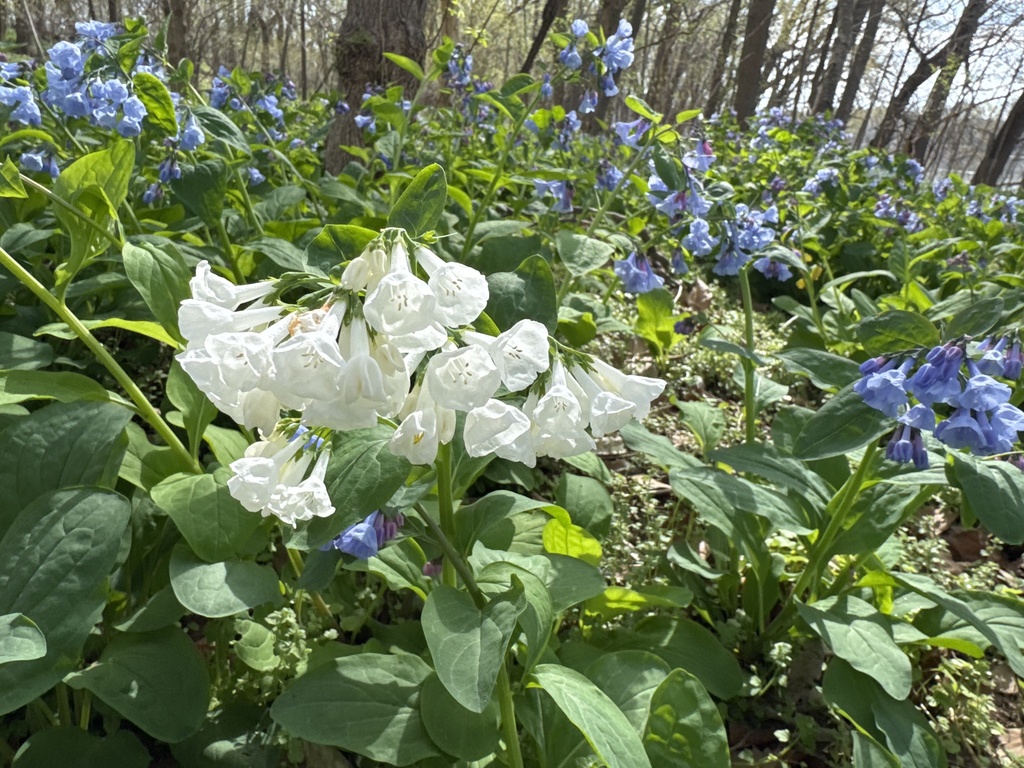
Virginia bluebells are lovely spring ephemerals that bring a splash of color to woodland gardens. They bloom with nodding clusters of pink buds that open into bell shaped blue flowers. Once the seeds set, the foliage fades away until next spring.

Auf einen Blick
- Pflegestufe
- Einfach
- Pflanzenart
- Perennial
- Licht
- Partial shade to full shade
- Licht im Innenraum
- Hell, indirekt
- Gießen
- Alle 3 bis 7 Tage
- Endgröße
- 1 to 2 feet
- Wachstum
- Mittel
- Winterhärte
- USDA 3 bis 8
- Blütezeit
- Early to mid spring
Pflege
Plant these in a spot with rich, moist soil that stays cool throughout the spring. Keep an eye out for slugs or snails that might snack on the tender new leaves. Since they go dormant, mark where you planted them so you don't accidentally dig them up later.
- Gießen
- Keep the soil consistently moist but never waterlogged during the active growing season.
- Düngen
- Apply a light layer of compost or organic mulch in the fall to provide nutrients for the coming spring.
- Schneiden
- Simply remove the yellowed, dying foliage once the plant goes dormant in late spring or early summer.
- Umtopfen
- These prefer to stay in the ground, but you can divide clumps every few years if they become too crowded.
- Boden
- Rich, moist, well draining soil
- Boden-pH
- 6.0 to 7.0
- Temperatur
- -30 bis 30°C
- Luftfeuchtigkeit
- 40 bis 70%
- Trockenheitstoleranz
- Gering
- Lebensdauer
- Perennial, typically long lived if left undisturbed.
- Wildverbiss-Resistenz
- Hoch
Anzeichen fürs Umtopfen
- Roots circling the bottom of the pot.
- Plant growth slowing significantly.
Sicherheit
- Menschen
- This plant is generally considered non-toxic but should not be ingested.
- Kinder
- The plant is not considered a specific risk to children, though standard caution against eating garden plants applies.
- Kontaktallergene
- There are no known significant skin irritants associated with this plant.
- Allergene in der Luft
- There is no evidence that this plant causes respiratory allergies.
- Essbarkeit
- While some sources mention historical use, it is best to avoid consuming this plant due to potential alkaloid content.
So erkennst du die Pflanze
- Nodding clusters of blue bell shaped flowers
- Smooth blue green oval leaves
- Pink buds before opening
- Foliage goes dormant in summer
- Höhe
- 0,3 bis 0,6m
- Breite
- 0,3 bis 0,45m
- Blätter
- blue-green, deciduous
- Blüten
- blue, pink, 1 bis 2cm
- Früchte
- brown, Late spring
Häufige Probleme
- Slugs — These mollusks can chew holes in the foliage during wet spring weather.
Standort und Pflege
- Vermehrung
- division, seed
- Pflanzzeit
- fall, early spring
- Überwinterung
- No special care is needed as the plant is fully dormant underground during winter.
- Im Kübel
- It is not well suited for containers because it requires specific woodland soil conditions and goes dormant.
Division
- 1. Wait until the plant is fully dormant in summer.
- 2. Carefully dig up the root clump.
- 3. Gently pull the roots apart.
- 4. Replant immediately in a shady spot.
Pair with late emerging perennials to hide the empty space left when the bluebells go dormant.
Gute Pflanzpartner
- White Trillium — They share similar woodland habitat requirements.
- Christmas fern — Ferns fill the space left behind when the bluebells go dormant.
Ähnliche Arten
- Lungwort — It shares similar blue flowers and woodland preferences.
Botanisches
- Familie
- Boraginaceae
- Gattung
- Mertensia
- Ordnung
- Boraginales
- Klasse
- Magnoliopsida
- Ursprüngliche Heimat
- Eastern and central North America.
- Artenschutz
- It is not currently listed as endangered, but it should never be collected from the wild.
It survives by completing its entire life cycle before the forest canopy fully leafs out.
- Nutzen für Wildtiere
- early season nectar source
- Bestäuber
- Bienen, Schmetterlinge, Kolibris
- Verwendung
- woodland gardens, pollinator borders, spring ephemeral displays
Im Jahresverlauf
Ökologische Zeigerwerte
- Salzgehalt
- 1/9
- Bodenreaktion
- 6/9
- Licht
- 3/9
- Temperatur
- 5/9
- Feuchtigkeit
- 7/9
- Nährstoffe
- 6/9
Taxonomie abgeglichen mit GBIF.
Häufige Fragen
- Why did my plant disappear?
- It is a spring ephemeral and naturally goes dormant after blooming.
- Can I grow it in full sun?
- It prefers shade and will likely struggle or go dormant early in full sun.
Woher der Name kommt
The genus honors German botanist Franz Carl Mertens, while the species name indicates its origin in Virginia.
Gut zu wissen
- It is commonly known as Virginia bluebells.
- The foliage disappears entirely by early summer.
- It thrives in the dappled light of deciduous forests.
- The plant is a classic spring ephemeral.
Auch in
Probleme mit Virginia bluebells?
Diese Seite bietet allgemeine Infos. Pocket Botanist erkennt Probleme anhand eines Fotos deiner echten Pflanze, passt das Gießen an dein Licht und deinen Standort an und erinnert dich an die Pflege.
Dieser Ratgeber wurde mit KI erstellt und mit der GBIF-Taxonomie abgeglichen. Er dient zur allgemeinen Information und ersetzt keine gärtnerische oder tierärztliche Beratung. Hier erfährst du, wie wir diese Ratgeber erstellen.