 Pocket Botanist
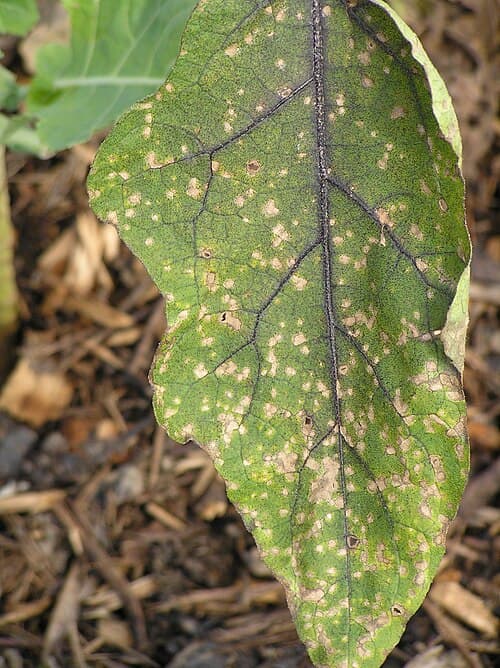

Check these first
- Examine the leaf surface for a white powdery substance.
- Look at the underside of the leaves for orange or yellow bumps.
- Check if the plant is crowded by other pots.
Likely causes
Powdery Mildew
Most likelyHow to tell: This appears as a white, dusty coating on the surface of the leaves. It spreads quickly in humid, stagnant air.
What to do: Remove the most affected leaves immediately to stop the spread. Improve air circulation around the plant and avoid watering from overhead.
Mint Rust
PossibleHow to tell: You will see small yellow to orange pustules on the undersides of leaves and stems. This is a fungal infection that thrives in cool, wet weather.
What to do: Prune away all infected stems and dispose of them in the trash, not your compost. Ensure the plant is not overcrowded to allow leaves to dry out.
Find out what's wrong with your peppermint
The list above covers the usual causes. Pocket Botanist looks at a photo of your actual plant and tells you the likely cause, how serious it is, and what to try first. Identification and a health check are free.



Scan with your phone's camera to get the app
Or go to pocketbotanist.app/get on your phone
When to worry
If the spots cover more than half of the plant, it is likely too far gone to save. Small, isolated spots can be managed with pruning.
Stopping it coming back
Water only at the base of the plant to keep the leaves dry. Ensure your mint has plenty of space for air to move between the stems.
Peppermint: spots? Check yours with a photo
Every plant is a little different. Take a photo of your peppermint and Pocket Botanist tells you which cause is most likely, how serious it is, and what to try first. A few checks a day are free. Save the plant and you get care reminders timed for it.
Scan with your phone's camera to get the app
Or go to pocketbotanist.app/get on your phone
Get the app · Or check it from a photo now, free
Questions people ask
- Is mint rust dangerous to other plants?
- Yes, it can spread to other mint family plants. Keep the infected plant isolated until it is fully recovered.
- Should I use a fungicide?
- For culinary herbs like peppermint, it is better to rely on pruning and cultural changes. Avoid chemical fungicides if you plan to eat the leaves.
Guides to these causes
More problems with Peppermint
- Why are there tiny bugs on my peppermint plant?
- Why is my peppermint plant growing so tall and thin?
- Why are my peppermint leaves turning yellow?
- Why is my peppermint plant drooping?
- Why do my peppermint leaves have brown tips?
- Why is my peppermint plant dropping leaves?
- How do I know if my peppermint has root rot?
- Why are my peppermint leaves curling?
This article was generated with AI on from the plant’s care profile and is general information, not horticultural advice. Read about how we build these guides.