 Pocket Botanist
Plant guide
Water Mint.
Mentha aquatica
Pronounced MEN-tha a-KWA-ti-ka
Also known as Marsh Mint, Mint, Water Mint



Scan with your phone's camera to get the app
Or go to pocketbotanist.app/get on your phone
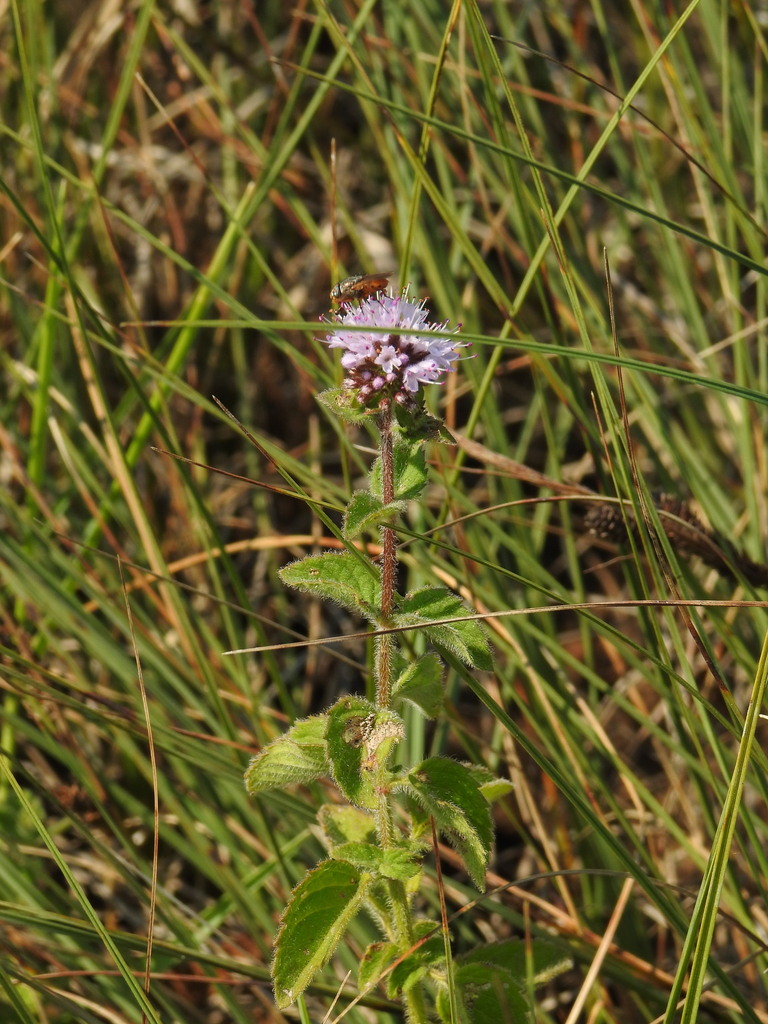
Water mint is a lovely perennial that thrives in wet, marshy spots. It spreads quickly through underground runners and produces beautiful clusters of lilac flowers. You will love how its refreshing, minty scent fills the air near your pond or water feature.
At a glance
- Care level
- Easy
- Plant type
- Perennial herb
- Light
- Full sun to partial shade
- Indoor light
- Direct sun
- Water
- Every 1 to 2 days
- Mature size
- 30 to 90 cm
- Growth rate
- Fast
- Hardiness
- USDA 5 to 11
- Bloom time
- Mid to late summer
Care
Keep the soil consistently saturated or submerge the pot in shallow water. Watch for wilting if the soil dries out, as this plant is not drought tolerant. Prune back stems if it starts to crowd out other plants in your water garden.
- Watering
- Keep the soil constantly moist or keep the container partially submerged in water.
- Feeding
- Use a balanced aquatic plant fertilizer during the active growing season.
- Pruning
- Trim back overgrown stems to encourage bushier growth and prevent it from taking over.
- Repotting
- Repot when the roots become crowded or the plant outgrows its container.
- Soil
- Loamy, clay, or aquatic soil
- Soil pH
- 6.0 to 7.5
- Temperature
- -20 to 35°C
- Humidity
- 60 to 100%
- Drought tolerance
- Low
- Lifespan
- Perennial, long-lived as it keeps spreading by underground runners.
- Fragrance
- Strong
- Deer and rabbits
- High
Signs it needs repotting
- Roots growing out of the basket mesh.
- Stunted growth.
- Water quality declining due to root congestion.
Safety
- People
- The plant is generally safe, but essential oils can irritate sensitive skin.
- Children
- The plant is safe for children, though the strong scent may be overwhelming for some.
- Contact allergens
- Handling the foliage may cause mild contact dermatitis in sensitive individuals.
- Airborne allergens
- Pollen may cause mild reactions in those with severe hay fever.
- Edibility
- While often used for tea, consume in moderation as high doses of mint oils can cause digestive distress.
How to identify it
- Oval shaped, serrated green leaves
- Square stems typical of mints
- Dense, rounded clusters of lilac flowers
- Strong, pleasant peppermint aroma
- Thrives in saturated or boggy soil
- Height
- 0.3 to 0.9m
- Spread
- 0.3 to 1.5m
- Leaves
- green, bronze, deciduous
- Flowers
- lilac, pink, 0.5 to 1cm
Problems to watch for
- Mint Rust · Orange pustules appear on the undersides of leaves during damp weather.
Check your water mint from a photo
Pocket Botanist looks at a photo of your plant and tells you what's wrong and what to try first.
Scan with your phone's camera to get the app
Or go to pocketbotanist.app/get on your phone
Growing it
- Propagation
- division, cuttings
- When to plant
- spring, summer
- Overwintering
- The foliage will die back in winter. Simply trim the dead stems to the water line once they turn brown.
- In containers
- Excellent for aquatic containers, use a mesh basket with aquatic soil.
Division
- 1. Remove the plant from its container.
- 2. Use a sharp knife to cut the root mass into smaller sections.
- 3. Replant the sections into fresh aquatic soil.
Plant in a submerged basket to prevent the aggressive runners from taking over your entire pond.
Grows well with
- Yellow Flag Iris · They share similar moisture requirements and provide a nice height contrast.
- Marsh Marigold · This plant blooms earlier, extending the season of interest in your pond.
Similar species
- Spearmint · A close relative that prefers drier soil conditions.
Science
- Family
- Lamiaceae
- Genus
- Mentha
- Order
- Lamiales
- Class
- Magnoliopsida
- Native range
- Europe, northern Africa, and western Asia.
- Conservation
- Not of conservation concern.
It grows along the edges of streams and ponds, where its roots help filter water and stabilize banks.
- Value to wildlife
- nectar source, shelter for aquatic insects
- Pollinators
- bees, butterflies
- Uses
- pond edge planting, herbal tea, erosion control
Through the year
Ecological indicators
- Salinity
- 2/9
- Soil reaction
- 6/9
- Light
- 7/9
- Temperature
- 5/9
- Moisture
- 9/9
- Nutrients
- 6/9
Taxonomy resolved against GBIF.
Questions people ask
- Does it need to be in water?
- It prefers very wet soil or shallow water but can grow in damp garden soil.
- Is it invasive?
- It spreads rapidly via underground runners, so keep it in a container if you have a small pond.
Where the name comes from
The name Mentha comes from the Greek nymph Minthe, while aquatica refers to its preference for water.
Good to know
- Water mint is one of the parents of the common peppermint hybrid.
- It thrives in shallow water up to 10 centimeters deep.
- The leaves have a distinct, refreshing peppermint aroma when crushed.
Also in
Keep your water mint growing
This page is a general guide. Save your plant in Pocket Botanist and you get care reminders timed for this plant, plus a care history that shows what worked.
Scan with your phone's camera to get the app
Or go to pocketbotanist.app/get on your phone
This guide was generated with AI on and checked against GBIF taxonomy. It is general information, not horticultural or veterinary advice. Read about how we build these guides.