 Pocket Botanist
Plant guide
Turk's cap.
Malvaviscus arboreus
Pronounced mal-vuh-VIS-kus ar-BOR-ee-us
Also known as Turk's cap, Turk's-cap, Wax Mallow



Scan with your phone's camera to get the app
Or go to pocketbotanist.app/get on your phone
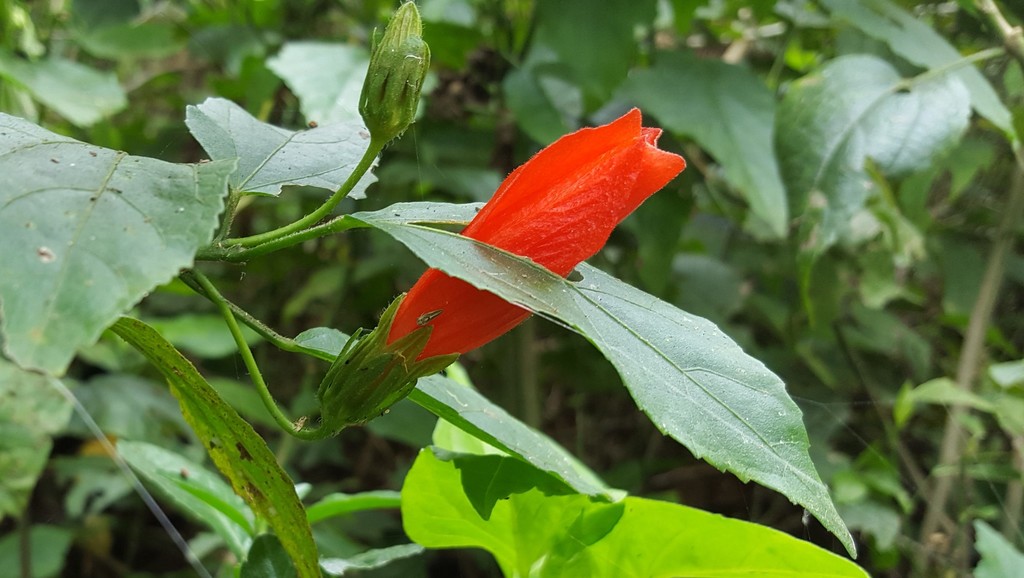
This lovely shrub is a favorite for attracting hummingbirds with its bright red flowers that never fully open. It is a hardy grower that thrives in warm climates and adds a tropical feel to any garden. You will love how easy it is to keep this plant happy in your outdoor space.

At a glance
- Care level
- Easy
- Plant type
- Shrub
- Light
- Full sun to partial shade
- Indoor light
- Bright indirect
- Water
- Every 3 to 7 days
- Mature size
- 10 feet
- Growth rate
- Fast
- Hardiness
- USDA 8 to 11
- Bloom time
- Year round in warm climates
Care
Keep the soil consistently moist but not soggy to ensure the best blooms. Watch for yellowing leaves which can indicate overwatering or poor drainage. Prune back after the main flowering season to encourage a bushier shape.
- Watering
- Water whenever the top inch of soil feels dry to the touch.
- Feeding
- Apply a balanced liquid fertilizer during the active growing season.
- Pruning
- Trim back long stems in late winter to maintain a tidy appearance.
- Repotting
- Move to a larger container once the roots begin to circle the pot.
- Soil
- Well draining loam
- Soil pH
- 6.0 to 7.5
- Temperature
- 0 to 35°C
- Humidity
- 40 to 70%
Safety
- People
- This plant is not considered toxic to humans.
- Children
- The plant is safe for children, though the small fruits could pose a minor choking hazard.
- Contact allergens
- The foliage can cause mild skin irritation in sensitive individuals.
- Airborne allergens
- There are no significant reports of respiratory allergies from this plant.
- Edibility
- While the fruit is technically edible, it is often bland and not commonly consumed by people.
How to identify it
- Bright red tubular flowers
- Petals remain partially closed
- Heart shaped green leaves
- Red berry like fruits
- Height
- 1.5 to 3m
- Spread
- 1.5 to 2.5m
- Leaves
- green, evergreen
- Flowers
- red, 2 to 4cm
- Fruit
- red, Late summer to autumn
Problems to watch for
- Whitefly · Small sap sucking insects that gather on the undersides of leaves.
Check your turk's cap from a photo
Pocket Botanist looks at a photo of your plant and tells you what's wrong and what to try first.
Scan with your phone's camera to get the app
Or go to pocketbotanist.app/get on your phone
Growing it
- Propagation
- cuttings, seed
- When to plant
- spring, autumn
Plant with other nectar rich flowers to create a dedicated hummingbird sanctuary.
Grows well with
Similar species
- Hibiscus · They are related and share similar foliage characteristics.
Science
- Family
- Malvaceae
- Genus
- Malvaviscus
- Order
- Malvales
- Class
- Magnoliopsida
- Native range
- Southern United States through Central and South America.
- Conservation
- This plant is not of conservation concern.
It grows in forest understories and edges where it provides essential nectar for hummingbirds.
- Value to wildlife
- nectar source, attracts hummingbirds
- Pollinators
- hummingbirds, butterflies, bees
- Uses
- ornamental shrub, wildlife garden, hedge
Through the year
Ecological indicators
- Salinity
- 2/9
- Soil reaction
- 6/9
- Light
- 6/9
- Temperature
- 8/9
- Moisture
- 5/9
- Nutrients
- 5/9
Taxonomy resolved against GBIF.
Questions people ask
- Do I need to prune it?
- Yes, regular pruning keeps it from becoming too leggy.
- Can it grow in a pot?
- It does well in large containers with good drainage.
Where the name comes from
The name comes from the Latin malva for mallow and viscus for sticky, referring to the mucilaginous sap.
Good to know
- It is a member of the mallow family.
- The name Malvaviscus means sticky mallow.
- It thrives in both sun and partial shade.
Keep your turk's cap growing
This page is a general guide. Save your plant in Pocket Botanist and you get care reminders timed for this plant, plus a care history that shows what worked.
Scan with your phone's camera to get the app
Or go to pocketbotanist.app/get on your phone
This guide was generated with AI on and checked against GBIF taxonomy. It is general information, not horticultural or veterinary advice. Read about how we build these guides.