 Pocket Botanist
Plant guide
Common toadflax.
Linaria vulgaris
Pronounced li-NAIR-ee-uh vul-GAIR-iss
Also known as Butter And Eggs, Common Toadflax, Flaxweed, Greater Butter-and-eggs, Jacob's Ladder, Ramsted



Scan with your phone's camera to get the app
Or go to pocketbotanist.app/get on your phone
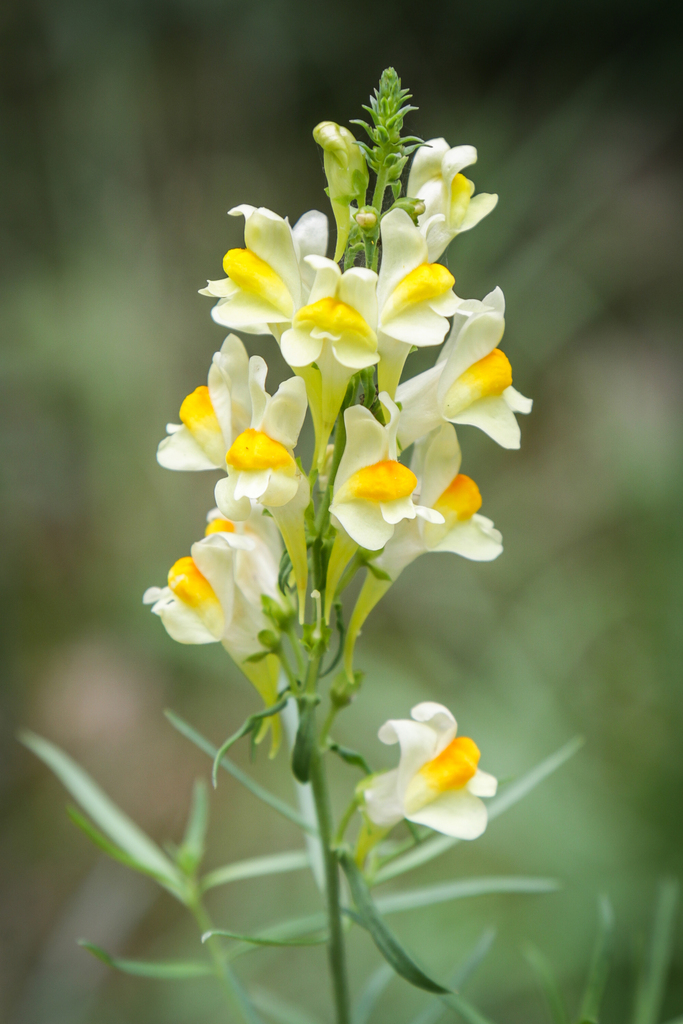
This charming wildflower is often called butter and eggs because of its bright yellow and orange snapdragon like blooms. It is a hardy perennial that spreads easily through underground runners. You will often spot it growing along roadsides and in open fields.
At a glance
- Care level
- Easy
- Plant type
- Perennial
- Light
- Full sun
- Indoor light
- Direct sun
- Water
- Every 7 to 14 days
- Mature size
- 2 to 3 feet
- Growth rate
- Fast
- Hardiness
- USDA 3 to 9
- Bloom time
- Late spring to early autumn
Care
Give this plant plenty of sun and well draining soil to keep it happy. Watch for wilting if the soil stays dry for too long during hot spells. It is quite vigorous so keep an eye on it if you do not want it to spread.
- Watering
- Water when the top inch of soil feels dry to the touch.
- Feeding
- No fertilizer is needed, as this plant prefers poor, sandy soil.
- Pruning
- Deadhead spent flowers to encourage a second flush of blooms.
- Repotting
- Repot only if the plant becomes root bound in its container.
- Soil
- Sandy or gravelly soil
- Soil pH
- Neutral to slightly acidic
- Temperature
- -30 to 30°C
- Humidity
- 40 to 70%
- Drought tolerance
- High
- Lifespan
- Perennial, typically 3 to 5 years.
- Fragrance
- Light
- Deer and rabbits
- High
Safety
- People
- The plant is generally considered mildly toxic if ingested in large quantities.
- Children
- Keep away from children as the plant contains compounds that can be irritating if chewed or swallowed.
- Contact allergens
- The sap may cause mild skin irritation in sensitive individuals.
- Airborne allergens
- Pollen may trigger mild allergic reactions in those prone to hay fever.
- Edibility
- This plant is not considered edible and may cause digestive upset if ingested.
How to identify it
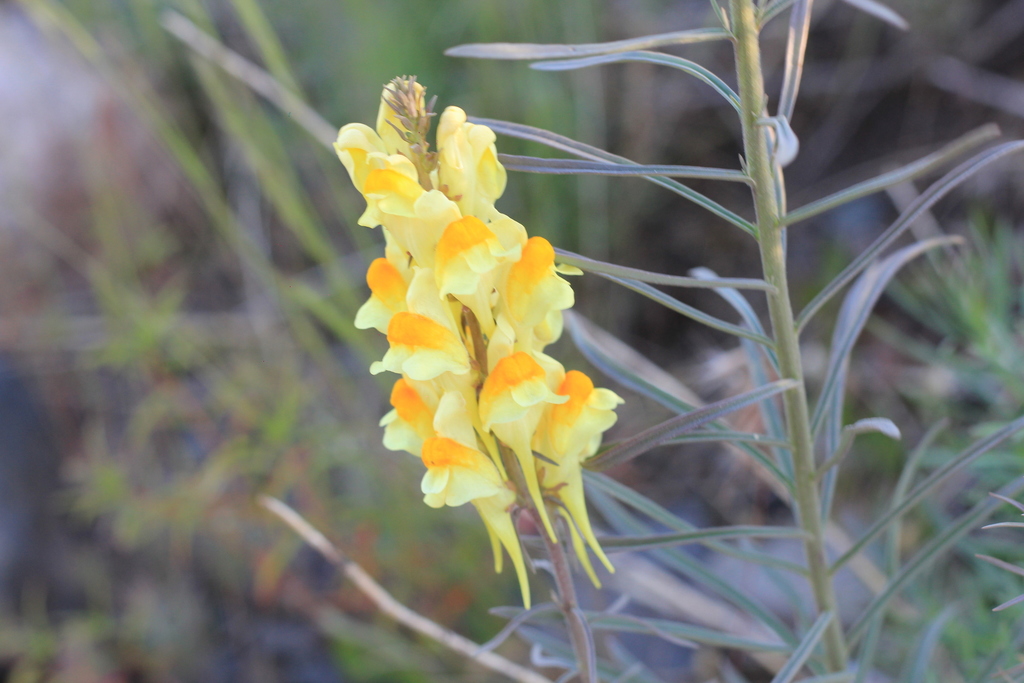
- Snapdragon like yellow and orange flowers
- Narrow linear grey green leaves
- Spikes of blooms on tall stalks
- Spurred petals at the base
- Height
- 0.3 to 0.9m
- Spread
- 0.2 to 0.4m
- Leaves
- green, blue-green, deciduous
- Flowers
- yellow, orange, 2 to 3cm
- Fruit
- brown, late summer
Problems to watch for
- Powdery mildew · A white fungal growth on leaves caused by poor air circulation.
Check your common toadflax from a photo
Pocket Botanist looks at a photo of your plant and tells you what's wrong and what to try first.
Scan with your phone's camera to get the app
Or go to pocketbotanist.app/get on your phone
Growing it
- Propagation
- seed, division
- When to plant
- spring, autumn
- Overwintering
- Cut back dead foliage in late autumn to keep the area tidy. The plant is fully hardy and requires no special protection.
- In containers
- It can grow in containers, but its aggressive rhizomes make it better suited for garden beds.
Pair this plant with other drought-tolerant wildflowers to create a low-maintenance, pollinator-friendly patch.
Grows well with
- Yarrow · They share similar requirements for dry, sunny conditions.
- Blanketflower · They provide a colorful, low-maintenance display in meadow settings.
Similar species
- Snapdragon · They share the same distinct flower shape and family characteristics.
Science
- Family
- Plantaginaceae
- Genus
- Linaria
- Order
- Lamiales
- Class
- Magnoliopsida
- Native range
- Europe and temperate Asia.
- Conservation
- It is considered an invasive weed in many parts of North America and is not of conservation concern.
It thrives in disturbed soils, roadsides, and meadows where it can outcompete other plants for space.
- Value to wildlife
- nectar source
- Pollinators
- bees, butterflies, moths
- Uses
- pollinator garden, wildflower meadow, naturalized areas
Through the year
Ecological indicators
- Salinity
- 2/9
- Soil reaction
- 6/9
- Light
- 8/9
- Temperature
- 5/9
- Moisture
- 3/9
- Nutrients
- 2/9
Taxonomy resolved against GBIF.
Questions people ask
- Is it easy to grow?
- Yes, it is extremely hardy and often spreads on its own.
- Does it need fertilizer?
- No, it prefers poor, sandy soils and will struggle in overly rich conditions.
Where the name comes from
The genus name Linaria comes from the Latin linum, meaning flax, because the leaves resemble those of flax. The species name vulgaris means common.
Good to know
- It is commonly known as butter and eggs due to the two-tone yellow color.
- The plant was historically used as a yellow dye.
- It spreads aggressively through underground rhizomes.
- It is a member of the plantain family.
Also in
Keep your common toadflax growing
This page is a general guide. Save your plant in Pocket Botanist and you get care reminders timed for this plant, plus a care history that shows what worked.
Scan with your phone's camera to get the app
Or go to pocketbotanist.app/get on your phone
This guide was generated with AI on and checked against GBIF taxonomy. It is general information, not horticultural or veterinary advice. Read about how we build these guides.