 Pocket Botanist
Plant guide
Blanket flower.
Gaillardia aristata
Pronounced gay-LAR-dee-uh a-ris-TAY-tuh
Also known as Blanket-flower, Blanketflower, Common Gaillardia, brown-eyed Susan, gaillardia, great blanket-flower, great blanketflower, great-flowered gaillardia



Scan with your phone's camera to get the app
Or go to pocketbotanist.app/get on your phone
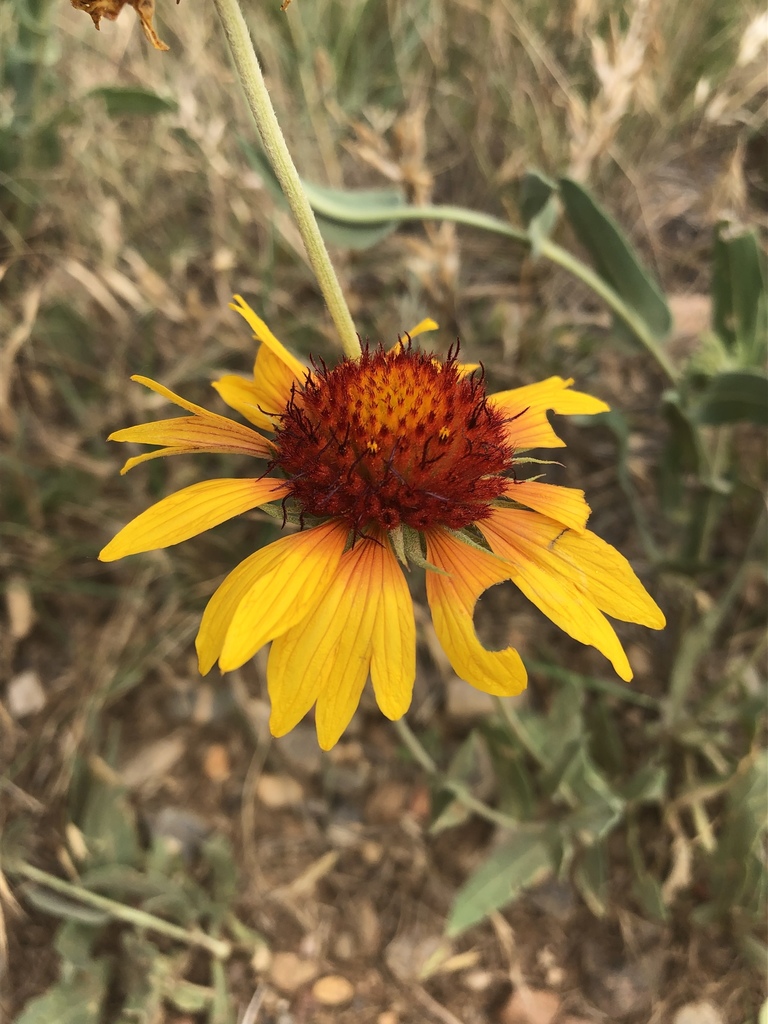
Blanket flowers are cheerful perennials that bring a splash of sunset colors to your garden. They're quite tough and love soaking up the sun all day long. You'll find them to be a favorite for bees and butterflies alike.

At a glance
- Care level
- Easy
- Plant type
- Perennial
- Light
- Full sun
- Indoor light
- Direct sun
- Water
- Every 7 to 14 days
- Mature size
- 2 feet
- Growth rate
- Medium
- Hardiness
- USDA 3 to 9
- Bloom time
- Early summer to early autumn
Care
Plant these in well draining soil to keep the roots happy. Deadhead the faded blooms to encourage a steady show of new flowers throughout the season. Watch for wilting if the soil stays soggy for too long.
- Watering
- Water deeply once the top inch of soil feels dry to the touch.
- Feeding
- Apply a balanced fertilizer sparingly during the growing season.
- Pruning
- Trim back spent flowers regularly to promote continuous blooming.
- Repotting
- Move to a larger container if the plant becomes root bound.
- Soil
- Sandy or rocky well draining soil
- Soil pH
- 6.0 to 8.0
- Temperature
- -30 to 35°C
- Humidity
- 20 to 50%
- Drought tolerance
- High
- Lifespan
- Short-lived perennial, typically 3 to 5 years.
- Deer and rabbits
- Moderate
Signs it needs repotting
- Roots growing out of the drainage holes.
- Water sitting on the surface for too long.
- Plant growth appears stunted.
Safety
- People
- The plant contains compounds that can cause mild skin irritation upon contact.
- Pets
- This plant is generally considered non toxic to cats and dogs.
- Children
- Keep away from small children as the plant parts can cause irritation if handled or chewed.
- Contact allergens
- The foliage can cause contact dermatitis in sensitive individuals.
- Airborne allergens
- Pollen may trigger mild allergic reactions in those sensitive to Asteraceae family plants.
- Edibility
- This plant is not considered edible and may cause stomach upset if ingested.
How to identify it
- Daisy like flower heads
- Petals with red and yellow bands
- Hairy lance shaped leaves
- Rough textured foliage
- Height
- 0.3 to 0.9m
- Spread
- 0.3 to 0.6m
- Leaves
- green, gray-green, deciduous
- Flowers
- red, orange, yellow, 5 to 10cm
Problems to watch for
- Powdery MildewCommon
- Root RotCommon
- AphidsUncommon
- Leaf SpotUncommon
Check your blanket flower from a photo
Pocket Botanist looks at a photo of your plant and tells you what's wrong and what to try first.
Scan with your phone's camera to get the app
Or go to pocketbotanist.app/get on your phone
Growing it
- Propagation
- seed, division
- When to plant
- spring, autumn
- Overwintering
- Cut back the foliage to the ground after the first hard frost. Ensure the soil remains well-drained during winter to prevent crown rot.
- In containers
- It grows well in containers if provided with excellent drainage and a pot at least 30 cm wide.
Seed Sowing
- Collect seeds in late summer after flower heads dry.
- Sow seeds in a sunny spot with well-draining soil.
- Cover lightly with soil and keep moist until germination.
Division
- Dig up the plant in early spring.
- Gently pull the root clump apart into smaller sections.
- Replant immediately and water well.
Pair this plant with other drought-tolerant natives to create a low-maintenance, water-wise garden bed.
Grows well with
- Purple Coneflower · They share similar requirements for sun and well-draining soil.
- Blue Grama Grass · This native grass provides a beautiful textural contrast to the bright flowers.
Similar species
- Indian Blanket · This is a closely related annual species with similar flower patterns.
Science
- Family
- Asteraceae
- Genus
- Gaillardia
- Order
- Asterales
- Class
- Magnoliopsida
- Native range
- Western North America
- Conservation
- It is a common native wildflower and is not currently of conservation concern.
It is adapted to open, sunny prairies and rocky slopes where it survives on minimal rainfall.
- Value to wildlife
- nectar source
- Pollinators
- bees, butterflies
- Uses
- pollinator gardens, meadow plantings, cut flowers, xeriscaping
Through the year
Ecological indicators
- Salinity
- 2/9
- Soil reaction
- 6/9
- Light
- 8/9
- Temperature
- 5/9
- Moisture
- 3/9
- Nutrients
- 2/9
Taxonomy resolved against GBIF.
Questions people ask
- Does it need deadheading?
- Yes, removing spent blooms encourages the plant to produce more flowers throughout the season.
- Is it a perennial?
- Yes, it is a short-lived perennial that often self-seeds to persist in the garden.
Where the name comes from
The genus honors French botanist Gaillard de Charentonneau, while the species name aristata refers to the awned bristles on the seeds.
Good to know
- It is commonly called blanket flower because it can spread to cover large areas.
- The plant is highly drought tolerant once established.
- It thrives in poor, sandy soils where other plants struggle.
Also in
Keep your blanket flower growing
This page is a general guide. Save your plant in Pocket Botanist and you get care reminders timed for this plant, plus a care history that shows what worked.
Scan with your phone's camera to get the app
Or go to pocketbotanist.app/get on your phone
This guide was generated with AI on and checked against GBIF taxonomy. It is general information, not horticultural or veterinary advice. Read about how we build these guides.