 Pocket Botanist
Plant guide
Purple toadflax.
Linaria purpurea
Pronounced li-NAIR-ee-uh pur-PUR-ee-uh
Also known as Linaria purpurea pink form, Purple Linaria, Purple Toadflax



Scan with your phone's camera to get the app
Or go to pocketbotanist.app/get on your phone

Purple toadflax is a charming, upright perennial that brings a touch of wild beauty to any garden. It produces tall spikes of tiny, snapdragon like flowers that bloom throughout the summer. You will love how easily it naturalizes in sunny spots.
At a glance
- Care level
- Easy
- Plant type
- Perennial
- Light
- Full sun
- Indoor light
- Direct sun
- Water
- Every 7 to 14 days
- Mature size
- 3 feet
- Growth rate
- Medium
- Hardiness
- USDA 5 to 9
- Bloom time
- Early summer to early autumn
Care
Plant this in well draining soil to keep the roots happy. Watch for wilting during dry spells, though it is quite drought tolerant once established. Deadhead the spent flower spikes to encourage a second flush of blooms later in the season.
- Watering
- Water deeply when the top inch of soil feels dry to the touch.
- Feeding
- A light application of balanced fertilizer in early spring is plenty.
- Pruning
- Cut back the stems after flowering to keep the plant tidy and prevent excessive self seeding.
- Repotting
- If growing in a container, move to a slightly larger pot only when it becomes root bound.
- Soil
- Well draining, sandy or rocky soil
- Soil pH
- Neutral to slightly alkaline
- Temperature
- -15 to 35°C
- Humidity
- 40 to 70%
- Drought tolerance
- High
- Lifespan
- Short-lived perennial, typically 3 to 5 years.
- Deer and rabbits
- Moderate
Signs it needs repotting
- Roots growing out of the drainage holes.
- Water running straight through the pot without soaking in.
Safety
- People
- The plant is generally considered non-toxic, but ingestion should be avoided.
- Pets
- This plant is generally considered non toxic to cats and dogs.
- Children
- The small seeds and flowers could pose a minor choking hazard if ingested by young children.
- Edibility
- This plant is not considered edible and should not be consumed.
How to identify it
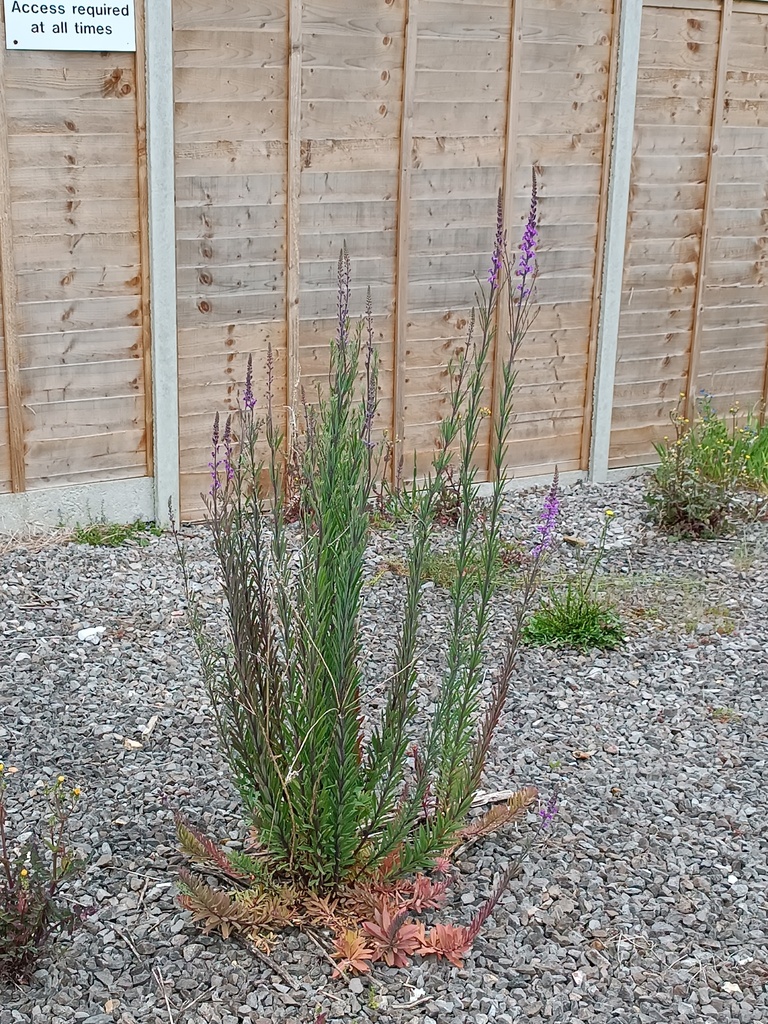
- Tall spikes of purple flowers
- Snapdragon like flower shape
- Narrow, linear blue green leaves
- Upright and slender growth habit
- Height
- 0.6 to 0.9m
- Spread
- 0.3 to 0.45m
- Leaves
- blue-green, deciduous
- Flowers
- purple, violet, 1 to 2cm
Problems to watch for
- AphidsCommon
- Powdery MildewCommon
- Root RotUncommon
- Slugs and SnailsUncommon
Check your purple toadflax from a photo
Pocket Botanist looks at a photo of your plant and tells you what's wrong and what to try first.
Scan with your phone's camera to get the app
Or go to pocketbotanist.app/get on your phone
Growing it
- Propagation
- seed, division
- When to plant
- spring, autumn
- Overwintering
- Cut back the spent flower stalks in late autumn to keep the plant tidy. Ensure the crown stays dry during winter to prevent rot.
- In containers
- It grows well in containers if provided with excellent drainage and a gritty potting mix.
Seed Sowing
- 1. Collect seeds in late summer.
- 2. Sow directly into a sunny, well-drained spot in autumn.
- 3. Lightly cover with soil.
Pair this plant with other drought-tolerant species that appreciate lean, gritty soil to prevent competition for nutrients.
Grows well with
- Lavender · They share similar requirements for sun and well-drained soil.
- Catmint · The soft blue-purple tones complement the toadflax perfectly.
- California Poppy · Both plants thrive in dry, sunny spots and offer a casual, meadow-like aesthetic.
Similar species
- Common Toadflax · A close relative with yellow and orange flowers.
Science
- Family
- Plantaginaceae
- Genus
- Linaria
- Order
- Lamiales
- Class
- Magnoliopsida
- Native range
- Southern Europe and the Mediterranean.
- Conservation
- This plant is not of conservation concern and is often considered a garden escapee in some regions.
It thrives in rocky, well-drained soils where it can easily colonize open ground.
- Value to wildlife
- nectar source
- Pollinators
- bees, butterflies
- Uses
- cottage gardens, pollinator borders, gravel gardens
Through the year
Ecological indicators
- Salinity
- 1/9
- Soil reaction
- 6/9
- Light
- 7/9
- Temperature
- 5/9
- Moisture
- 3/9
- Nutrients
- 3/9
Taxonomy resolved against GBIF.
Questions people ask
- Does it need deadheading?
- Deadheading encourages a second flush of flowers later in the season.
- Will it spread everywhere?
- It is a prolific self-seeder, so be prepared for it to pop up in unexpected places.
Where the name comes from
Linaria comes from the Latin linum for flax, referring to the leaf shape, while purpurea refers to the purple flower color.
Good to know
- It readily self-seeds in cracks and crevices.
- The name toadflax comes from the flower's resemblance to a toad's mouth.
- It is a short-lived perennial that often acts like a biennial.
Also in
Keep your purple toadflax growing
This page is a general guide. Save your plant in Pocket Botanist and you get care reminders timed for this plant, plus a care history that shows what worked.
Scan with your phone's camera to get the app
Or go to pocketbotanist.app/get on your phone
This guide was generated with AI on and checked against GBIF taxonomy. It is general information, not horticultural or veterinary advice. Read about how we build these guides.