 Pocket Botanist
Plant guide
Regal Lily.
Lilium regale
Pronounced LIL-ee-um ree-GAH-lee
Also known as Regal lily, Royal Lily



Scan with your phone's camera to get the app
Or go to pocketbotanist.app/get on your phone
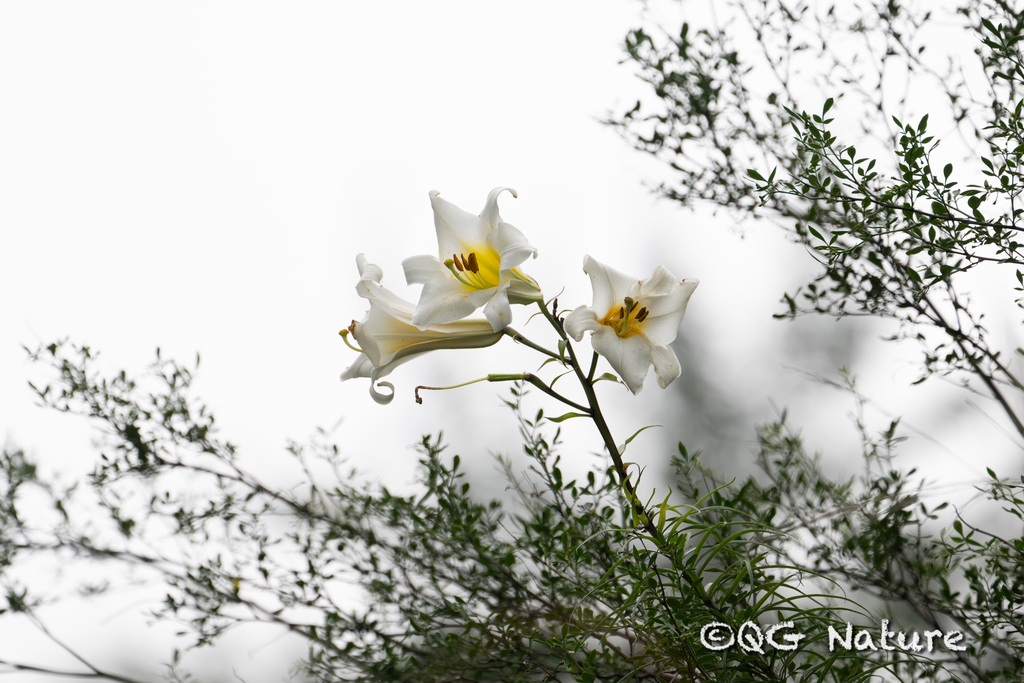
The Regal Lily is a stunning, fragrant bulbous perennial that brings a touch of elegance to any garden. It produces large, trumpet shaped white flowers with a golden throat and purplish pink streaks on the outside. These beauties are quite hardy and return reliably each year when planted in a sunny spot.
At a glance
- Care level
- Moderate
- Plant type
- Bulbous perennial
- Light
- Full sun to partial shade
- Indoor light
- Direct sun
- Water
- Every 5 to 10 days
- Mature size
- 3 to 6 feet
- Growth rate
- Medium
- Hardiness
- USDA 4 to 8
- Bloom time
- Early to mid summer
Care
Plant your bulbs in well draining soil with the top of the bulb about six inches deep. Keep an eye out for aphids or lily beetles that might snack on the foliage. Ensure the soil stays moist but never soggy to prevent the bulbs from rotting.
- Watering
- Keep the soil consistently moist during the active growing season but reduce watering after the flowers fade.
- Feeding
- Apply a balanced bulb fertilizer once a month during the spring and early summer.
- Pruning
- Cut back the dead stems to the ground only after the foliage has turned yellow and withered in the fall.
- Repotting
- Divide and repot the bulbs every few years when they become overcrowded to keep them blooming well.
- Soil
- Well draining, fertile, loamy soil
- Soil pH
- 6.0 to 7.0
- Temperature
- -20 to 30°C
- Humidity
- 40 to 60%
Safety
- People
- Ingestion can cause gastrointestinal distress and is particularly dangerous to cats.
- Pets
- This plant is toxic to cats and can cause severe kidney failure if ingested.
- Children
- Keep this plant out of reach of children as the bulbs and foliage are toxic if chewed or swallowed.
- Contact allergens
- Handling the bulbs or foliage may cause mild skin irritation in sensitive individuals.
- Airborne allergens
- The heavy, sweet fragrance of the flowers can be overwhelming and may trigger respiratory sensitivity in some people.
- Edibility
- All parts of this plant are considered toxic if ingested by humans or pets.
How to identify it
- Trumpet shaped white flowers
- Golden yellow throat
- Purplish pink exterior streaks
- Strong sweet fragrance
- Narrow lance shaped leaves
- Height
- 0.9 to 1.8m
- Spread
- 0.3 to 0.45m
- Leaves
- dark green, deciduous
- Flowers
- white, yellow, pink, purple, 10 to 15cm
Problems to watch for
- Botrytis BlightCommon
- Lily BeetleCommon
- Bulb RotUncommon
- Slugs and SnailsUncommon
Check your regal lily from a photo
Pocket Botanist looks at a photo of your plant and tells you what's wrong and what to try first.
Scan with your phone's camera to get the app
Or go to pocketbotanist.app/get on your phone
Growing it
- Propagation
- seed, bulb offsets
- When to plant
- spring, autumn
Plant low growing perennials around the base of your lilies to keep their roots cool and moist while the tops enjoy the sun.
Grows well with
Similar species
- Trumpet Lily · Shares the classic trumpet shape and strong fragrance.
Science
- Family
- Liliaceae
- Genus
- Lilium
- Order
- Liliales
- Class
- Liliopsida
- Native range
- Sichuan province, China.
- Conservation
- This species is not currently listed as endangered, but wild collection should be avoided to protect native populations.
It grows naturally on steep, rocky, and well drained mountain slopes in its native habitat.
- Value to wildlife
- nectar source
- Pollinators
- bees, moths
- Uses
- ornamental garden plant, cut flowers, fragrant border
Through the year
Ecological indicators
- Salinity
- 2/9
- Soil reaction
- 5/9
- Light
- 7/9
- Temperature
- 5/9
- Moisture
- 5/9
- Nutrients
- 6/9
Taxonomy resolved against GBIF.
Questions people ask
- How deep should I plant the bulbs?
- Plant the bulbs about 15 to 20 centimeters deep.
- Does it need full sun?
- It prefers full sun but appreciates having its roots shaded by low growing plants.
Where the name comes from
The species name regale means royal or regal, referring to its majestic appearance. It was introduced to the West by Ernest Wilson in 1903.
Good to know
- The flowers are famously fragrant, especially in the evening.
- It is often called the regal lily or royal lily.
- It thrives in well drained, slightly acidic soil.
- The stems are very sturdy and often do not require staking.
Also in
Keep your regal lily growing
This page is a general guide. Save your plant in Pocket Botanist and you get care reminders timed for this plant, plus a care history that shows what worked.
Scan with your phone's camera to get the app
Or go to pocketbotanist.app/get on your phone
This guide was generated with AI on and checked against GBIF taxonomy. It is general information, not horticultural or veterinary advice. Read about how we build these guides.