 Pocket Botanist
Plant guide
Pincushion Protea.
Leucospermum cordifolium
Pronounced loo-koh-SPER-mum kor-di-FOH-lee-um
Also known as Flamespike, Giant Orange Nodding Pincushion, Memory, Nodding Pincushion, Orange Pincushion, Ornamental Pincushion, Pincushion, Sunburst Pincushion



Scan with your phone's camera to get the app
Or go to pocketbotanist.app/get on your phone

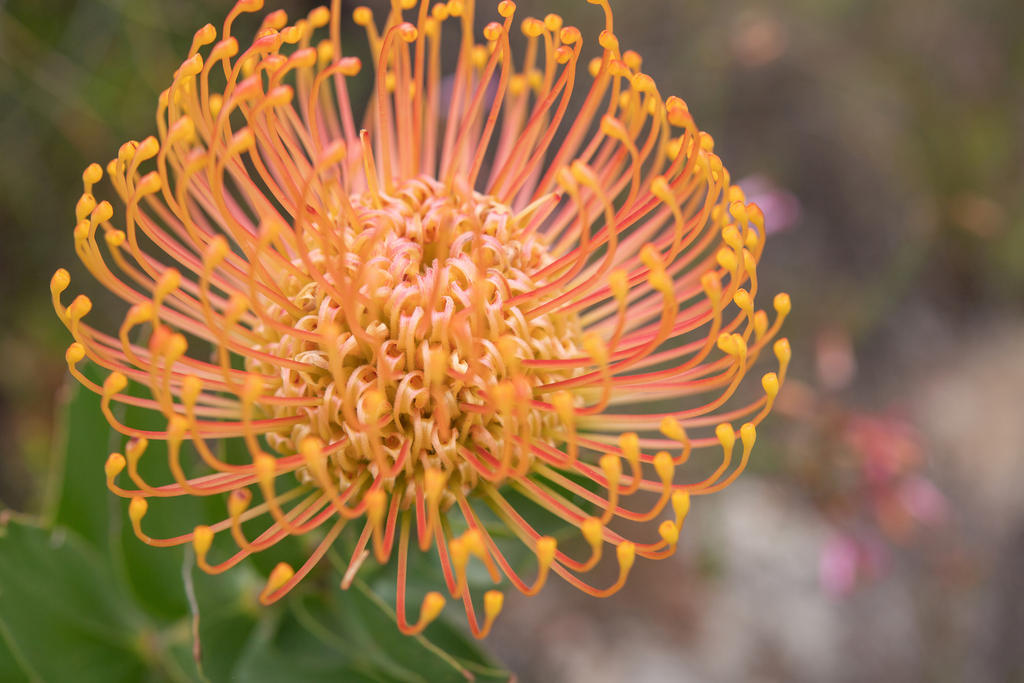
The Pincushion Protea is a striking shrub known for its unique, pin-like flower heads that look like they belong in a tropical dream. It loves plenty of sunshine and well-draining soil to really show off its vibrant colors. It's a fantastic choice for adding a bold, architectural touch to your garden.
At a glance
- Care level
- Moderate
- Plant type
- Evergreen shrub
- Light
- Full sun
- Indoor light
- Direct sun
- Water
- Every 7 to 14 days
- Mature size
- 1.5 to 2 meters
- Growth rate
- Medium
- Hardiness
- USDA 9 to 11
- Bloom time
- Late winter to mid summer
Care
Keep this plant in a spot with excellent drainage and avoid overwatering, as it is quite sensitive to root rot. Watch for yellowing leaves, which often signal that the soil is staying too wet or the pH is too high. Pruning after flowering helps keep the shrub dense and encourages more blooms next season.
- Watering
- Allow the soil to dry out significantly between waterings to prevent root issues.
- Feeding
- Use a low-phosphorus fertilizer specifically formulated for proteas to avoid burning the roots.
- Pruning
- Prune back stems after flowering to maintain shape and promote bushier growth.
- Repotting
- Repot only when necessary, as these plants dislike root disturbance.
- Soil
- Sandy, acidic, well-draining soil
- Soil pH
- Acidic
- Temperature
- 5 to 35°C
- Humidity
- 30 to 50%
- Drought tolerance
- High
- Lifespan
- Perennial, typically 10 to 15 years
- Deer and rabbits
- Moderate
Signs it needs repotting
- Roots growing out of the drainage holes
- Water sitting on the surface for too long
- Stunted growth during the active season
Safety
- People
- The plant is generally non-toxic, but the stiff, leathery leaves can cause minor mechanical irritation.
- Pets
- This plant is generally considered non-toxic to cats and dogs.
- Children
- The stiff, pointed leaves and woody stems could pose a minor scratching risk to small children.
- Contact allergens
- Handling the foliage can cause skin irritation for sensitive individuals due to the stiff, leathery texture.
- Airborne allergens
- There are no notable airborne allergen risks associated with this plant.
- Edibility
- This plant is not considered edible and may cause digestive upset if ingested.
How to identify it
- Unique pin-like flower heads
- Heart-shaped leathery leaves
- Stiff, woody stems
- Vibrant orange to red blooms
- Height
- 1 to 1.5m
- Spread
- 1.2 to 1.8m
- Leaves
- dark green, evergreen
- Flowers
- orange, red, yellow, 8 to 12cm
- Fruit
- brown, Late summer
Problems to watch for
- PhytophthoraCommon
- Root RotCommon
- AphidsUncommon
- Botrytis BlightUncommon
- ChlorosisUncommon
- Leaf SpotUncommon
- Scale InsectsUncommon
Check your pincushion protea from a photo
Pocket Botanist looks at a photo of your plant and tells you what's wrong and what to try first.
Scan with your phone's camera to get the app
Or go to pocketbotanist.app/get on your phone
Growing it
- Propagation
- cuttings, seed
- When to plant
- spring, early autumn
- Overwintering
- Protect from heavy frost and ensure the soil remains dry during cold periods to prevent root rot.
- In containers
- It grows well in large, well-draining pots, ideally at least 40 cm in diameter.
Semi-hardwood cuttings
- Take 10 cm cuttings from healthy, non-flowering stems in late summer.
- Remove the lower leaves and dip the base in rooting hormone.
- Place in a well-draining, sandy medium and keep in a bright, humid spot until rooted.
Group with other fynbos plants that require low-phosphorus soil and excellent drainage.
Grows well with
- Cape Rush · It shares similar water and soil requirements in a Mediterranean garden.
- African Lily · It provides a contrasting texture and color while thriving in similar conditions.
Similar species
- King Protea · It is a related iconic South African shrub with similar cultural needs.
Science
- Family
- Proteaceae
- Genus
- Leucospermum
- Order
- Proteales
- Class
- Magnoliopsida
- Native range
- Southwestern Cape, South Africa
- Conservation
- It is not currently listed as endangered, but wild populations are protected in their native South African habitats.
It is a fire-adapted shrub that relies on smoke and heat to trigger seed germination in the wild.
- Value to wildlife
- nectar source
- Pollinators
- bees, butterflies, hummingbirds
- Uses
- ornamental shrub, cut flower, xeriscaping
Through the year
Ecological indicators
- Salinity
- 4/9
- Soil reaction
- 3/9
- Light
- 8/9
- Temperature
- 7/9
- Moisture
- 2/9
- Nutrients
- 1/9
Taxonomy resolved against GBIF.
Questions people ask
- Does it need fertilizer?
- Only sparingly. It is highly sensitive to phosphorus and prefers nutrient-poor, acidic soils, so use a low-phosphorus protea fertilizer and avoid standard feeds.
- Can I grow it in a pot?
- Yes, it grows well in containers if provided with excellent drainage and a specialized protea potting mix.
Where the name comes from
The genus name Leucospermum comes from the Greek words for white and seed, while cordifolium refers to its heart-shaped leaves.
Good to know
- It is commonly known as the pincushion protea.
- The flowers are highly prized in the floral industry for their long vase life.
- It is native to the fynbos biome of South Africa.
- The plant is adapted to survive periodic wildfires in its natural environment.
Also in
Keep your pincushion protea growing
This page is a general guide. Save your plant in Pocket Botanist and you get care reminders timed for this plant, plus a care history that shows what worked.
Scan with your phone's camera to get the app
Or go to pocketbotanist.app/get on your phone
This guide was generated with AI on and checked against GBIF taxonomy. It is general information, not horticultural or veterinary advice. Read about how we build these guides.