 Pocket Botanist
Plant guide
Crape myrtle.
Lagerstroemia indica
Pronounced lah-ger-STREEM-ee-uh IN-dih-kuh
Also known as Common Crape Myrtle, Crape myrtle, Crapemyrtle, Indian crape-myrtle, Laggerstreamer, Leggerstreamer, Pride-Of-India, crape-myrtle



Scan with your phone's camera to get the app
Or go to pocketbotanist.app/get on your phone

The crape myrtle is a stunning deciduous shrub or small tree known for its long blooming season. It produces vibrant clusters of crinkled flowers throughout the summer months. You will love how its smooth, exfoliating bark adds visual interest to your garden even in winter.
At a glance
- Care level
- Easy
- Plant type
- Deciduous shrub or tree
- Light
- Full sun
- Indoor light
- Direct sun
- Water
- Every 7 to 14 days
- Mature size
- 15 to 25 feet
- Growth rate
- Fast
- Hardiness
- USDA 6 to 9
- Bloom time
- Mid summer to early autumn
Care
Plant your crape myrtle in a spot that gets plenty of sun to ensure the best flower production. Keep an eye out for powdery mildew on the leaves, which can happen if air circulation is poor. Regular pruning helps maintain a nice shape and encourages more blooms for next year.
- Watering
- Water deeply once the top few inches of soil feel dry to the touch.
- Feeding
- Apply a balanced fertilizer in early spring as new growth begins.
- Pruning
- Prune in late winter or early spring before new growth appears.
- Repotting
- Repot only if the plant is container grown and has become root bound.
- Soil
- Well-draining, fertile soil
- Soil pH
- 6.0 to 7.5
- Temperature
- -15 to 40°C
- Humidity
- 40 to 70%
- Drought tolerance
- High
- Lifespan
- Perennial, typically 20 to 50 years
- Deer and rabbits
- Moderate
Safety
- People
- It is generally considered non toxic to humans.
- Pets
- This plant is considered non-toxic to cats and dogs.
- Children
- The small, hard seed capsules could be a choking hazard if ingested by small children.
- Contact allergens
- The bark or leaves may cause mild skin irritation in sensitive individuals.
- Airborne allergens
- It is not a significant source of airborne allergens.
- Edibility
- This plant is not considered edible and should not be consumed.
How to identify it
- Crinkled, crepe paper like flower petals
- Smooth, exfoliating bark on mature trunks
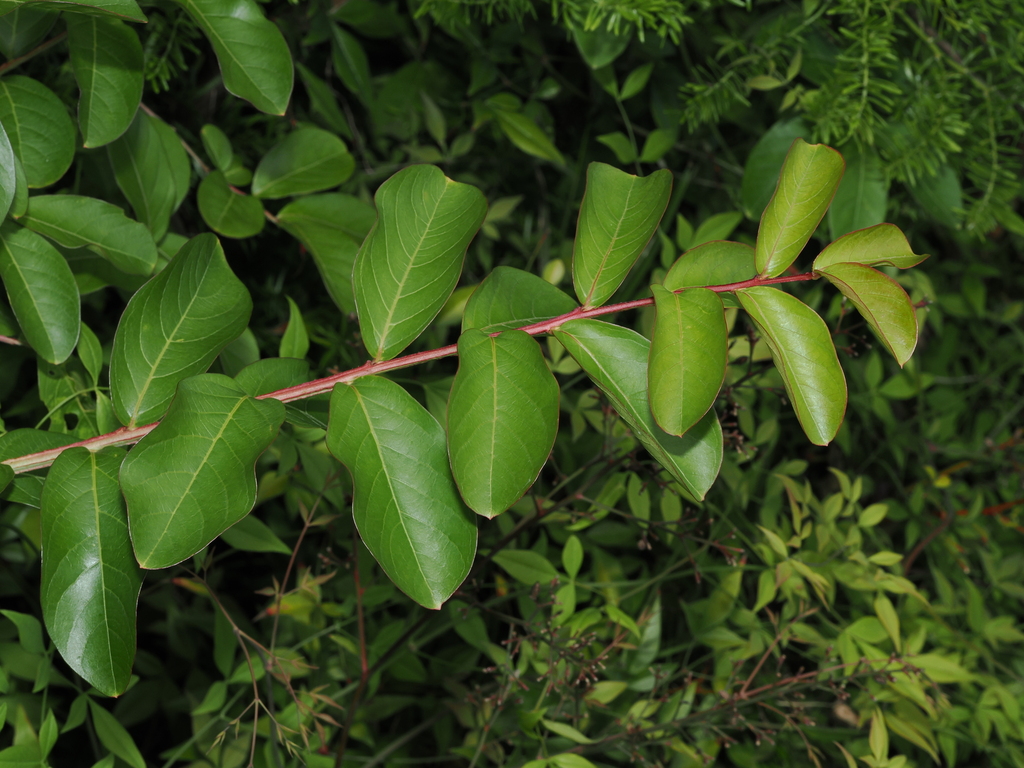
- Opposite, simple, oval shaped leaves
- Panicles of colorful summer blooms
- Height
- 3 to 6m
- Spread
- 2 to 5m
- Leaves
- green, bronze, deciduous
- Flowers
- pink, red, white, purple, 2 to 4cm
- Fruit
- brown, Autumn
Problems to watch for
- Powdery mildew · A white fungal growth appears on leaves and buds during humid weather.
- Aphids · Small insects that suck sap and leave behind sticky honeydew.
Check your crape myrtle from a photo
Pocket Botanist looks at a photo of your plant and tells you what's wrong and what to try first.
Scan with your phone's camera to get the app
Or go to pocketbotanist.app/get on your phone
Growing it
- Propagation
- cuttings, seed
- When to plant
- spring, autumn
- Overwintering
- In colder regions, apply a layer of mulch around the base to protect the roots from deep freezes. If grown in a container, move it to a sheltered, unheated area during the coldest months.
- In containers
- Dwarf varieties grow well in large containers with excellent drainage.
Plant drought tolerant perennials around the base to avoid overwatering the tree.
Grows well with
- Lavender · They share similar requirements for full sun and well drained soil.
- Coneflower · These perennials provide a nice color contrast beneath the tree.
Similar species
- Japanese Crepe Myrtle · It is more resistant to powdery mildew than the common crepe myrtle.
Science
- Family
- Lythraceae
- Genus
- Lagerstroemia
- Order
- Myrtales
- Class
- Magnoliopsida
- Native range
- East Asia
- Conservation
- This species is not of conservation concern.
It survives by being highly heat tolerant and drought resistant once established in well drained soils.
- Value to wildlife
- nectar source
- Pollinators
- bees, butterflies
- Uses
- ornamental tree, street tree, shrub border
Through the year
Ecological indicators
- Salinity
- 3/9
- Soil reaction
- 6/9
- Light
- 8/9
- Temperature
- 7/9
- Moisture
- 4/9
- Nutrients
- 5/9
Taxonomy resolved against GBIF.
Questions people ask
- Why isn't my crepe myrtle blooming?
- It likely needs more direct sunlight or was pruned too late in the season.
- Should I prune my crepe myrtle?
- Light pruning to shape the tree is fine, but avoid heavy topping which ruins the natural form.
Where the name comes from
The genus honors Magnus von Lagerström, a Swedish merchant who collected plants for Linnaeus, while the species name indica refers to its broad Asian origin.
Good to know
- It is often called the lilac of the South.
- The wood is very hard and was historically used for tool handles.
- It thrives in the heat and humidity of the southern United States.
Also in
Keep your crape myrtle growing
This page is a general guide. Save your plant in Pocket Botanist and you get care reminders timed for this plant, plus a care history that shows what worked.
Scan with your phone's camera to get the app
Or go to pocketbotanist.app/get on your phone
This guide was generated with AI on and checked against GBIF taxonomy. It is general information, not horticultural or veterinary advice. Read about how we build these guides.