 Pocket Botanist
Plant guide
Jointleaf rush.
Juncus articulatus
Pronounced JUNG-kus ar-tik-yoo-LAY-tus
Also known as Joint-leaf Rush, Jointed Rush, Jointleaf Rush



Scan with your phone's camera to get the app
Or go to pocketbotanist.app/get on your phone
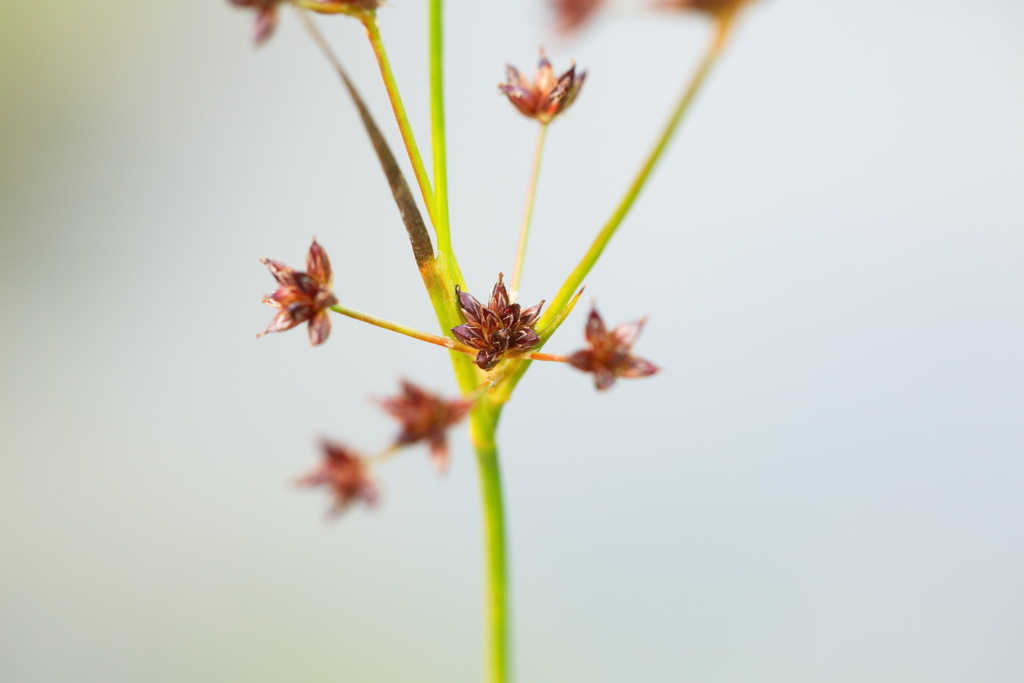
The jointleaf rush is a charming wetland plant that thrives in saturated soils. It features unique stems that look like they have little joints or segments along their length. You will often find it growing happily near ponds or in boggy garden spots.

At a glance
- Care level
- Easy
- Plant type
- Perennial grass like rush
- Light
- Full sun to partial shade
- Indoor light
- Direct sun
- Water
- Every 1 to 3 days
- Mature size
- 2 feet tall
- Growth rate
- Medium
- Hardiness
- USDA 4 to 9
- Bloom time
- Mid to late summer
Care
Keep the soil consistently wet or even submerged in shallow water to mimic its natural habitat. Watch for browning tips which often signal that the soil has dried out too much. It is a very hardy plant that rarely needs extra attention once established in the right spot.
- Watering
- The soil must remain constantly moist or waterlogged at all times.
- Feeding
- Apply a balanced liquid fertilizer sparingly during the active growing season.
- Pruning
- Trim back dead or yellowing foliage in late winter to make room for new spring growth.
- Repotting
- Repot when the plant becomes root bound or outgrows its container.
- Soil
- Wet, boggy, or clay soils
- Soil pH
- Acidic to neutral
- Temperature
- -20 to 30°C
- Humidity
- 60 to 100%
- Drought tolerance
- Low
- Lifespan
- Perennial, typically 3 to 5 years.
- Deer and rabbits
- High
Signs it needs repotting
- roots circling the bottom of the container
- stunted growth during the active season
Safety
- People
- There are no reports of toxicity in humans.
- Children
- The sharp, pointed tips of the foliage can be irritating to skin, so keep small children from playing directly in dense patches.
- Contact allergens
- The stiff, grass-like leaves can cause minor skin abrasions if handled roughly.
- Airborne allergens
- The wind-dispersed pollen may cause mild reactions in sensitive individuals.
- Edibility
- This plant is not considered edible for humans.
How to identify it
- hollow stems with internal cross walls
- cylindrical leaves with distinct joints
- small clusters of dark brown flowers
- grows in dense tufted clumps
- Height
- 0.15 to 0.6m
- Spread
- 0.2 to 0.4m
- Leaves
- green, deciduous
- Flowers
- brown, green, 0.5 to 1cm
- Fruit
- dark brown, Autumn
Problems to watch for
- Aphids · Small sap-sucking insects may cluster on the stems during hot, dry spells.
Check your jointleaf rush from a photo
Pocket Botanist looks at a photo of your plant and tells you what's wrong and what to try first.
Scan with your phone's camera to get the app
Or go to pocketbotanist.app/get on your phone
Growing it
- Propagation
- division, seed
- When to plant
- spring, autumn
- Overwintering
- Cut back dead foliage in late winter to make room for fresh spring growth. It is very hardy and requires no special protection in cold climates.
- In containers
- It grows well in containers without drainage holes, provided the soil is kept constantly wet.
Division
- 1. Dig up a mature clump in early spring.
- 2. Gently tease the root mass apart into smaller sections.
- 3. Replant the divisions immediately into wet, muddy soil.
Group this plant with other moisture-loving species to create a self-sustaining bog garden that requires little maintenance.
Grows well with
- Marsh Marigold · They share a love for wet, boggy conditions and provide a nice contrast in form.
- Yellow Flag Iris · This taller companion creates a beautiful structural backdrop for the lower-growing rush.
Similar species
- Soft Rush · It has a similar growth habit but lacks the distinct jointed stems of Juncus articulatus.
Science
- Family
- Juncaceae
- Genus
- Juncus
- Order
- Poales
- Class
- Liliopsida
- Native range
- Widespread across the Northern Hemisphere in temperate regions.
- Conservation
- It is widespread and not of conservation concern.
It acts as a pioneer species in disturbed wetlands, helping to stabilize muddy banks with its creeping rhizomes.
- Value to wildlife
- provides cover for small aquatic life, seeds eaten by waterfowl
- Pollinators
- bees, beetles
- Uses
- rain garden filler, pond edge planting, erosion control
Through the year
Ecological indicators
- Salinity
- 2/9
- Soil reaction
- 5/9
- Light
- 7/9
- Temperature
- 5/9
- Moisture
- 9/9
- Nutrients
- 5/9
Taxonomy resolved against GBIF.
Questions people ask
- Does it need to be submerged?
- It prefers very moist soil or shallow water up to 5 centimeters deep.
- Can I grow it in a regular garden bed?
- Only if you can guarantee the soil remains consistently saturated throughout the growing season.
Where the name comes from
The genus name Juncus is the ancient Latin name for rushes, while the species name articulatus describes the jointed, segmented stems.
Good to know
- It thrives in wet, boggy soils where many other plants would rot.
- The specific epithet articulatus refers to the jointed appearance of the stems.
- It is a common sight in marshes and damp meadows across the Northern Hemisphere.
Also in
Keep your jointleaf rush growing
This page is a general guide. Save your plant in Pocket Botanist and you get care reminders timed for this plant, plus a care history that shows what worked.
Scan with your phone's camera to get the app
Or go to pocketbotanist.app/get on your phone
This guide was generated with AI on and checked against GBIF taxonomy. It is general information, not horticultural or veterinary advice. Read about how we build these guides.