 Pocket Botanist
Plant guide
Common morning glory.
Ipomoea purpurea
Pronounced ip-oh-MEE-uh pur-PUR-ee-uh
Also known as Annual Morning Glory, Common Morning-Glory, Common Morningglory, Tall Morning-glory, Tall Morningglory



Scan with your phone's camera to get the app
Or go to pocketbotanist.app/get on your phone
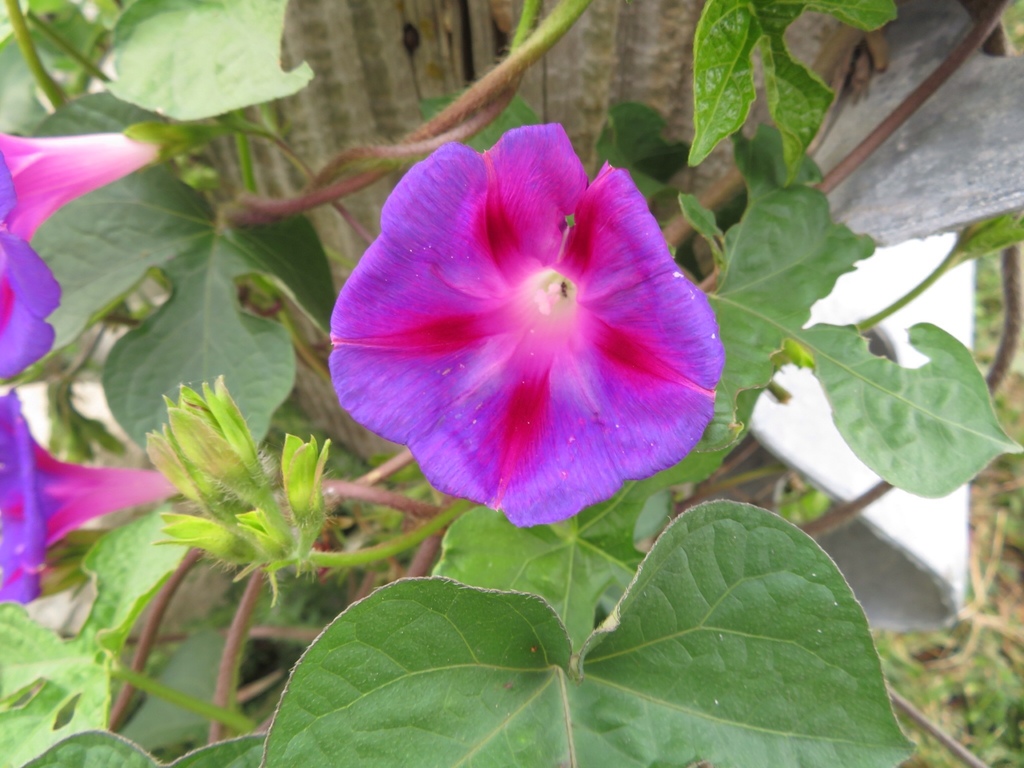
The common morning glory is a fast growing vine that produces beautiful trumpet shaped flowers. It is a classic choice for covering fences or trellises quickly. You will love watching the blooms open in the morning sun.
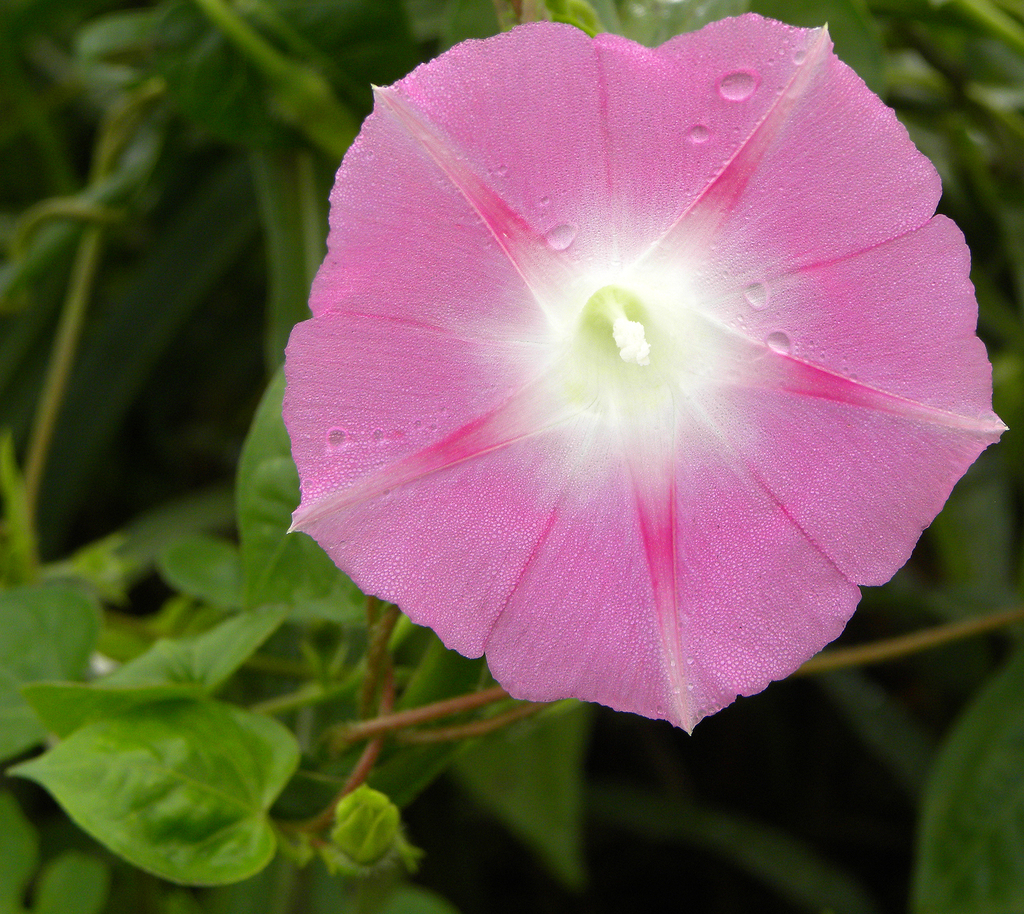
At a glance
- Care level
- Easy
- Plant type
- Annual vine
- Light
- Full sun
- Indoor light
- Direct sun
- Water
- Every 3 to 7 days
- Mature size
- 10 feet
- Growth rate
- Fast
- Hardiness
- USDA 2 to 11
- Bloom time
- Early summer to first frost
Care
Provide a sturdy trellis for the vines to climb as they grow. Watch for yellowing leaves which can indicate overwatering or poor drainage. Keep an eye out for aphids that might hide on the undersides of the foliage.
- Watering
- Keep the soil consistently moist but never waterlogged.
- Feeding
- Use a balanced liquid fertilizer once a month during the growing season.
- Pruning
- Trim back long stems to encourage bushier growth and more flowers.
- Repotting
- Since this is typically grown as an annual, repotting is rarely necessary.
- Soil
- Well draining loamy soil
- Soil pH
- 6.0 to 6.8
- Temperature
- 10 to 35°C
- Humidity
- 40 to 70%
Safety
- People
- The seeds contain alkaloids that are harmful if consumed in quantity.
- Pets
- This plant is toxic to cats and dogs if ingested.
- Children
- Keep seeds away from children as they are toxic if swallowed.
- Contact allergens
- The sap may cause mild skin irritation in sensitive individuals.
- Airborne allergens
- The pollen is not typically considered a major allergen.
- Edibility
- All parts of this plant are toxic if ingested and can cause severe gastrointestinal distress.
How to identify it
- Heart shaped green leaves
- Trumpet shaped flowers
- Twining vine growth habit
- Flowers open in morning
- Height
- 2 to 3m
- Spread
- 0.3 to 0.6m
- Leaves
- green, deciduous
- Flowers
- purple, blue, pink, white, 4 to 7cm
- Fruit
- brown, Late summer to autumn
Problems to watch for
- AphidsCommon
- Leaf SpotCommon
- Spider MitesUncommon
- WhiteflyUncommon
Check your common morning glory from a photo
Pocket Botanist looks at a photo of your plant and tells you what's wrong and what to try first.
Scan with your phone's camera to get the app
Or go to pocketbotanist.app/get on your phone
Growing it
- Propagation
- seed
- When to plant
- Spring
Provide a sturdy trellis or fence for the vines to climb early in the season.
Grows well with
Similar species
- Moonflower · It is a related vine that blooms at night instead of the morning.
Science
- Family
- Convolvulaceae
- Genus
- Ipomoea
- Order
- Solanales
- Class
- Magnoliopsida
- Native range
- Tropical Americas
- Conservation
- This plant is considered invasive in many regions and should be managed carefully.
It thrives by rapidly climbing over other vegetation to reach sunlight in disturbed areas.
- Value to wildlife
- nectar source
- Pollinators
- bees, butterflies, moths, hummingbirds
- Uses
- vertical screening, trellis cover, cottage garden
Through the year
Ecological indicators
- Salinity
- 2/9
- Soil reaction
- 6/9
- Light
- 8/9
- Temperature
- 7/9
- Moisture
- 5/9
- Nutrients
- 5/9
Taxonomy resolved against GBIF.
Questions people ask
- Do I need to soak the seeds?
- Yes, soaking seeds in warm water overnight helps improve germination rates.
- Is it a perennial?
- It is an annual in most climates, though it may self seed readily.
Where the name comes from
The genus name Ipomoea comes from the Greek words for worm and likeness, referring to the twining habit of the stems.
Good to know
- Morning glories have been cultivated for centuries.
- They are fast growing vines that can climb several feet in a single season.
- The flowers are sensitive to light levels.
Also in
Keep your common morning glory growing
This page is a general guide. Save your plant in Pocket Botanist and you get care reminders timed for this plant, plus a care history that shows what worked.
Scan with your phone's camera to get the app
Or go to pocketbotanist.app/get on your phone
This guide was generated with AI on and checked against GBIF taxonomy. It is general information, not horticultural or veterinary advice. Read about how we build these guides.