 Pocket Botanist
Plant guide
Yaupon holly.
Ilex vomitoria
Pronounced EYE-leks vom-ih-TOR-ee-uh
Also known as Appalachian tea, Carolina tea, Christmas berry, Indian black drink, South Sea tea, Yaupon Holly, black drink plant, cassena



Scan with your phone's camera to get the app
Or go to pocketbotanist.app/get on your phone
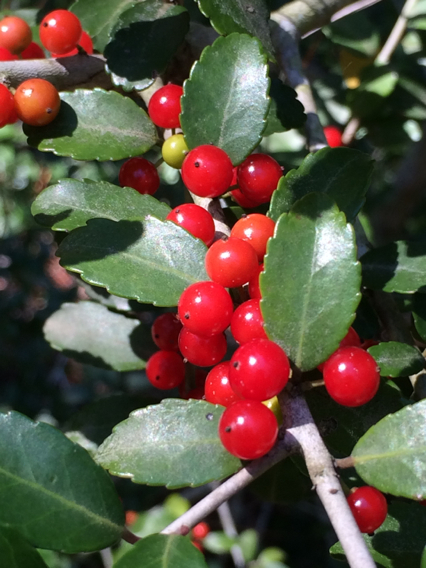
The Yaupon holly is a hardy, evergreen shrub native to the southeastern United States. It is well known for its small, glossy leaves and bright red berries that provide a lovely pop of color in winter. It is a very versatile plant that works well as a hedge, screen, or specimen shrub.
At a glance
- Care level
- Easy
- Plant type
- Evergreen shrub
- Light
- Full sun to partial shade
- Indoor light
- Bright indirect
- Water
- Every 5 to 10 days
- Mature size
- 15 to 25 feet
- Growth rate
- Medium
- Hardiness
- USDA 7 to 10
- Bloom time
- Mid to late spring
Care
Water regularly until the plant is established, then let the well drained soil dry out somewhat between waterings, since established plants are very drought tolerant. Watch for yellowing leaves, which often signal that the soil is staying too wet for too long. You can prune it throughout the year to maintain your preferred shape.
- Watering
- Water deeply whenever the top inch of soil feels dry to the touch.
- Feeding
- Apply a balanced, slow release fertilizer once in early spring.
- Pruning
- Trim back branches in late winter or early spring to encourage dense growth.
- Repotting
- Move to a larger container only when the roots have filled the current pot.
- Soil
- Well drained, acidic soil
- Soil pH
- 5.0 to 6.5
- Temperature
- -15 to 35°C
- Humidity
- 40 to 80%
- Drought tolerance
- High
- Lifespan
- Perennial, typically 30 to 50 years
- Deer and rabbits
- Moderate
Signs it needs repotting
- roots growing out of drainage holes
- water running straight through the pot
- stunted growth despite fertilization
Safety
- People
- The berries are considered toxic if ingested and can cause vomiting and diarrhea. The leaves contain caffeine and are traditionally brewed as a tea.
- Pets
- The berries are considered toxic to cats and dogs if ingested.
- Children
- Keep small children away from the bright red berries as they are tempting but poisonous.
- Contact allergens
- The leaves have sharp, spiny margins that can cause minor skin scratches.
- Airborne allergens
- It is not considered a significant source of airborne allergens.
- Edibility
- The berries are toxic to humans and should never be consumed.
How to identify it
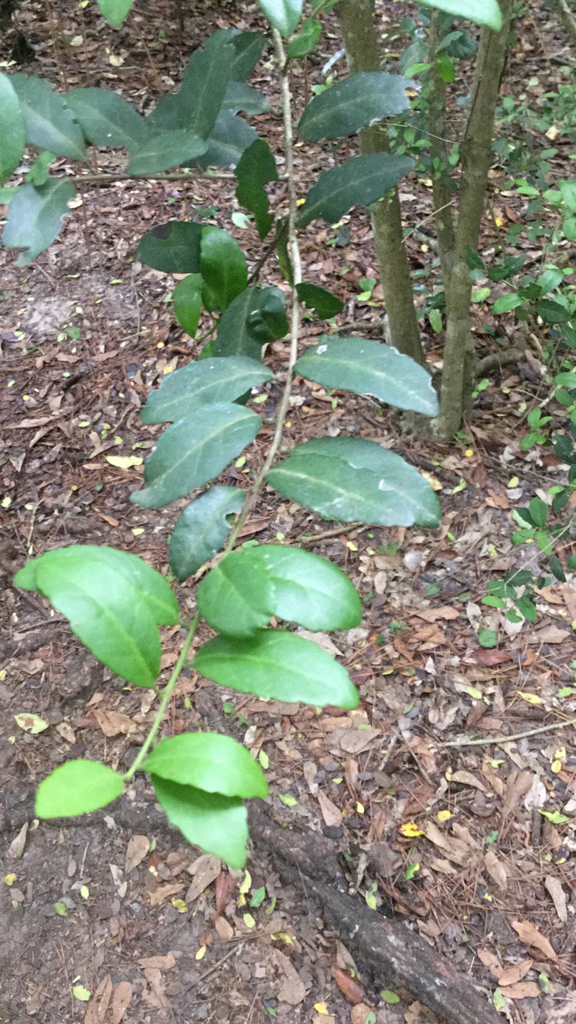
- Small, glossy, dark green leaves
- Bright red berries on females
- Smooth, light gray bark
- Dense, twiggy branching habit
- Height
- 1.5 to 6m
- Spread
- 1.5 to 4.5m
- Leaves
- dark green, evergreen
- Flowers
- white, 0.5 to 1cm
- Fruit
- red, Fall to winter
Problems to watch for
- Holly leaf miner · Small larvae create winding trails inside the leaves.
- Scale insects · Tiny sap-sucking insects that can cause leaf yellowing.
Check your yaupon holly from a photo
Pocket Botanist looks at a photo of your plant and tells you what's wrong and what to try first.
Scan with your phone's camera to get the app
Or go to pocketbotanist.app/get on your phone
Growing it
- Propagation
- cuttings, seed
- When to plant
- spring, fall
- Overwintering
- It is generally hardy, but young plants benefit from a layer of mulch to protect roots from extreme temperature fluctuations.
- In containers
- It is excellent for containers and responds very well to frequent pruning, requiring at least a 30 liter pot.
Cuttings
- Take 10 cm semi-hardwood cuttings in late summer.
- Dip the cut end in rooting hormone.
- Place in a well-draining potting mix and keep humid until rooted.
Plant in groups to ensure cross pollination for a better berry display.
Grows well with
- Southern Magnolia · They share similar soil and moisture requirements in the landscape.
- Beautyberry · It provides a nice textural contrast and thrives in similar woodland edges.
Similar species
- American Holly · It is a larger relative with similar red berries and evergreen foliage.
Science
- Family
- Aquifoliaceae
- Genus
- Ilex
- Order
- Aquifoliales
- Class
- Magnoliopsida
- Native range
- Southeastern United States
- Conservation
- It is a common and stable native species in the southeastern United States.
It thrives in diverse habitats from sandy coastal dunes to moist bottomland forests.
- Value to wildlife
- nectar source, winter food for birds, nesting cover
- Pollinators
- bees
- Uses
- ornamental hedge, wildlife garden, topiary, coastal landscaping
Through the year
Ecological indicators
- Salinity
- 7/9
- Soil reaction
- 5/9
- Light
- 6/9
- Temperature
- 7/9
- Moisture
- 5/9
- Nutrients
- 4/9
Taxonomy resolved against GBIF.
Questions people ask
- Do I need both male and female plants for berries?
- Yes, you need at least one male plant nearby to pollinate the female plants that produce the berries.
- Can I grow this in a container?
- Yes, it adapts well to containers and can be pruned into formal shapes.
Where the name comes from
The name Ilex is the ancient Latin name for holly, while vomitoria refers to the historical, though incorrect, association with emetics.
Good to know
- Indigenous peoples used the leaves to brew a ceremonial tea.
- The specific epithet vomitoria is a misnomer based on the belief that the tea caused vomiting.
- It is extremely tolerant of salt spray, making it perfect for beach homes.
- The wood is very hard and was historically used for tool handles.
Also in
Keep your yaupon holly growing
This page is a general guide. Save your plant in Pocket Botanist and you get care reminders timed for this plant, plus a care history that shows what worked.
Scan with your phone's camera to get the app
Or go to pocketbotanist.app/get on your phone
This guide was generated with AI on and checked against GBIF taxonomy. It is general information, not horticultural or veterinary advice. Read about how we build these guides.