 Pocket Botanist
Plant guide
Bear Paw.
Gynura aurantiaca
Pronounced jy-NOO-ruh aw-ran-tee-AH-kuh
Also known as Velvetplant, purple velvetplant, purple-passionvine, royal velvetplant, Purple velvet plant, Velvet Plant



Scan with your phone's camera to get the app
Or go to pocketbotanist.app/get on your phone
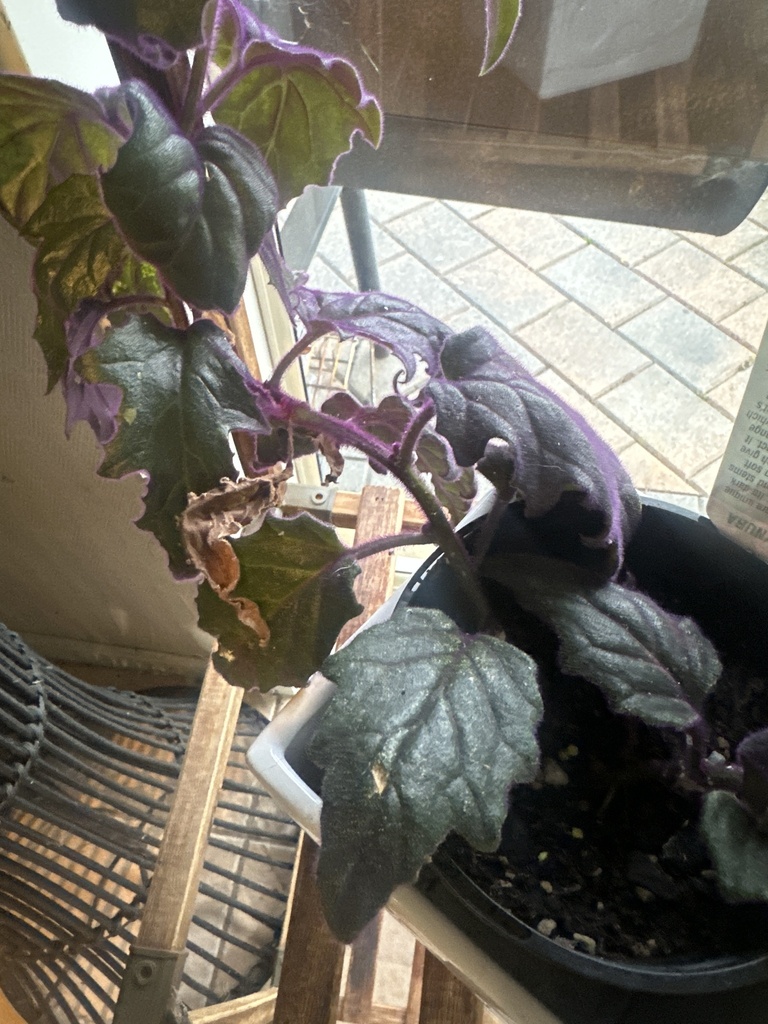
This plant is famous for its velvety, deep purple hairs that cover its dark green leaves. It adds a striking pop of color to any indoor collection. You will love how the light catches those fuzzy leaves.

At a glance
- Care level
- Moderate
- Plant type
- Herbaceous perennial
- Light
- Bright indirect light is best.
- Indoor light
- Bright indirect
- Water
- Every 5 to 10 days
- Mature size
- Up to 60 cm tall.
- Growth rate
- Fast
- Hardiness
- USDA 10 to 12
- Bloom time
- Late winter to early spring
Care
Keep the soil consistently moist but never soggy to prevent root rot. Watch for drooping leaves as a sign that it needs a drink. Provide plenty of bright, indirect light to maintain that vibrant purple coloration.
- Watering
- Water when the top inch of soil feels dry to the touch.
- Feeding
- Feed with a balanced liquid fertilizer during the growing season.
- Pruning
- Trim back long stems to encourage a bushier shape.
- Repotting
- Repot when the plant becomes root bound in its current container.
- Soil
- Well draining potting mix.
- Soil pH
- 6.0 to 7.0
- Temperature
- 15 to 27°C
- Humidity
- 60 to 80%
- Drought tolerance
- Low
- Lifespan
- Perennial, typically 3 to 5 years.
- Deer and rabbits
- Moderate
Signs it needs repotting
- Roots growing out of the drainage holes
- Water running straight through the pot
- Stunted growth
Safety
- People
- This plant is generally considered non-toxic, but ingestion may cause mild digestive upset.
- Pets
- This plant is generally considered non-toxic to cats and dogs.
- Children
- Keep out of reach of small children as the fuzzy leaves may be tempting to touch or put in the mouth.
- Contact allergens
- The fine hairs on the leaves can cause mild skin irritation in sensitive individuals.
- Airborne allergens
- The flowers may produce pollen that can trigger mild reactions in sensitive people.
- Edibility
- The plant is not considered edible and should be kept away from food preparation areas.
How to identify it
- Velvety purple hairs on leaves
- Dark green serrated foliage
- Trailing or upright growth habit
- Small orange daisy like flowers
- Height
- 0.3 to 0.6m
- Spread
- 0.3 to 0.5m
- Leaves
- purple, green, evergreen
- Flowers
- orange, yellow, 1 to 2cm
Problems to watch for
- MealybugsCommon
- Root RotCommon
- AphidsUncommon
- EdemaUncommon
- Fungus GnatsUncommon
- Spider MitesUncommon
Check your bear paw from a photo
Pocket Botanist looks at a photo of your plant and tells you what's wrong and what to try first.
Scan with your phone's camera to get the app
Or go to pocketbotanist.app/get on your phone
Growing it
- Propagation
- cuttings
- When to plant
- spring, summer
- Overwintering
- Keep the plant in a warm room away from cold drafts. Reduce watering slightly during the winter months when growth slows down.
- In containers
- It grows very well in pots and prefers a container with good drainage, at least 15 cm in diameter.
Stem cuttings
- 1. Take a 10 cm cutting from a healthy stem.
- 2. Remove the lower leaves.
- 3. Place the cutting in a glass of water or moist potting mix.
- 4. Keep in bright, indirect light until roots form.
Group this plant with other tropical foliage plants to create a microclimate that maintains higher humidity levels.
Grows well with
- Peace Lily · They share similar requirements for high humidity and indirect light.
- Ferns · Ferns provide a lush backdrop and thrive in the same humid environment.
Similar species
- Velvet Plant · It is a close relative with similar growth habits but less intense purple coloration.
Science
- Family
- Asteraceae
- Genus
- Gynura
- Order
- Asterales
- Class
- Magnoliopsida
- Native range
- Southeast Asia, specifically Indonesia.
- Conservation
- This species is common in cultivation and not currently threatened in its native habitat.
It grows as an understory plant in tropical forests, where it thrives in filtered light and high humidity.
- Value to wildlife
- nectar source
- Pollinators
- bees, butterflies
- Uses
- houseplant, indoor container plant
Through the year
Ecological indicators
- Salinity
- 2/9
- Soil reaction
- 6/9
- Light
- 6/9
- Temperature
- 8/9
- Moisture
- 6/9
- Nutrients
- 5/9
Taxonomy resolved against GBIF.
Questions people ask
- Why are the leaves losing their purple color?
- The plant is likely not receiving enough bright, indirect light.
- How often should I water it?
- Water when the top inch of soil feels dry to the touch.
Where the name comes from
The name Gynura comes from Greek words meaning woman and tail, referring to the long stigmas, while aurantiaca means orange in Latin.
Good to know
- It is commonly known as the purple passion plant.
- The leaves look like they are covered in purple velvet.
- It grows best in bright, indirect light to keep the purple color intense.
Keep your bear paw growing
This page is a general guide. Save your plant in Pocket Botanist and you get care reminders timed for this plant, plus a care history that shows what worked.
Scan with your phone's camera to get the app
Or go to pocketbotanist.app/get on your phone
This guide was generated with AI on and checked against GBIF taxonomy. It is general information, not horticultural or veterinary advice. Read about how we build these guides.