 Pocket Botanist
Plant guide
Glory lily.
Gloriosa superba
Pronounced glor-ee-OH-suh soo-PER-buh
Also known as Climbing Liliy, Climing lily, Dragon Flower, Flame Lily, Gloriosa Lily, Glory Lily, Superb lily, Tiger's Claws



Scan with your phone's camera to get the app
Or go to pocketbotanist.app/get on your phone
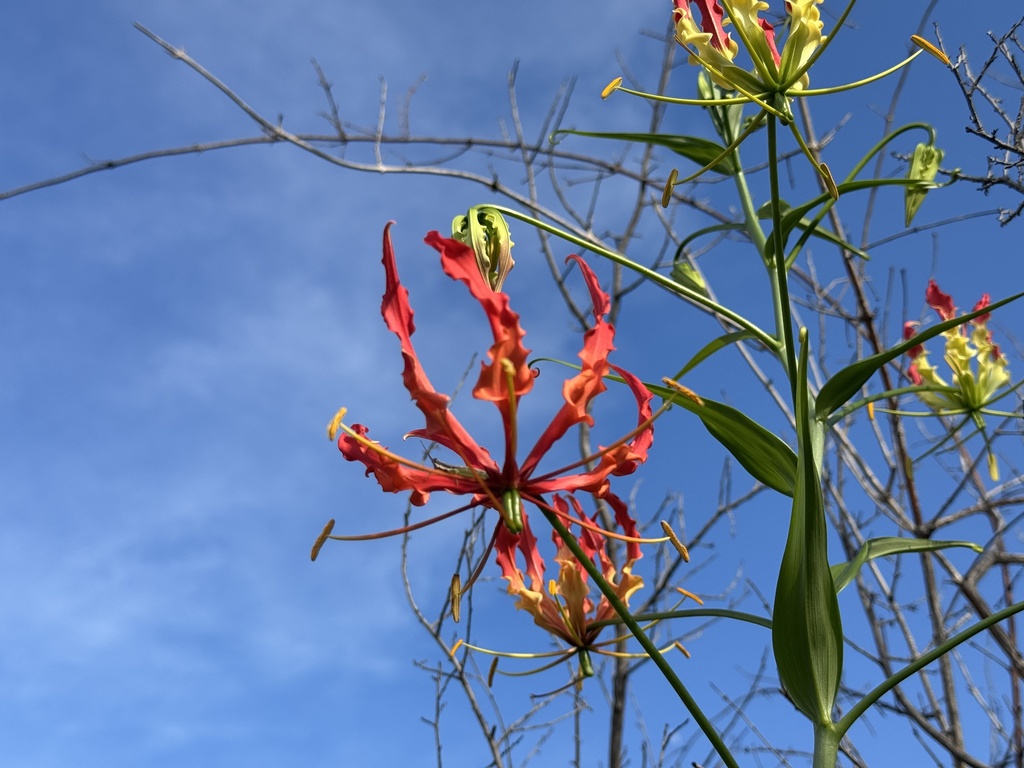
The glory lily is a stunning climbing plant known for its unique, flame-like flowers with reflexed petals. It grows from tuberous roots and loves to scramble up trellises or other supports. You'll find it's a real showstopper in any collection.

At a glance
- Care level
- Moderate
- Plant type
- Tuberous perennial climber
- Light
- Full sun to partial shade, with some afternoon shade in hot climates
- Indoor light
- Bright indirect
- Water
- Every 5 to 10 days
- Mature size
- 6 to 8 feet
- Growth rate
- Fast
- Hardiness
- USDA 9 to 11
- Bloom time
- Mid to late summer
Care
Provide a sturdy trellis for the vines to climb as they grow. Watch for yellowing leaves which can signal overwatering or poor drainage. Keep the plant in a warm spot and ensure it gets plenty of humidity during the growing season.
- Watering
- Keep the soil consistently moist but never soggy during the active growing season.
- Feeding
- Feed with a balanced liquid fertilizer every two weeks while the plant is actively growing.
- Pruning
- Cut back the stems once the foliage begins to yellow and die down after flowering.
- Repotting
- Repot the tubers in fresh soil each spring just as they begin to break dormancy.
- Soil
- Well draining, rich potting mix
- Soil pH
- 6.0 to 7.0
- Temperature
- 15 to 30°C
- Humidity
- 60 to 80%
- Drought tolerance
- Moderate
- Lifespan
- Perennial, typically 5 to 10 years
- Deer and rabbits
- Moderate
Signs it needs repotting
- Roots growing out of the drainage holes
- Stunted growth during the active season
Safety
- People
- The plant contains colchicine, which is extremely poisonous to humans and pets if consumed.
- Pets
- This plant is highly toxic to cats and dogs if ingested.
- Children
- Keep this plant well away from children as the tubers and foliage are deadly if eaten.
- Contact allergens
- Handling the tubers may cause skin irritation in sensitive individuals.
- Airborne allergens
- There are no notable airborne allergy risks associated with this plant.
- Edibility
- All parts of this plant are highly toxic if ingested and can cause severe illness.
How to identify it
- Wavy, reflexed petals like flames
- Bright red and yellow coloration
- Tendrils at leaf tips for climbing
- Lance shaped green foliage
- Tuberous root system
- Height
- 1.5 to 2.5m
- Spread
- 0.3 to 0.6m
- Leaves
- green, deciduous
- Flowers
- red, yellow, 8 to 12cm
- Fruit
- green, brown, Autumn
Problems to watch for
- AphidsCommon
- Tuber RotCommon
- Spider MitesUncommon
- ThripsUncommon
Check your glory lily from a photo
Pocket Botanist looks at a photo of your plant and tells you what's wrong and what to try first.
Scan with your phone's camera to get the app
Or go to pocketbotanist.app/get on your phone
Growing it
- Propagation
- division, seed
- When to plant
- Spring
- Overwintering
- In cooler climates, lift the tubers after the first frost. Store them in dry peat or sand in a frost free location until spring.
- In containers
- It grows well in containers at least 30 centimeters deep, provided they have excellent drainage.
Tuber division
- 1. Carefully dig up the tubers during the dormant season.
- 2. Separate the V shaped tubers by hand.
- 3. Replant each section in well draining soil.
Plant near a sturdy trellis or fence to allow the tendrils to climb safely.
Grows well with
Similar species
- Climbing Lily · It shares the same family and similar growth habits.
Science
- Family
- Colchicaceae
- Genus
- Gloriosa
- Order
- Liliales
- Class
- Liliopsida
- Native range
- Tropical Africa and Asia
- Conservation
- It is considered invasive in some parts of Australia and should be managed carefully in the wild.
It thrives in forest edges and thickets where it can climb into sunlight.
- Value to wildlife
- nectar source
- Pollinators
- butterflies
- Uses
- ornamental climber, cut flower
Through the year
Ecological indicators
- Salinity
- 2/9
- Soil reaction
- 6/9
- Light
- 7/9
- Temperature
- 8/9
- Moisture
- 5/9
- Nutrients
- 6/9
Taxonomy resolved against GBIF.
Questions people ask
- Does it need a trellis?
- Yes, it is a climbing vine that requires a support structure to grow vertically.
- How do I store the tubers?
- Dig them up after the foliage dies back and store them in a cool, dry place over winter.
Where the name comes from
The name Gloriosa comes from the Latin word for glorious, referring to the spectacular flowers, while superba means superb.
Good to know
- It is the national flower of Zimbabwe.
- The flowers change color from green to yellow and finally red as they mature.
- It is also known as the flame lily due to its fiery appearance.
Also in
Keep your glory lily growing
This page is a general guide. Save your plant in Pocket Botanist and you get care reminders timed for this plant, plus a care history that shows what worked.
Scan with your phone's camera to get the app
Or go to pocketbotanist.app/get on your phone
This guide was generated with AI on and checked against GBIF taxonomy. It is general information, not horticultural or veterinary advice. Read about how we build these guides.