 Pocket Botanist
Plant guide
Ground Ivy.
Glechoma hederacea L.
Pronounced GLEK-oh-muh hed-er-AY-see-uh
Also known as Creeping Charlie, Gill-over-the-ground, Ground Ivy, Ground-ivy, Groundivy, Haymaids


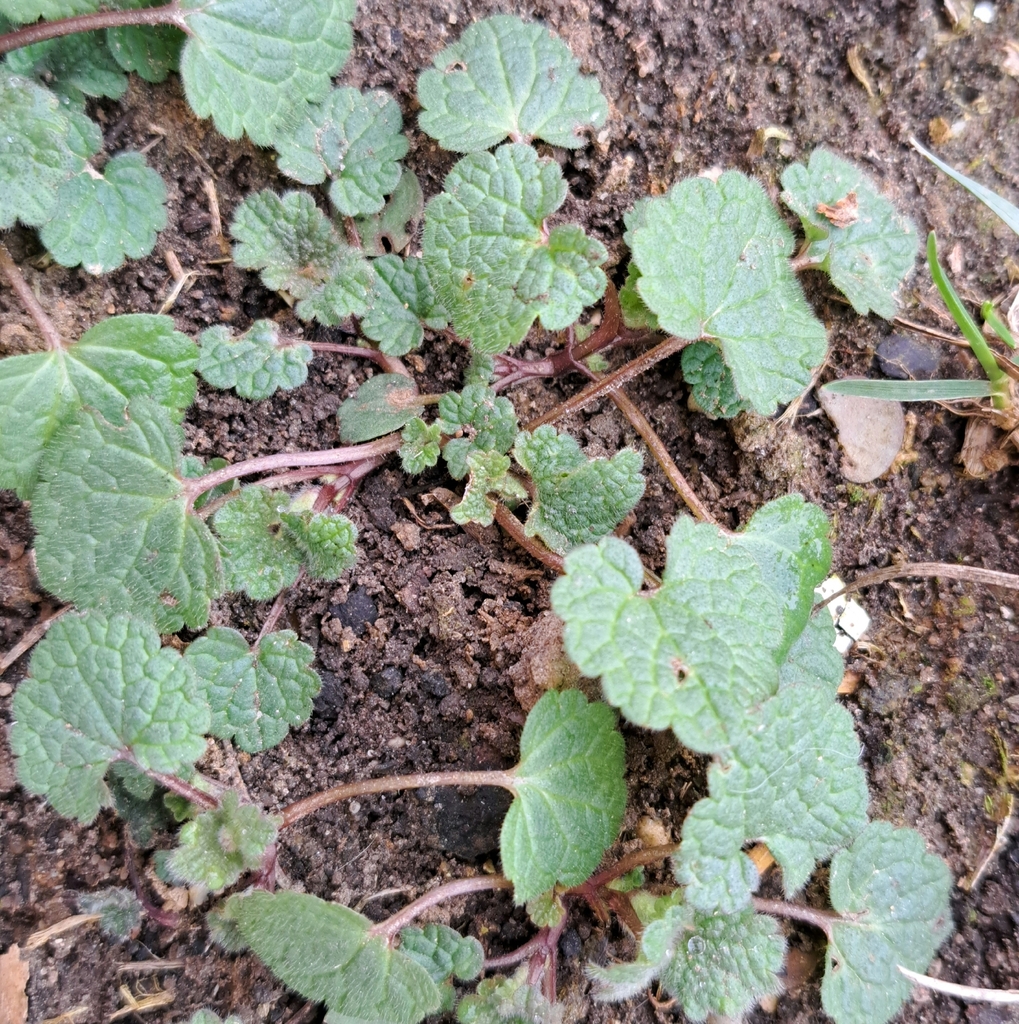
Ground ivy is a hardy, trailing perennial that spreads quickly across the ground. It is often considered a weed in lawns, but it makes a lovely, fragrant ground cover in shaded areas. You will love its small, scalloped leaves and delicate purple flowers.
At a glance
- Care level
- Easy
- Plant type
- Perennial herb
- Light
- Partial shade to full shade
- Indoor light
- Medium light
- Water
- Every 3 to 7 days
- Mature size
- 6 inches tall
- Growth rate
- Fast
- Hardiness
- USDA 3 to 10
- Bloom time
- Mid to late spring
Care
Keep the soil consistently moist to help this plant thrive in its preferred shady spots. Watch for rapid spreading, as it can easily take over garden beds if left unchecked. If you see the leaves yellowing, it might be getting too much direct sun.
- Watering
- Keep the soil evenly moist but never soggy.
- Feeding
- Apply a balanced liquid fertilizer during the active growing season.
- Pruning
- Trim back runners regularly to contain its spread.
- Repotting
- Repot only if the plant becomes root bound in its container.
- Soil
- Moist, well draining soil
- Soil pH
- 6.0 to 7.5
- Temperature
- -30 to 35°C
- Humidity
- 40 to 80%
Safety
- People
- It is considered mildly toxic if ingested in large quantities.
- Pets
- This plant is considered toxic to horses and can cause mild irritation in cats and dogs if ingested.
- Children
- The plant is not considered dangerous to children, but ingestion should be discouraged due to potential stomach upset.
- Contact allergens
- The foliage can cause mild skin irritation in sensitive individuals.
- Airborne allergens
- Pollen may cause mild reactions in those with seasonal allergies.
- Edibility
- While historically used in brewing, it can be toxic to horses and should be avoided for consumption.
How to identify it
- Scalloped kidney shaped leaves
- Square stems typical of mint family
- Small funnel shaped purple flowers
- Spreads via creeping stolons
- Aromatic foliage when crushed
- Height
- 0.05 to 0.2m
- Spread
- 0.3 to 1m
- Leaves
- green, semi-evergreen
- Flowers
- blue, violet, 1 to 2cm
Problems to watch for
- Powdery MildewCommon
- AphidsUncommon
- Root RotUncommon
- Slugs and SnailsUncommon
By symptom
Check your ground ivy from a photo
Pocket Botanist looks at a photo of your plant and tells you what's wrong and what to try first.
Growing it
- Propagation
- division, seed, cuttings
- When to plant
- spring, autumn
Because this plant is highly aggressive, it is best grown in containers or areas where it cannot spread into garden beds.
Grows well with
- Hosta — They share similar shade and moisture requirements.
- Ferns — They provide a nice textural contrast in woodland settings.
Similar species
- Deadnettle — It has a similar growth habit but is generally less invasive.
Science
- Family
- Lamiaceae
- Genus
- Glechoma
- Order
- Lamiales
- Class
- Magnoliopsida
- Native range
- Europe and parts of Asia.
- Conservation
- It is considered an invasive species in many parts of North America and should be managed accordingly.
It colonizes disturbed ground and moist woodlands by forming dense mats that outcompete native flora.
- Value to wildlife
- early season nectar source
- Pollinators
- bees
- Uses
- ground cover, hanging baskets
Through the year
Ecological indicators
- Salinity
- 2/9
- Soil reaction
- 6/9
- Nutrients
- 6/9
- Light
- 4/9
- Temperature
- 5/9
- Moisture
- 6/9
Taxonomy resolved against GBIF.
Questions people ask
- Is ground ivy hard to kill?
- Yes, it is quite persistent due to its ability to root from tiny stem fragments.
- Can I grow it in a pot?
- It makes a lovely trailing plant for containers, but keep it contained to prevent it from escaping.
Where the name comes from
The name Glechoma comes from the Greek word for a type of mint, while hederacea refers to its ivy like leaves.
Good to know
- It spreads rapidly via creeping stems that root at the nodes.
- It is a member of the mint family.
- It can thrive in both sun and deep shade.
Also in
Keep your ground ivy growing
This page is a general guide. Save your plant in Pocket Botanist and you get care reminders timed for this plant, plus a care history that shows what worked.
This guide was generated with AI and checked against GBIF taxonomy. It is general information, not horticultural or veterinary advice. Read about how we build these guides.