 Pocket Botanist
Guide botanique
Lierre terrestre.
Glechoma hederacea L.
Prononciation GLEK-oh-muh hed-er-AY-see-uh
Aussi appelée Lierre terrestre, Gill-over-the-ground, Grater-ale, Herbe à la gale, Rondelle, Haymaids


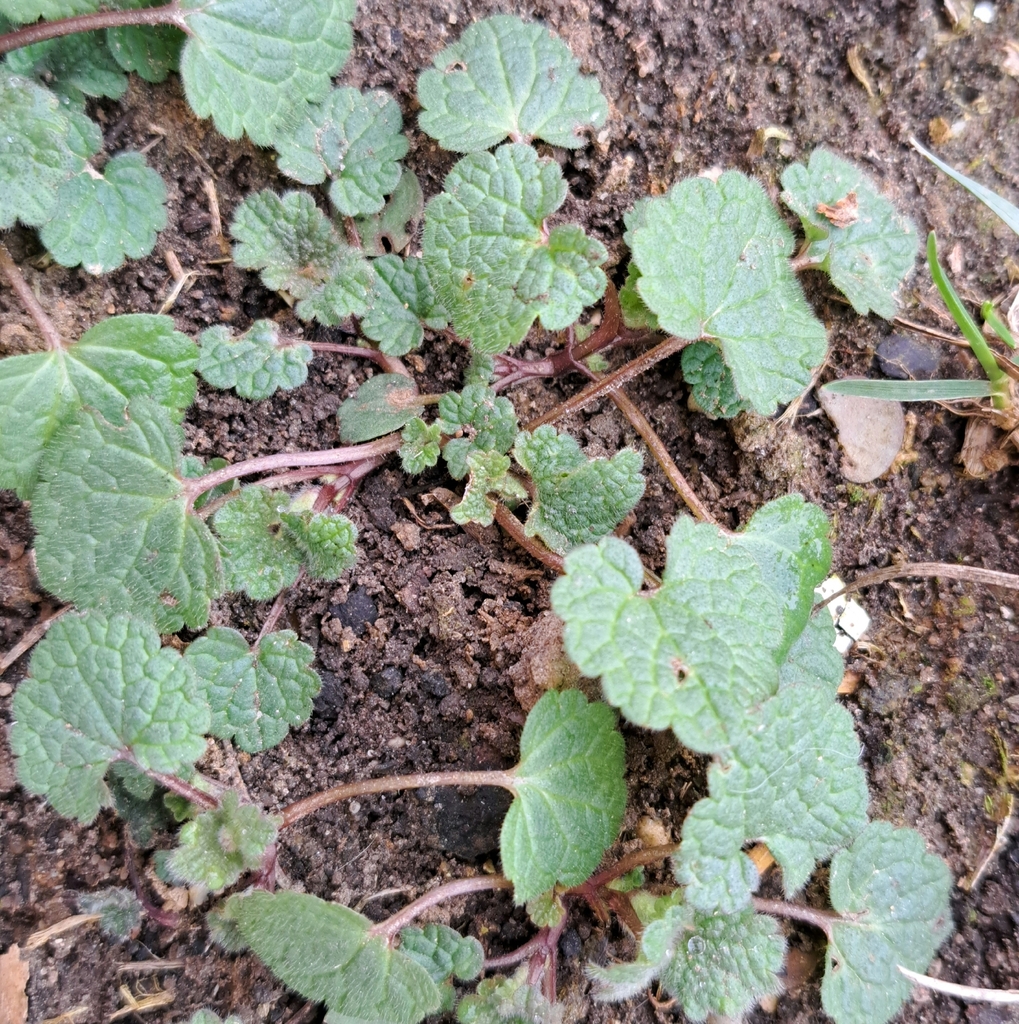
Le lierre terrestre est une plante vivace rustique et rampante qui s'étend rapidement sur le sol. Il est souvent considéré comme une mauvaise herbe dans les pelouses, mais il constitue un couvre-sol charmant et parfumé dans les zones ombragées. Vous aimerez ses petites feuilles festonnées et ses délicates fleurs violettes.
En un coup d'œil
- Niveau d'entretien
- Facile
- Type de plante
- Herbe vivace
- Lumière
- Mi-ombre à ombre totale
- Lumière en intérieur
- Lumière moyenne
- Arrosage
- Tous les 3 à 7 jours
- Taille adulte
- 15 cm de haut
- Croissance
- Rapide
- Rusticité
- USDA 3 à 10
- Floraison
- Mi à fin du printemps
Entretien
Gardez le sol constamment humide pour aider cette plante à prospérer dans ses endroits préférés et ombragés. Surveillez sa propagation rapide, car elle peut facilement envahir les plates-bandes si elle n'est pas contrôlée. Si vous voyez les feuilles jaunir, c'est peut-être qu'elle reçoit trop de soleil direct.
- Arrosage
- Gardez le sol uniformément humide, mais jamais détrempé.
- Engrais
- Appliquez un engrais liquide équilibré pendant la saison de croissance active.
- Taille
- Taillez régulièrement les stolons pour contenir sa propagation.
- Rempotage
- Rempotez uniquement si la plante est à l'étroit dans son conteneur.
- Sol
- Sol humide et bien drainé
- pH du sol
- 6,0 à 7,5
- Température
- -30 à 35°C
- Humidité
- 40 à 80%
Sécurité
- Humains
- Il est considéré comme légèrement toxique s'il est ingéré en grandes quantités.
- Animaux
- Cette plante est considérée comme toxique pour les chevaux et peut provoquer une légère irritation chez les chats et les chiens si elle est ingérée.
- Enfants
- La plante n'est pas considérée comme dangereuse pour les enfants, mais l'ingestion doit être découragée en raison de possibles maux d'estomac.
- Allergènes de contact
- Le feuillage peut provoquer une légère irritation cutanée chez les personnes sensibles.
- Allergènes aéroportés
- Le pollen peut provoquer de légères réactions chez les personnes souffrant d'allergies saisonnières.
- Comestibilité
- Bien qu'historiquement utilisé dans le brassage, il peut être toxique pour les chevaux et doit être évité pour la consommation.
Comment l'identifier
- Feuilles festonnées en forme de rein
- Tiges carrées typiques de la famille de la menthe
- Petites fleurs violettes en forme d'entonnoir
- Se propage par des stolons rampants
- Feuillage aromatique lorsqu'il est écrasé
- Hauteur
- 0,05 à 0,2m
- Envergure
- 0,3 à 1m
- Feuilles
- vert, semi-persistant
- Fleurs
- bleu, violet, 1 à 2cm
Problèmes à surveiller
- OïdiumCourant
- Limaces et escargotsPeu courant
- Pourriture des racinesPeu courant
- PuceronsPeu courant
Par symptôme
Vérifie la santé de ta plante en photo
Pocket Botanist analyse une photo de ta plante et te dit ce qui ne va pas et quoi essayer en premier.
La cultiver
- Multiplication
- division, semis, boutures
- Quand planter
- printemps, automne
Parce que cette plante est très agressive, elle est mieux cultivée en contenants ou dans des zones où elle ne peut pas envahir les parterres de jardin.
Bonnes associations
- Hosta — Ils partagent des exigences similaires en matière d'ombre et d'humidité.
- Polystichum — Elles offrent un joli contraste textuel dans les environnements boisés.
Espèces similaires
- Lamier maculé — Il a un port similaire mais est généralement moins envahissant.
Science
- Famille
- Lamiaceae
- Genre
- Glechoma
- Ordre
- Lamiales
- Classe
- Magnoliopsida
- Région d'origine
- Europe et parties de l'Asie.
- Préservation
- Il est considéré comme une espèce envahissante dans de nombreuses régions d'Amérique du Nord et doit être géré en conséquence.
Il colonise les sols perturbés et les bois humides en formant des tapis denses qui supplantent la flore indigène.
- Intérêt pour la faune
- source de nectar précoce
- Pollinisateurs
- abeilles
- Utilisations
- couvre-sol, paniers suspendus
Au fil des saisons
Repères écologiques
- Salinité
- 2/9
- Réaction du sol
- 6/9
- Nutriments
- 6/9
- Lumière
- 4/9
- Température
- 5/9
- Humidité
- 6/9
Taxonomie vérifiée avec le GBIF.
Ce qu'on demande souvent
- L'herbe aux écus est-elle difficile à éliminer?
- Oui, elle est assez persistante grâce à sa capacité à s'enraciner à partir de minuscules fragments de tige.
- Puis-je la cultiver en pot?
- Elle fait une belle plante retombante pour les contenants, mais gardez-la contenue pour l'empêcher de s'échapper.
D'où vient le nom
Le nom Glechoma vient du mot grec pour un type de menthe, tandis que hederacea fait référence à ses feuilles semblables à du lierre.
Bon à savoir
- Il s'étale rapidement grâce à des tiges rampantes qui s'enracinent aux nœuds.
- C'est un membre de la famille de la menthe.
- Il peut prospérer à la fois au soleil et à l'ombre profonde.
Aussi dans
Garde ta plante en pleine forme
Cette page est un guide général. Enregistre ta plante dans Pocket Botanist et tu reçois des rappels d'entretien adaptés à cette plante, ainsi qu'un historique d'entretien qui montre ce qui a marché.
Ce guide a été généré par IA et vérifié avec la taxonomie du GBIF. Il s'agit d'informations générales, et non de conseils horticoles ou vétérinaires. Découvre comment nous concevons ces guides.