 Pocket Botanist
Plant guide
Virginia strawberry.
Fragaria virginiana
Pronounced fra-GAIR-ee-uh vir-jin-ee-AY-nuh
Also known as Thickleaved Wild Strawberry, Virginia Strawberry, Wild Strawberry, blue-leaf strawberry, mountain strawberry



Scan with your phone's camera to get the app
Or go to pocketbotanist.app/get on your phone

The Virginia strawberry is a charming native groundcover that produces small, sweet red berries. It spreads through runners and thrives in open woods or meadows. You will love how it brings a bit of wild beauty to your garden.
At a glance
- Care level
- Easy
- Plant type
- Perennial herb
- Light
- Full sun to partial shade
- Indoor light
- Direct sun
- Water
- Every 3 to 7 days
- Mature size
- 6 to 10 inches tall
- Growth rate
- Fast
- Hardiness
- USDA 3 to 9
- Bloom time
- Mid to late spring
Care
Keep the soil consistently moist but not waterlogged to support fruit production. Watch for wilting leaves as a sign that the plant needs more water during hot spells. Ensure it gets plenty of airflow to prevent fungal issues on the foliage.
- Watering
- Water when the top inch of soil feels dry to the touch.
- Feeding
- Apply a balanced organic fertilizer during the active growing season.
- Pruning
- Trim back dead foliage in late winter to encourage fresh spring growth.
- Repotting
- Repot if the plant becomes root bound or if the soil loses its structure.
- Soil
- Well draining loamy soil
- Soil pH
- 5.5 to 7.0
- Temperature
- -35 to 30°C
- Humidity
- 40 to 70%
- Drought tolerance
- Moderate
- Lifespan
- Perennial, typically 3 to 5 years.
- Fragrance
- Light
- Deer and rabbits
- Low
Signs it needs repotting
- Roots growing out of drainage holes
- Stunted growth
- Soil drying out too quickly
Safety
- People
- This plant is non-toxic and safe for human consumption.
- Children
- The small berries are safe for children, but always supervise young ones to ensure they do not eat unknown wild plants.
- Contact allergens
- Some individuals may experience mild skin irritation from the fine hairs on the leaves.
- Airborne allergens
- The pollen is generally not considered a significant allergen.
- Edibility
- Always ensure you have correctly identified the plant before consuming any wild berries.
How to identify it
- Three leaflets with serrated edges
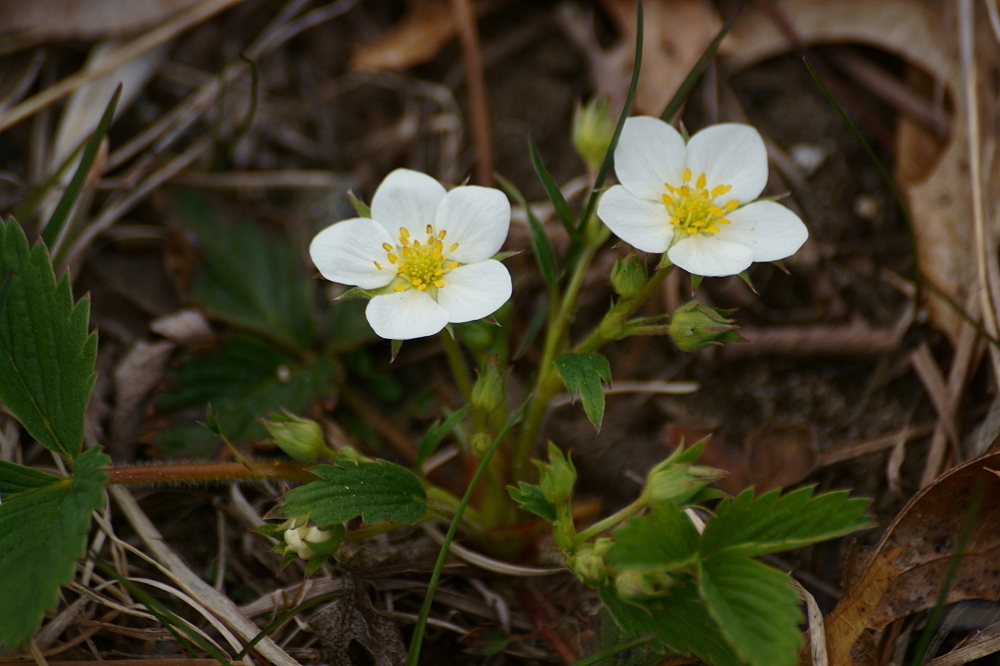
- Small white five petaled flowers
- Bright red edible fruit
- Low growing herbaceous habit
- Spreads via creeping stolons
- Height
- 0.05 to 0.2m
- Spread
- 0.15 to 0.45m
- Leaves
- green, semi-evergreen
- Flowers
- white, 1 to 2cm
- Fruit
- red, Early to mid summer
Problems to watch for
- Leaf spot · Fungal spots appear on foliage during periods of high humidity.
- Slugs · These pests often feed on the ripening fruit near the ground.
Check your virginia strawberry from a photo
Pocket Botanist looks at a photo of your plant and tells you what's wrong and what to try first.
Scan with your phone's camera to get the app
Or go to pocketbotanist.app/get on your phone
Growing it
- Propagation
- division, seed, runners
- When to plant
- spring, fall
- Overwintering
- The plants go dormant in winter and do not require special protection in most climates. A light layer of mulch can help protect the crowns in very cold areas.
- In containers
- It grows well in shallow containers or hanging baskets, provided they have good drainage.
Runner Division
- Identify a healthy daughter plant attached to a runner.
- Ensure the daughter plant has established its own roots.
- Sever the runner and transplant the new plant to a new location.
Plant these in a sunny border where they can act as a living mulch to suppress weeds.
Grows well with
- Blueberry · They share similar soil acidity requirements.
- Wild Geranium · It provides a nice textural contrast in woodland settings.
Similar species
- Mock Strawberry · It looks very similar but produces tasteless red fruit.
Science
- Family
- Rosaceae
- Genus
- Fragaria
- Order
- Rosales
- Class
- Magnoliopsida
- Native range
- Across much of North America.
- Conservation
- This plant is common and widespread, requiring no special conservation status.
It thrives in open woodlands and meadows, often colonizing disturbed soil.
- Value to wildlife
- nectar source, larval host plant, food for birds
- Pollinators
- bees, butterflies
- Uses
- ground cover, edible landscaping, wildlife garden
Through the year
Ecological indicators
- Salinity
- 2/9
- Soil reaction
- 5/9
- Light
- 6/9
- Temperature
- 5/9
- Moisture
- 5/9
- Nutrients
- 4/9
Taxonomy resolved against GBIF.
Questions people ask
- Does it need full sun?
- It prefers full sun to partial shade for the best fruit production.
- Will it take over my garden?
- It spreads by runners, so it can be aggressive in ideal conditions.
Where the name comes from
The name Fragaria comes from the Latin word for fragrant, while virginiana refers to the Virginia colony where it was first described.
Good to know
- The berries are much smaller but often more flavorful than store-bought varieties.
- It spreads rapidly through above-ground runners.
- Native Americans used the leaves for medicinal teas.
Keep your virginia strawberry growing
This page is a general guide. Save your plant in Pocket Botanist and you get care reminders timed for this plant, plus a care history that shows what worked.
Scan with your phone's camera to get the app
Or go to pocketbotanist.app/get on your phone
This guide was generated with AI on and checked against GBIF taxonomy. It is general information, not horticultural or veterinary advice. Read about how we build these guides.