 Pocket Botanist
Plant guide
Fiddle Leaf Fig.
Ficus lyrata
Pronounced FY-kus ly-RAY-tuh
Also known as Fiddle-leaf Fig, Fiddleleaf Fig, banjo fig, lyre-leaf figtree, fiddle leaf fig


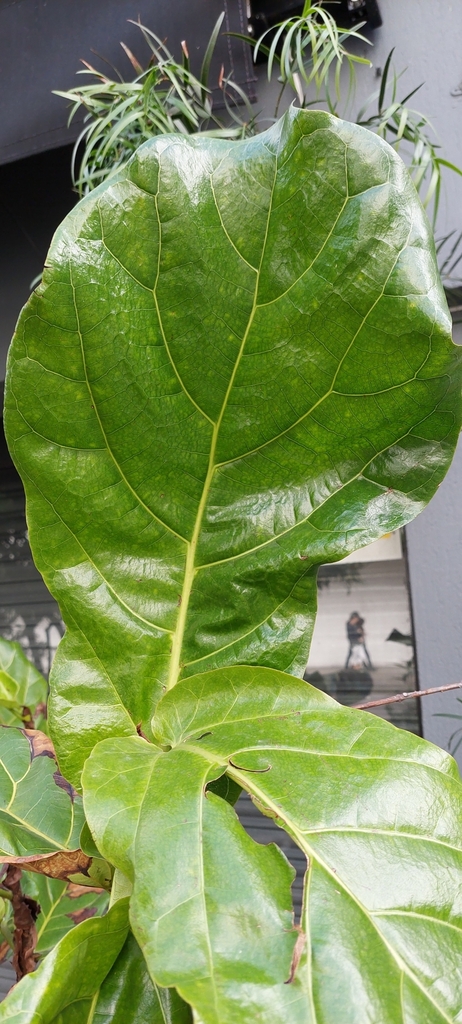
The Fiddle Leaf Fig is a popular houseplant known for its large, violin shaped leaves. It makes a bold statement in any room with enough space to accommodate its height. It thrives when it has a consistent routine and plenty of bright light.
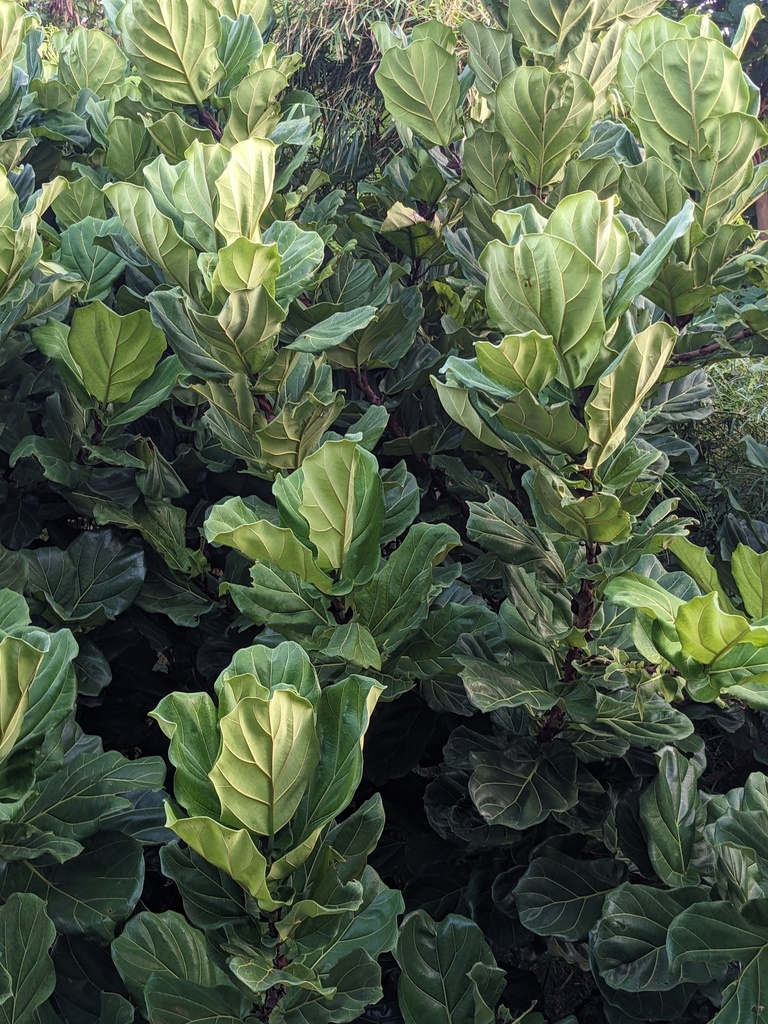
At a glance
- Care level
- Moderate
- Plant type
- Evergreen tree
- Light
- Bright indirect light
- Indoor light
- Bright indirect
- Water
- Every 7 to 14 days
- Mature size
- Up to 3 meters indoors
- Growth rate
- Medium
- Hardiness
- USDA 10 to 12
- Bloom time
- Rarely blooms indoors
Care
Keep your plant in a spot with plenty of bright, filtered light and rotate it occasionally for even growth. Wipe the leaves with a damp cloth to remove dust and help it breathe. Watch for brown spots on leaves, which often signal overwatering or root issues.
- Watering
- Water when the top few centimeters of soil feel dry to the touch.
- Feeding
- Feed with a balanced liquid fertilizer during the active growing season.
- Pruning
- Prune in early spring to encourage branching or control height.
- Repotting
- Repot when the plant becomes root bound or growth slows significantly.
- Soil
- Well draining peat based potting mix
- Soil pH
- 6.0 to 7.0
- Temperature
- 15 to 29°C
- Humidity
- 40 to 70%
- Drought tolerance
- Low
- Lifespan
- Perennial, can live for decades with proper care.
- Deer and rabbits
- Moderate
Signs it needs repotting
- Roots growing out of the drainage holes.
- Water running straight through the pot without soaking in.
- Stunted growth during the active season.
Safety
- People
- The milky sap contains latex that can cause skin irritation and is toxic if consumed.
- Pets
- This plant is toxic to cats and dogs if ingested.
- Children
- Keep this plant away from small children because the leaves are heavy and the sap is irritating if touched or ingested.
- Contact allergens
- The milky sap can cause contact dermatitis in sensitive individuals.
- Airborne allergens
- There is no significant respiratory allergen risk.
- Edibility
- The plant is not edible and can cause significant gastrointestinal distress if ingested.
How to identify it
- Large violin shaped dark green leaves
- Prominent light green leaf veins
- Waxy leaf texture
- Upright woody trunk
- Height
- 1.8 to 3m
- Spread
- 0.6 to 1.5m
- Leaves
- dark green, evergreen
- Flowers
- greenish white, 2 to 4cm
- Fruit
- green, rarely produces fruit indoors
Problems to watch for
- EdemaCommon
- Leaf DropCommon
- Spider MitesCommon
- Fungus GnatsUncommon
- MealybugsUncommon
- Root RotUncommon
- Scale InsectsUncommon
- Leaf ScorchRare
Check your fiddle leaf fig from a photo
Pocket Botanist looks at a photo of your plant and tells you what's wrong and what to try first.
Growing it
- Propagation
- cuttings, air layering
- When to plant
- spring, summer
- Overwintering
- Keep the plant away from cold drafts and heating vents during winter. Reduce watering slightly as growth slows down.
- In containers
- It grows well in containers, provided the pot has excellent drainage and is at least 30 cm in diameter.
Stem Cuttings
- 1. Take a 15 cm cutting with at least two leaves.
- 2. Place the cutting in a jar of clean water.
- 3. Change the water weekly until roots appear.
- 4. Pot into well draining soil once roots are 5 cm long.
Group plants with similar water needs to make maintenance easier.
Grows well with
- Snake Plant — They share similar light and water requirements.
- Peace Lily — It adds a nice textural contrast beneath the large leaves.
Similar species
- Rubber Plant — It is a related species with similar care needs but different leaf shapes.
Science
- Family
- Moraceae
- Genus
- Ficus
- Order
- Rosales
- Class
- Magnoliopsida
- Native range
- Western Africa
- Conservation
- The species is considered vulnerable in its native habitat due to deforestation.
It begins life as an epiphyte in the canopy before sending roots down to the forest floor.
- Value to wildlife
- provides habitat in native range
- Pollinators
- wasps
- Uses
- indoor ornamental, architectural focal point
Through the year
Ecological indicators
- Soil reaction
- 6/9
- Light
- 7/9
- Salinity
- 2/9
- Temperature
- 8/9
- Moisture
- 5/9
- Nutrients
- 6/9
Taxonomy resolved against GBIF.
Questions people ask
- Why are my leaves turning yellow?
- This is often a sign of overwatering or poor drainage.
- How often should I water it?
- Water when the top 5 cm of soil feels dry to the touch.
Where the name comes from
The specific epithet lyrata refers to the lyre or violin shape of the leaves.
Good to know
- It is commonly called the fiddle leaf fig because of its unique leaf shape.
- These plants thrive in bright, indirect light.
- They are native to the lowland tropical rainforests of West Africa.
Also in
Keep your fiddle leaf fig growing
This page is a general guide. Save your plant in Pocket Botanist and you get care reminders timed for this plant, plus a care history that shows what worked.
This guide was generated with AI and checked against GBIF taxonomy. It is general information, not horticultural or veterinary advice. Read about how we build these guides.