 Pocket Botanist

Check these first
- Inspect the undersides of the leaves for fuzzy growth.
- Check if the soil is staying soggy for too long.
- Look for signs of poor airflow around the plant.
Likely causes
Downy mildew
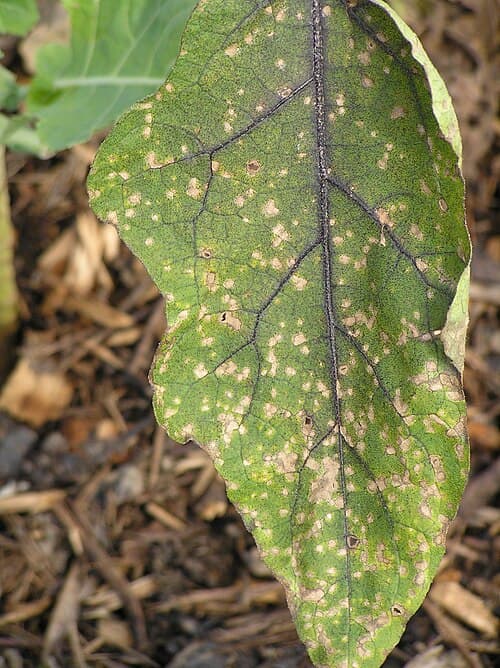
Most likelyHow to tell: You will see yellow patches on the leaves that eventually turn brown or necrotic. This happens most often when the air is humid and the foliage stays wet.
What to do: Remove the affected leaves immediately to stop the spread. Improve air circulation around the plant by spacing them further apart and avoid overhead watering.
Fungal leaf spot
Most likelyHow to tell: These appear as small, dark, or circular spots scattered across the foliage. They thrive in damp, stagnant conditions.
What to do: Prune away the damaged leaves to reduce the fungal load. Keep the soil surface clean of debris and ensure the plant gets full, direct sun to dry out quickly.
Find out what's wrong with your western wallflower
The list above covers the usual causes. Pocket Botanist looks at a photo of your actual plant and tells you the likely cause, how serious it is, and what to try first. Identification and a health check are free.



Scan with your phone's camera to get the app
Or go to pocketbotanist.app/get on your phone
When to worry
Worry if the spots are spreading rapidly across the entire plant. A few small spots on older leaves are usually not a major threat.
Stopping it coming back
Water only at the base of the plant to keep the leaves dry. Ensure your wallflower is in a spot with plenty of direct sunlight and good wind movement.
Western wallflower: spots? Check yours with a photo
Every plant is a little different. Take a photo of your western wallflower and Pocket Botanist tells you which cause is most likely, how serious it is, and what to try first. A few checks a day are free. Save the plant and you get care reminders timed for it.
Scan with your phone's camera to get the app
Or go to pocketbotanist.app/get on your phone
Get the app · Or check it from a photo now, free
Questions people ask
- Can I save leaves with spots?
- It is usually best to remove them. Once a leaf is heavily spotted, it cannot recover and may spread the fungus to healthy parts of the plant.
- Will these spots kill my plant?
- If left untreated in humid conditions, yes. However, if you catch it early and improve the environment, the plant will likely bounce back.
Guides to these causes
More problems with Western wallflower
- Why are my Western wallflower leaves turning yellow?
- Why are there bugs on my Western wallflower?
- Why is my Western wallflower looking leggy?
- Why is my Western wallflower not blooming?
- Why are my Western wallflower's leaf tips turning brown?
- Why is my Western wallflower drooping?
- Why is my Western wallflower losing its leaves?
- How to tell if my Western wallflower has root rot?
- Why are my Western wallflower leaves curling?
Back to the Western wallflower guide
This article was generated with AI on from the plant’s care profile and is general information, not horticultural advice. Read about how we build these guides.