 Pocket Botanist
Plant guide
Water horsetail.
Equisetum fluviatile
Pronounced ek-wi-SEE-tum floo-vee-ah-TEE-lay
Also known as Water Horsetail



Scan with your phone's camera to get the app
Or go to pocketbotanist.app/get on your phone
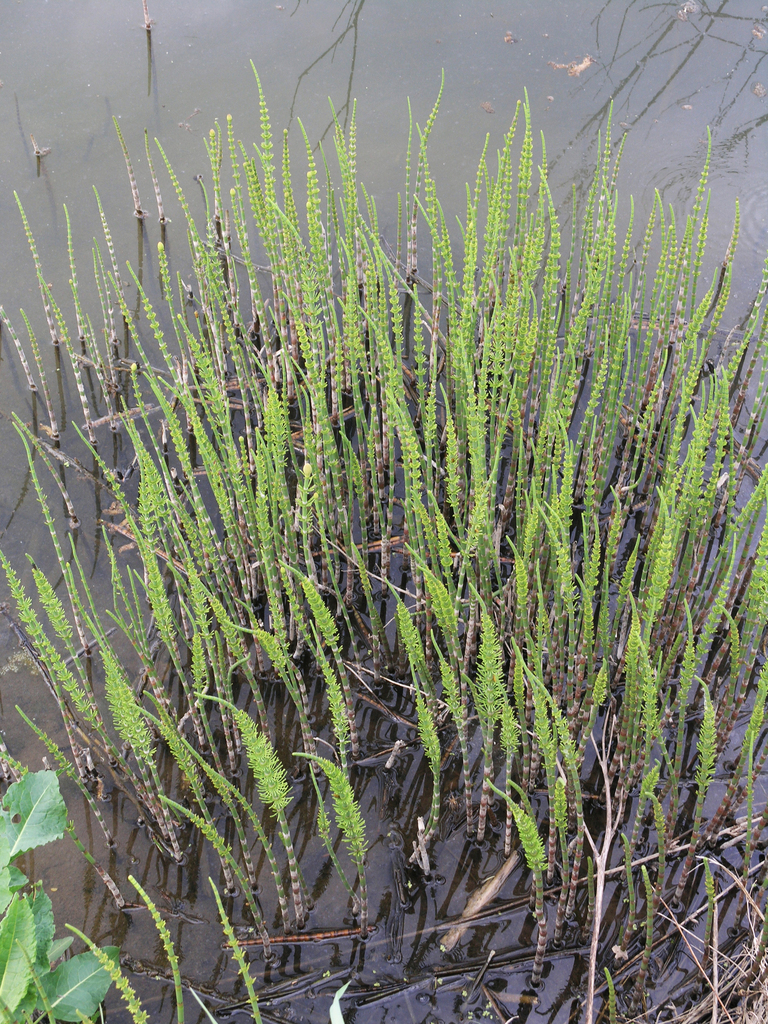
Water horsetail is a fascinating, primitive plant that thrives in shallow water or very wet soil. It features hollow, jointed stems that look like miniature bamboo stalks. You will love how it adds a unique, architectural touch to pond edges or bog gardens.
At a glance
- Care level
- Easy
- Plant type
- Perennial aquatic
- Light
- Full sun to partial shade
- Indoor light
- Bright indirect
- Water
- Every day
- Mature size
- 3 feet
- Growth rate
- Fast
- Hardiness
- USDA 3 to 9
- Bloom time
- Does not flower. Spore cones appear in early summer.
Care
Keep the base of the plant submerged in water or consistently saturated. Watch for invasive spread as it grows via underground rhizomes. Trim back dead stems in late autumn to keep your planting area tidy.
- Watering
- The soil must remain constantly saturated or submerged in water.
- Feeding
- Apply a balanced aquatic plant fertilizer during the active growing season.
- Pruning
- Cut back dead or damaged stems once a year in late autumn.
- Repotting
- Divide the rhizomes every year or two to prevent the container from becoming overcrowded.
- Soil
- Wet, boggy, or aquatic soil
- Soil pH
- 6.0 to 7.5
- Temperature
- -35 to 30°C
- Humidity
- 60 to 100%
- Drought tolerance
- Low
- Lifespan
- Perennial, indefinite with proper care.
- Deer and rabbits
- High
Signs it needs repotting
- Roots growing out of the drainage holes.
- Plant growth slows significantly.
- The container becomes crowded with rhizomes.
Safety
- People
- It is considered mildly toxic due to thiaminase and high silica content.
- Pets
- This plant is considered toxic to horses and potentially other animals if ingested in large quantities.
- Children
- The sharp, hollow stems can be a physical hazard to small children if handled carelessly.
- Contact allergens
- The rough, silica-rich stems can cause minor skin abrasions if handled roughly.
- Airborne allergens
- Spore production can trigger mild respiratory irritation in sensitive individuals.
- Edibility
- This plant contains silica and alkaloids that can be toxic if ingested in quantity.
How to identify it
- Hollow, jointed, bright green stems
- Stems lack prominent side branches
- Small, blackish teeth at stem nodes
- Spore bearing cones at stem tips
- Height
- 0.3 to 1m
- Spread
- 0.3 to 2m
- Leaves
- green, deciduous
- Flowers
- 0cm
Problems to watch for
- Invasiveness · The aggressive rhizomes can quickly overtake small ponds or containers if not contained.
Check your water horsetail from a photo
Pocket Botanist looks at a photo of your plant and tells you what's wrong and what to try first.
Scan with your phone's camera to get the app
Or go to pocketbotanist.app/get on your phone
Growing it
- Propagation
- division, rhizome cuttings
- When to plant
- spring, summer
- Overwintering
- The stems will die back in winter. Simply trim the dead stalks to the water line once they turn brown.
- In containers
- It is best grown in a container at least 30 cm wide to manage its aggressive spread.
Rhizome Division
- 1. Carefully remove the plant from its container.
- 2. Use a sharp knife to cut the rhizome mat into smaller sections.
- 3. Replant the sections into new containers with heavy soil.
Keep this plant in a separate container from other aquatic plants to prevent it from outcompeting them.
Grows well with
- Pickerelweed · It shares similar moisture requirements and provides a nice textural contrast.
- Yellow Flag Iris · They both thrive in shallow water margins.
Similar species
- Common Horsetail · It is a related species that prefers slightly drier soil conditions.
Science
- Family
- Equisetaceae
- Genus
- Equisetum
- Order
- Equisetales
- Class
- Polypodiopsida
- Native range
- Circumboreal regions across the Northern Hemisphere.
- Conservation
- It is widespread and not currently of conservation concern.
It thrives in shallow water and wetlands, using its hollow stems to transport oxygen to its roots in anaerobic mud.
- Value to wildlife
- provides cover for aquatic life, nesting material for waterfowl
- Uses
- water garden accent, erosion control, natural filtration
Through the year
Ecological indicators
- Salinity
- 1/9
- Soil reaction
- 5/9
- Light
- 7/9
- Temperature
- 4/9
- Moisture
- 9/9
- Nutrients
- 5/9
Taxonomy resolved against GBIF.
Questions people ask
- Can I grow this in a regular garden bed?
- It requires consistently wet soil or standing water to thrive.
- How do I stop it from spreading?
- Always plant it in a sturdy, submerged container to prevent the rhizomes from escaping.
Where the name comes from
The name Equisetum comes from the Latin words for horse and bristle, while fluviatile refers to its river-dwelling nature.
Good to know
- It is often called water horsetail because of its preference for shallow water.
- The stems are hollow and segmented, making them easy to pull apart.
- It was historically used as a scouring rush for cleaning pots due to its abrasive silica content.
Also in
Keep your water horsetail growing
This page is a general guide. Save your plant in Pocket Botanist and you get care reminders timed for this plant, plus a care history that shows what worked.
Scan with your phone's camera to get the app
Or go to pocketbotanist.app/get on your phone
This guide was generated with AI on and checked against GBIF taxonomy. It is general information, not horticultural or veterinary advice. Read about how we build these guides.