 Pocket Botanist
Plant guide
Lucky Bamboo.
Dracaena sanderiana
Pronounced drah-SEE-nah san-der-ee-AH-nah


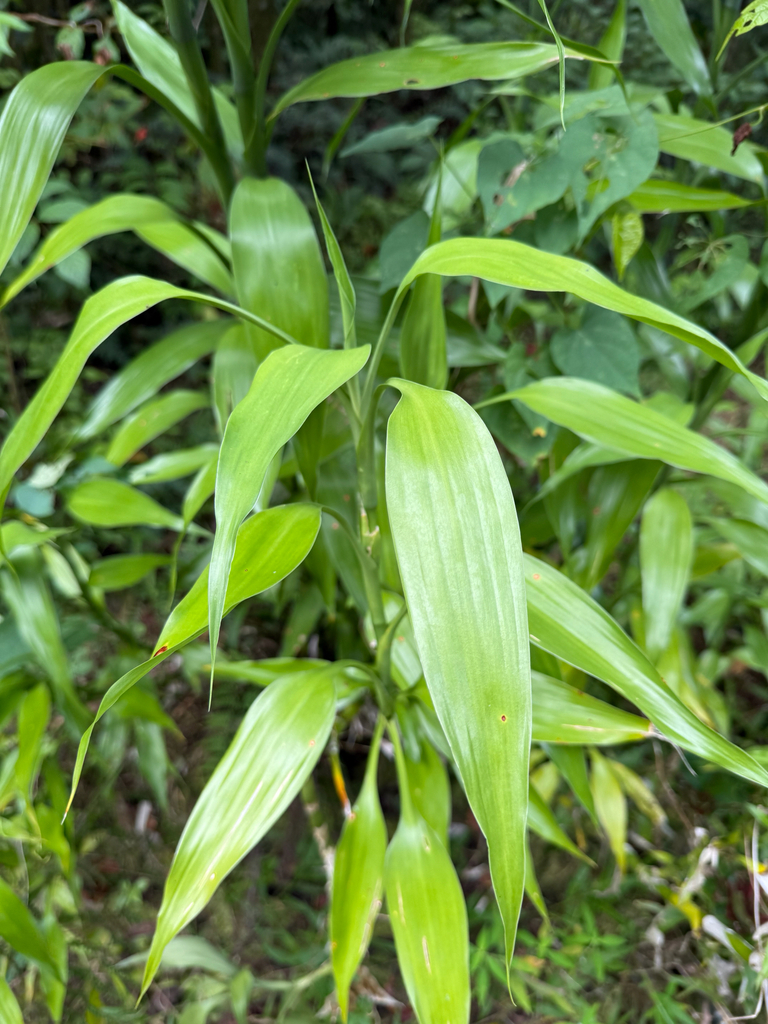
Lucky bamboo is a popular houseplant often grown in water or soil. It is known for its resilience and ability to thrive in various indoor conditions. Many people keep it for its symbolic association with good fortune.
At a glance
- Care level
- Easy
- Plant type
- Tropical perennial
- Light
- Bright indirect light is best.
- Indoor light
- Medium light
- Water
- Every 7 to 14 days
- Mature size
- 3 feet
- Growth rate
- Medium
- Hardiness
- USDA 10 to 12
- Bloom time
- Rarely blooms indoors
Care
Keep your plant in bright, indirect light to prevent leaf yellowing. If growing in water, change it every few weeks to keep it fresh and clear. Watch for brown leaf tips, which often signal low humidity or mineral buildup in tap water.
- Watering
- Keep the roots submerged in water or the soil consistently moist but not soggy.
- Feeding
- Use a very weak liquid fertilizer during the growing season.
- Pruning
- Trim back yellowing leaves or overgrown stems to maintain the desired shape.
- Repotting
- Refresh the soil or clean the container when the roots become crowded.
- Soil
- Well draining potting mix or water
- Soil pH
- 6.0 to 6.5
- Temperature
- 15 to 27°C
- Humidity
- 40 to 60%
- Drought tolerance
- Low
- Lifespan
- Perennial, typically 5 to 10 years
- Deer and rabbits
- Moderate
Signs it needs repotting
- Roots circling the bottom of the container
- Stunted growth
- Water draining too quickly
Safety
- People
- The plant contains saponins which can cause irritation if ingested.
- Pets
- This plant is toxic to cats and dogs if ingested.
- Children
- Keep this plant out of reach of small children as the leaves can be a choking hazard and ingestion is harmful.
- Contact allergens
- The sap may cause mild skin irritation in sensitive individuals.
- Airborne allergens
- There are no notable respiratory allergens associated with this plant.
- Edibility
- This plant is not for consumption and can cause digestive distress if ingested.
How to identify it
- segmented green bamboo like stems
- narrow lance shaped leaves
- often grown in decorative water containers
- can be trained into spirals
- Height
- 0.3 to 1m
- Spread
- 0.15 to 0.4m
- Leaves
- green, white, evergreen
- Flowers
- white, 0cm
Problems to watch for
- Spider MitesCommon
- Tip BurnCommon
- MealybugsUncommon
- Root RotUncommon
By symptom
Check your lucky bamboo from a photo
Pocket Botanist looks at a photo of your plant and tells you what's wrong and what to try first.
Growing it
- Propagation
- cuttings
- When to plant
- spring, summer
- Overwintering
- Keep the plant away from cold drafts and heating vents during winter. Maintain consistent indoor temperatures.
- In containers
- It is excellent for containers and often grown in glass vases with water and pebbles.
Stem Cuttings
- 1. Cut a healthy stem section with at least one node.
- 2. Place the cutting in a container of clean water.
- 3. Change the water weekly to keep it fresh.
- 4. Wait for roots to develop before potting if desired.
Group plants with similar moisture needs to create a small humid microclimate.
Grows well with
- Peace Lily — They share similar light and humidity requirements.
- Pothos — Both plants thrive in similar indoor environments.
Similar species
- Corn Plant — It is a larger relative with similar care needs.
- Dragon Tree — It shares the same genus and general growth habit.
Science
- Family
- Asparagaceae
- Genus
- Dracaena
- Order
- Asparagales
- Class
- Liliopsida
- Native range
- Central Africa
- Conservation
- This species is not currently threatened in the wild.
It grows in the understory of tropical rainforests where it receives filtered light.
- Uses
- indoor decor, hydroponic display, feng shui accent
Through the year
Ecological indicators
- Soil reaction
- 6/9
- Light
- 3/9
- Moisture
- 6/9
- Salinity
- 2/9
- Nutrients
- 4/9
- Temperature
- 8/9
Taxonomy resolved against GBIF.
Questions people ask
- Why are the leaves turning yellow?
- This is often due to direct sunlight or too much fertilizer.
- Can I grow it in soil?
- Yes, it thrives in well draining potting mix.
Where the name comes from
It was named after the German gardener Henry Frederick Conrad Sander, while the genus name comes from the Greek word drakaina meaning female dragon.
Good to know
- It is often grown in water rather than soil.
- It is a popular gift for good fortune.
- It tolerates low light conditions well.
- The stems can be trained into spirals.
Also in
Keep your lucky bamboo growing
This page is a general guide. Save your plant in Pocket Botanist and you get care reminders timed for this plant, plus a care history that shows what worked.
This guide was generated with AI and checked against GBIF taxonomy. It is general information, not horticultural or veterinary advice. Read about how we build these guides.