 Pocket Botanist
Plant guide
Japanese Cedar.
Cryptomeria japonica
Pronounced krip-toh-MEER-ee-uh juh-PON-ih-kuh
Also known as Japanese Cedar, Japanese Red-Cedar, Japanese cryptomeria, Japanese redwood, Japanese-cedar



Scan with your phone's camera to get the app
Or go to pocketbotanist.app/get on your phone
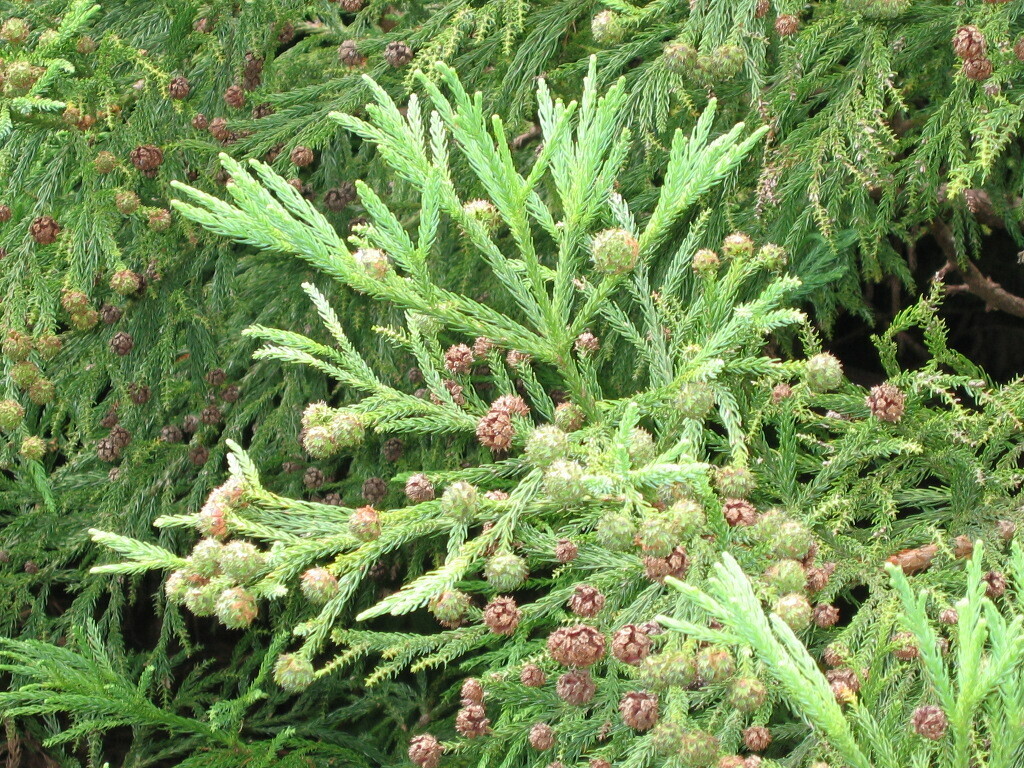
The Japanese Cedar is a majestic evergreen conifer known for its tall, conical shape and reddish, peeling bark. It thrives in cool, moist environments and makes a stunning focal point in large landscapes. You will love how its soft, needle like foliage adds texture to your garden year round.

At a glance
- Care level
- Moderate
- Plant type
- Conifer
- Light
- Full sun to partial shade
- Indoor light
- Bright indirect
- Water
- Every 5 to 10 days
- Mature size
- 15 to 30 meters
- Growth rate
- Fast
- Hardiness
- USDA 5 to 9
- Bloom time
- Late winter to early spring
Care
Keep the soil consistently moist and protect the tree from harsh, drying winds. Watch for browning needle tips, which often signal that the plant needs more humidity or consistent moisture. Ensure the site has deep, fertile soil to support its rapid growth.
- Watering
- Keep the soil evenly moist but never waterlogged.
- Feeding
- Apply a balanced, slow release fertilizer in early spring.
- Pruning
- Prune only to remove dead or damaged branches in late winter.
- Repotting
- Repot young specimens when they become root bound.
- Soil
- Deep, moist, well drained, acidic soil
- Soil pH
- Acidic
- Temperature
- -23 to 35°C
- Humidity
- 50 to 80%
- Drought tolerance
- Low
- Lifespan
- Long lived, often exceeding 100 years.
- Deer and rabbits
- Moderate
Signs it needs repotting
- Roots growing out of the drainage holes.
- Water running straight through the pot without soaking in.
Safety
- People
- The foliage can cause mild skin irritation in sensitive individuals upon contact.
- Pets
- This plant is generally considered non toxic to cats and dogs.
- Children
- The stiff needles can be sharp, so keep this tree away from areas where small children play.
- Contact allergens
- Handling the foliage may cause contact dermatitis in some people.
- Airborne allergens
- The pollen is a common seasonal allergen in its native range during late winter.
- Edibility
- The foliage and cones are not considered edible and may cause digestive upset.
How to identify it
- Tall conical growth habit
- Reddish brown peeling bark
- Awl shaped evergreen needles
- Small woody spherical cones
- Height
- 15 to 30m
- Spread
- 6 to 10m
- Leaves
- dark green, bronze, evergreen
- Flowers
- yellow, brown, 0.5 to 1cm
- Fruit
- brown, Autumn
Problems to watch for
- Needle BlightCommon
- Spider MitesCommon
- Leaf ScorchUncommon
- PhytophthoraUncommon
- Root RotUncommon
- CankerRare
Check your japanese cedar from a photo
Pocket Botanist looks at a photo of your plant and tells you what's wrong and what to try first.
Scan with your phone's camera to get the app
Or go to pocketbotanist.app/get on your phone
Growing it
- Propagation
- cuttings, seed
- When to plant
- spring, autumn
- Overwintering
- Ensure the soil remains moist but not waterlogged before the ground freezes. A layer of mulch helps protect the shallow root system from extreme temperature fluctuations.
- In containers
- It is not suitable for long term container growth due to its massive size.
Cuttings
- Take 10 cm cuttings from new growth in late summer.
- Remove the lower needles and dip the base in rooting hormone.
- Plant in a well draining mix and keep in a humid, bright spot until rooted.
Plant these in a woodland setting with other acid loving shrubs to create a cohesive, low maintenance landscape.
Grows well with
- Japanese Maple · They share similar soil requirements and provide a beautiful contrast in leaf texture.
- Hostas · These shade loving perennials thrive in the dappled light beneath the canopy.
- Azaleas · Both plants prefer acidic soil conditions and look natural together in a woodland garden.
Similar species
- Giant Sequoia · It shares a similar evergreen, coniferous habit but grows significantly larger.
- Coast Redwood · It has a comparable appearance and preference for humid, temperate climates.
Science
- Family
- Cupressaceae
- Genus
- Cryptomeria
- Order
- Pinales
- Class
- Pinopsida
- Native range
- Japan and parts of China.
- Conservation
- It is not currently threatened, but wild populations are managed for sustainable timber production.
It thrives in deep, fertile, acidic soils in regions with high rainfall and cool, humid summers.
- Value to wildlife
- provides winter shelter for birds, seeds provide food for small birds
- Pollinators
- beetles
- Uses
- ornamental specimen, privacy screen, windbreak, timber production
Through the year
Ecological indicators
- Salinity
- 2/9
- Soil reaction
- 4/9
- Light
- 6/9
- Temperature
- 5/9
- Moisture
- 6/9
- Nutrients
- 5/9
Taxonomy resolved against GBIF.
Questions people ask
- Does it need a lot of water?
- It prefers consistently moist, well drained soil and does not handle prolonged drought well.
- Can I keep it small?
- While you can prune it, it is a naturally large tree and is best suited for spaces where it can reach its full size.
Where the name comes from
The name Cryptomeria comes from the Greek kryptos meaning hidden and meros meaning part, while japonica indicates its origin.
Good to know
- Cryptomeria can live for over 600 years in the right conditions.
- The name comes from Greek words meaning hidden parts, referring to the flower structure.
- It is often planted in temple grounds in Japan for its majestic appearance.
Keep your japanese cedar growing
This page is a general guide. Save your plant in Pocket Botanist and you get care reminders timed for this plant, plus a care history that shows what worked.
Scan with your phone's camera to get the app
Or go to pocketbotanist.app/get on your phone
This guide was generated with AI on and checked against GBIF taxonomy. It is general information, not horticultural or veterinary advice. Read about how we build these guides.