 Pocket Botanist
Plant guide
Montbretia.
Crocosmia x crocosmiiflora
Pronounced kro-KOZ-mee-uh kro-koz-mee-FLOR-uh
Also known as Crocosmia x crocosmiiflora, Autumn-gold, Garden Montbretia, Montbretia, Montbretia, Crocosmia, Garden Montbretia


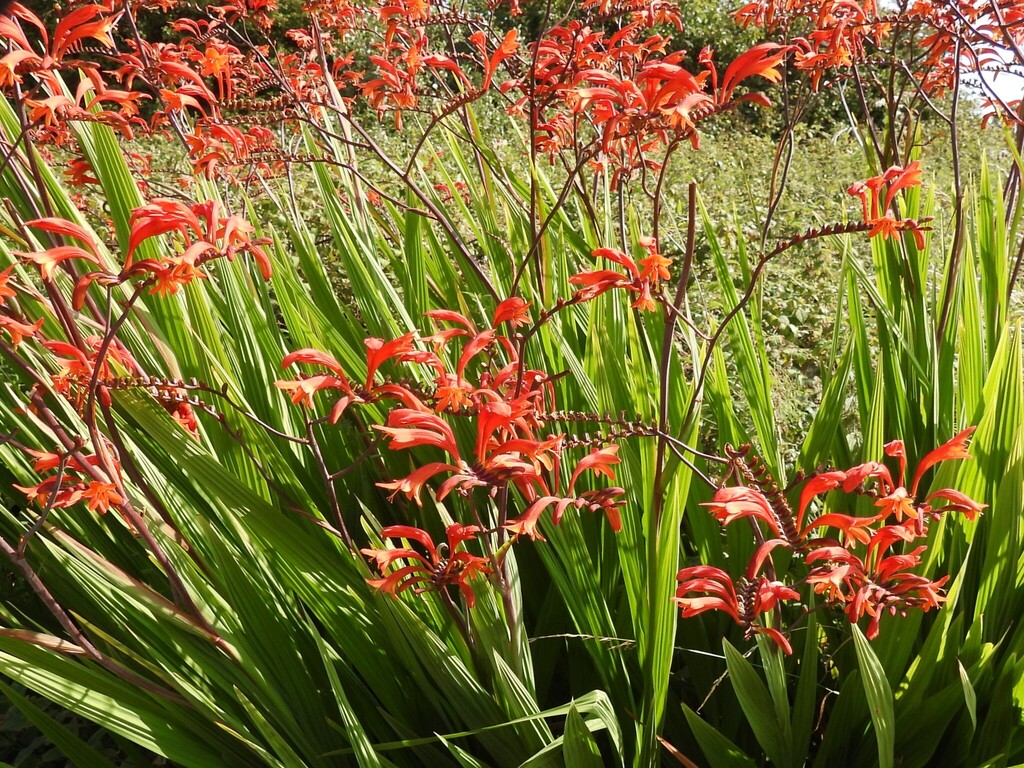
Montbretia is a lovely, clump forming perennial that brings vibrant color to the garden with its arching stems. It grows from underground corms and spreads steadily over time. You will find it is quite resilient once it gets settled in your soil.
At a glance
- Care level
- Easy
- Plant type
- Perennial bulb
- Light
- Full sun to partial shade
- Indoor light
- Bright indirect
- Water
- Every 7 to 14 days
- Mature size
- 90 cm height, 60 cm spread
- Growth rate
- Medium
- Hardiness
- USDA 6 to 9
- Bloom time
- Mid to late summer
Care
Plant your corms in well draining soil where they can get plenty of sun. Keep an eye out for aphids or spider mites during dry spells. Ensure the soil does not stay soggy in winter to prevent the corms from rotting.
- Watering
- Keep the soil consistently moist during the growing season but reduce watering once the foliage begins to die back.
- Feeding
- Apply a balanced liquid fertilizer every month during the active growing season.
- Pruning
- Cut back the dead foliage to the ground in late autumn or early winter after the leaves have turned brown.
- Repotting
- Divide the clumps every few years to maintain vigor and prevent overcrowding.
- Soil
- Well draining, fertile, loamy soil
- Soil pH
- Neutral to slightly acidic
- Temperature
- -10 to 35°C
- Humidity
- 40 to 70%
- Drought tolerance
- Moderate
- Lifespan
- Perennial, typically 5 to 10 years
- Deer and rabbits
- Moderate
Signs it needs repotting
- Roots growing out of the drainage holes.
- Water sitting on the surface for too long.
- The plant stops producing new flowers.
Safety
- People
- The plant is generally considered non-toxic, but ingestion is not recommended.
- Pets
- This plant is generally considered non toxic to cats and dogs.
- Children
- Keep bulbs away from small children as they can be a choking hazard if swallowed.
- Contact allergens
- The foliage can cause mild skin irritation in sensitive individuals.
- Airborne allergens
- There are no notable airborne allergen risks associated with this plant.
- Edibility
- This plant is not considered edible and ingestion may cause gastrointestinal distress.
How to identify it
- Arching stems with funnel shaped flowers
- Sword shaped, bright green leaves
- Clusters of orange or red blooms
- Grows from small underground corms
- Height
- 0.6 to 1m
- Spread
- 0.3 to 0.6m
- Leaves
- green, deciduous
- Flowers
- orange, red, 3 to 5cm
Problems to watch for
- Root RotCommon
- Spider MitesCommon
- AphidsUncommon
- Slugs and SnailsUncommon
By symptom
Check your montbretia from a photo
Pocket Botanist looks at a photo of your plant and tells you what's wrong and what to try first.
Growing it
- Propagation
- division, seed
- When to plant
- spring
- Overwintering
- Apply a thick layer of mulch over the roots in late autumn to protect them from deep freezes. In very cold climates, dig up the corms and store them in a cool, dry place.
- In containers
- It grows well in containers, provided the pot has excellent drainage and is at least 30 cm deep.
Division
- 1. Dig up the clump in early spring.
- 2. Gently pull the corms apart.
- 3. Replant the healthy corms at the same depth.
Plant in groups of 5 or more for the best visual impact in a perennial border.
Grows well with
- Daylily — They share similar light and moisture requirements.
- Purple Coneflower — The contrasting colors look beautiful together in a summer border.
Similar species
- Lucifer — A popular cultivar with more intense red flowers.
Science
- Family
- Iridaceae
- Genus
- Crocosmia
- Order
- Asparagales
- Class
- Liliopsida
- Native range
- Garden hybrid of South African species.
- Conservation
- It is considered an invasive species in some parts of the world, including New Zealand and parts of Australia.
It spreads through underground corms and can naturalize in moist, disturbed areas.
- Value to wildlife
- nectar source
- Pollinators
- bees, butterflies, hummingbirds
- Uses
- border plant, cut flower, pollinator garden
Through the year
Ecological indicators
- Salinity
- 2/9
- Light
- 7/9
- Temperature
- 6/9
- Moisture
- 5/9
- Nutrients
- 5/9
- Soil reaction
- 5/9
Taxonomy resolved against GBIF.
Questions people ask
- Do I need to dig up the corms in winter?
- In colder zones, it is best to lift and store them, but they are hardy in zones 6 and warmer.
- How often should I divide them?
- Divide the clumps every 3 to 4 years to keep them vigorous.
Where the name comes from
The name refers to the dried flowers smelling like saffron when soaked in water.
Good to know
- The name comes from the Greek words krokos for saffron and osme for smell.
- It is often called Montbretia in older gardening books.
- The flowers are excellent for attracting hummingbirds to the garden.
Keep your montbretia growing
This page is a general guide. Save your plant in Pocket Botanist and you get care reminders timed for this plant, plus a care history that shows what worked.
This guide was generated with AI and checked against GBIF taxonomy. It is general information, not horticultural or veterinary advice. Read about how we build these guides.