 Pocket Botanist
Guía de plantas
Montbretia.
Crocosmia x crocosmiiflora
Pronunciación kro-KOZ-mee-uh kro-koz-mee-FLOR-uh
También se conoce como Crocosmia x crocosmiiflora, Autumn-gold, Garden Montbretia, Montbretia, Montbretia, Crocosmia, Garden Montbretia


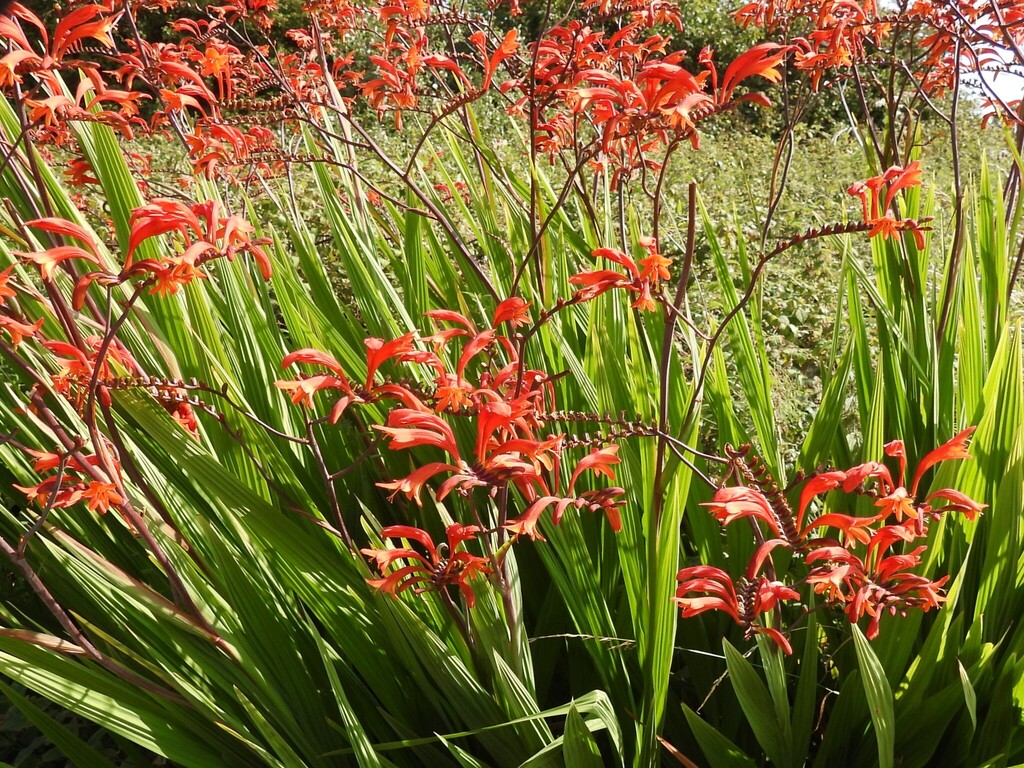
La Montbretia es una planta perenne encantadora que forma matas y aporta un color vibrante al jardín con sus tallos arqueados. Crece a partir de cormos subterráneos y se extiende de manera constante con el tiempo. Verás que es bastante resistente una vez que se asienta en tu suelo.
De un vistazo
- Nivel de cuidados
- Fácil
- Tipo de planta
- Planta perenne de bulbo
- Luz
- Pleno sol a sombra parcial
- Luz en interior
- Luz indirecta brillante
- Riego
- Cada 7 a 14 días
- Tamaño adulto
- 90 cm de altura, 60 cm de extensión
- Ritmo de crecimiento
- Medio
- Rusticidad
- USDA 6 a 9
- Floración
- Mediados a finales de verano
Cuidados
Planta los cormos en un suelo bien drenado donde reciban mucho sol. Presta atención a pulgones o ácaros araña durante las sequías. Asegúrate de que el suelo no permanezca empapado en invierno para evitar que los cormos se pudran.
- Riego
- Mantén la tierra constantemente húmeda durante la temporada de crecimiento, pero reduce el riego una vez que el follaje comience a marchitarse.
- Abonado
- Aplica un fertilizante líquido equilibrado cada mes durante la temporada de crecimiento activo.
- Poda
- Recorta el follaje muerto hasta el suelo a finales de otoño o principios de invierno, después de que las hojas se hayan vuelto marrones.
- Trasplante
- Divide las matas cada pocos años para mantener la vitalidad y evitar el hacinamiento.
- Suelo
- Suelo franco, fértil y bien drenado
- pH del suelo
- Neutro a ligeramente ácido
- Temperatura
- -10 a 35°C
- Humedad
- 40 a 70%
- Tolerancia a la sequía
- Moderada
- Longevidad
- Perenne, típicamente de 5 a 10 años
- Resistencia a ciervos y conejos
- Moderada
Señales de que necesita trasplante
- Las raíces crecen fuera de los agujeros de drenaje.
- El agua permanece en la superficie durante demasiado tiempo.
- La planta deja de producir flores nuevas.
Seguridad
- Personas
- La planta generalmente se considera no tóxica, pero no se recomienda su ingestión.
- Mascotas
- Esta planta generalmente se considera no tóxica para gatos y perros.
- Niños
- Mantén los bulbos alejados de los niños pequeños, ya que pueden ser un peligro de asfixia si se tragan.
- Alérgenos por contacto
- El follaje puede causar una leve irritación de la piel en personas sensibles.
- Alérgenos en el aire
- No hay riesgos notables de alérgenos en el aire asociados con esta planta.
- Comestibilidad
- Esta planta no se considera comestible y su ingestión puede causar malestar gastrointestinal.
Cómo identificarla
- Tallos arqueados con flores en forma de embudo
- Hojas en forma de espada de color verde brillante
- Racimos de flores de color naranja o rojo
- Crece a partir de pequeños cormos subterráneos
- Altura
- 0,6 a 1m
- Anchura
- 0,3 a 0,6m
- Hojas
- verde, caducifolio
- Flores
- naranja, rojo, 3 a 5cm
Problemas a vigilar
- Araña rojaComún
- Podredumbre radicularComún
- Babosas y caracolesPoco común
- PulgonesPoco común
- Ácaros araña — Pequeñas plagas que causan moteado en las hojas durante el clima caluroso y seco.
- Pudrición de raíz — Decaimiento fúngico causado por condiciones de suelo demasiado húmedo o mal drenado.
Por síntoma
Revisa tu montbretia con una foto
Pocket Botanist mira una foto de tu planta y te dice qué le pasa y qué probar primero.
Cómo cultivarla
- Propagación
- división, semilla
- Cuándo plantar
- primavera
- Cuidados en invierno
- Aplica una capa gruesa de mantillo sobre las raíces a finales de otoño para protegerlas de las heladas profundas. En climas muy fríos, desentierra los cormos y guárdalos en un lugar fresco y seco.
- En maceta
- Crece bien en contenedores, siempre que la maceta tenga un excelente drenaje y tenga al menos 30 cm de profundidad.
División
- 1. Desentierra el grupo a principios de primavera.
- 2. Separa suavemente los cormos.
- 3. Vuelve a plantar los cormos sanos a la misma profundidad.
Planta en grupos de 5 o más para obtener el mejor impacto visual en un borde perenne.
Buenas compañeras
- Lirio de día — Comparten requisitos similares de luz y humedad.
- Equinácea morada — Los colores contrastantes lucen hermosos juntos en un borde de verano.
Especies parecidas
- Crocosmia 'Lucifer' — Un cultivar popular con flores rojas más intensas.
Ciencia
- Familia
- Iridaceae
- Género
- Crocosmia
- Orden
- Asparagales
- Clase
- Liliopsida
- Distribución natural
- Híbrido de jardín de especies sudafricanas.
- Conservación
- Se considera una especie invasora en algunas partes del mundo, incluyendo Nueva Zelanda y partes de Australia.
Se propaga a través de cormos subterráneos y puede naturalizarse en áreas húmedas y alteradas.
- Valor para la fauna
- fuente de néctar
- Polinizadores
- abejas, mariposas, colibríes
- Usos
- planta de borde, flor cortada, jardín para polinizadores
A lo largo del año
Indicadores ecológicos
- Salinidad
- 2/9
- Luz
- 7/9
- Temperatura
- 6/9
- Humedad
- 5/9
- Nutrientes
- 5/9
- Reacción del suelo
- 5/9
Taxonomía cotejada con GBIF.
Lo que más preguntan
- ¿Necesito desenterrar los cormos en invierno?
- En zonas más frías, es mejor levantarlos y guardarlos, pero son resistentes en las zonas 6 y más cálidas.
- ¿Con qué frecuencia debo dividirlos?
- Divide los grupos cada 3 a 4 años para mantenerlos vigorosos.
De dónde viene el nombre
El nombre se refiere a las flores secas que huelen a azafrán cuando se remojan en agua.
Bueno saberlo
- El nombre proviene de las palabras griegas "krokos" para azafrán y "osme" para olor.
- A menudo se le llama Montbretia en libros de jardinería antiguos.
- Las flores son excelentes para atraer colibríes al jardín.
Que tu montbretia siga creciendo
Esta página es una guía general. Guarda tu planta en Pocket Botanist y tendrás recordatorios de cuidado pensados para esta planta, además de un historial de cuidados que muestra qué ha funcionado.
Esta guía se ha generado con IA y se ha cotejado con la taxonomía de GBIF. Es información general, no asesoramiento botánico ni veterinario. Descubre cómo elaboramos estas guías.