 Pocket Botanist
Plant guide
Coffee plant.
Coffea
Pronounced KOF-ee-uh
Also known as Coffee, Coffees



Scan with your phone's camera to get the app
Or go to pocketbotanist.app/get on your phone
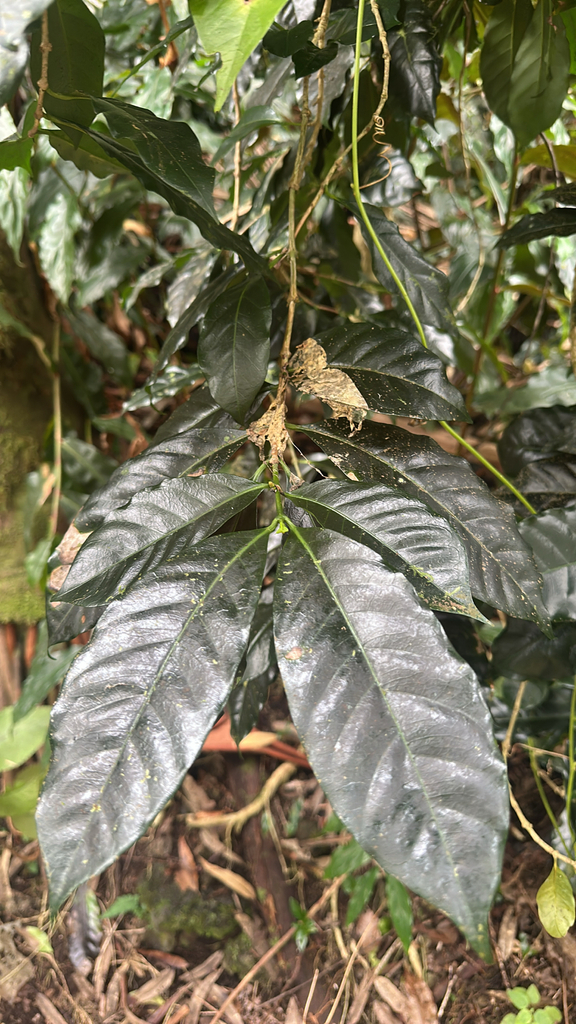
The coffee plant is a lovely evergreen shrub that brings a tropical feel to your home. It features glossy, dark green leaves and can produce fragrant white flowers followed by red berries. It is a rewarding plant if you can provide the right humidity and light.

At a glance
- Care level
- Moderate
- Plant type
- Evergreen shrub
- Light
- Bright indirect light is best, as direct sun can scorch the leaves.
- Indoor light
- Bright indirect
- Water
- Every 5 to 10 days
- Mature size
- 3 to 6 feet indoors
- Growth rate
- Medium
- Hardiness
- USDA 10 to 12
- Bloom time
- Late spring to early summer
Care
Keep the soil consistently moist but never soggy to prevent root rot. Watch for yellowing leaves, which often signal overwatering or a lack of humidity. It really appreciates a regular misting or a spot near a humidifier.
- Watering
- Water when the top inch of soil feels dry to the touch.
- Feeding
- Feed with a balanced liquid fertilizer during the active growing season.
- Pruning
- Trim back the tips to encourage a bushier shape and manage height.
- Repotting
- Move to a slightly larger pot once the roots begin to crowd the container.
- Soil
- Well draining, acidic potting mix
- Soil pH
- 6.0 to 6.5
- Temperature
- 15 to 25°C
- Humidity
- 60 to 90%
- Drought tolerance
- Low
- Lifespan
- Perennial, typically 20 to 50 years in ideal conditions.
- Fragrance
- Strong
- Deer and rabbits
- Moderate
Signs it needs repotting
- Roots growing out of the drainage holes
- Water running straight through the pot
- Stunted growth during the active season
Safety
- People
- The plant is generally safe, but excessive ingestion of raw berries or leaves can cause caffeine-related jitters.
- Pets
- The coffee plant is toxic to cats and dogs if ingested.
- Children
- Keep the small, hard berries away from young children as they pose a choking hazard.
- Contact allergens
- Some people may experience skin irritation from handling the raw, unwashed leaves.
- Airborne allergens
- The pollen can cause mild respiratory irritation in sensitive individuals during the bloom.
- Edibility
- The raw seeds contain caffeine and should be processed by roasting before consumption.
How to identify it
- Glossy, dark green, wavy leaves
- Opposite leaf arrangement on stems
- Fragrant, star shaped white flowers
- Bright red, berry like fruits
- Height
- 1.5 to 4.5m
- Spread
- 1 to 2.5m
- Leaves
- dark green, evergreen
- Flowers
- white, 1 to 2cm
- Fruit
- red, purple, Autumn to winter
Problems to watch for
- Scale insects · Small sap-sucking insects that appear as brown bumps on stems and leaves.
- Leaf spot · Fungal infections causing brown or black spots on foliage due to high humidity.
Check your coffee plant from a photo
Pocket Botanist looks at a photo of your plant and tells you what's wrong and what to try first.
Scan with your phone's camera to get the app
Or go to pocketbotanist.app/get on your phone
Growing it
- Propagation
- seed, cuttings
- When to plant
- spring, summer
- Overwintering
- Bring the plant indoors before temperatures drop below 15 degrees Celsius. Place it in a bright spot away from cold drafts and heaters.
- In containers
- It grows very well in containers, provided you use a well-draining potting mix and a pot at least 30 cm wide.
Seed
- 1. Use fresh, unroasted coffee seeds.
- 2. Soak seeds in water for 24 hours.
- 3. Plant in moist, well-draining soil.
- 4. Keep warm and humid until germination.
Group plants with similar humidity needs together to create a microclimate that keeps them all happy.
Grows well with
- Ferns · They enjoy the same high humidity and filtered light conditions.
- Peace Lily · They thrive in the same warm, humid environment as coffee plants.
Similar species
- Gardenia · They share similar glossy foliage and fragrant white flowers.
Science
- Family
- Rubiaceae
- Genus
- Coffea
- Order
- Gentianales
- Class
- Magnoliopsida
- Native range
- Tropical Africa, Madagascar and nearby Indian Ocean islands, and tropical Asia to northern Australia. Coffea arabica, the best known species, comes mainly from Ethiopia and South Sudan.
- Conservation
- Wild populations of Coffea arabica are considered endangered due to climate change and habitat loss.
It grows naturally as an understory shrub in tropical forests, thriving in dappled shade.
- Value to wildlife
- nectar source
- Pollinators
- bees, butterflies
- Uses
- ornamental houseplant, beverage production
Through the year
Ecological indicators
- Salinity
- 2/9
- Soil reaction
- 5/9
- Light
- 6/9
- Temperature
- 8/9
- Moisture
- 7/9
- Nutrients
- 6/9
Taxonomy resolved against GBIF.
Questions people ask
- Can I grow coffee indoors?
- Yes, it makes a lovely houseplant if you provide bright, indirect light and high humidity.
- Will my indoor plant produce beans?
- It is possible, but it requires a mature plant and very specific environmental conditions.
Where the name comes from
The genus name Coffea is derived from the Kaffa region in Ethiopia, where the plant was first discovered.
Good to know
- Coffee is the second most traded commodity in the world.
- The plant belongs to the Rubiaceae family, which also includes gardenias.
- It takes about 3 to 4 years for a new coffee plant to start producing fruit.
Also in
Keep your coffee plant growing
This page is a general guide. Save your plant in Pocket Botanist and you get care reminders timed for this plant, plus a care history that shows what worked.
Scan with your phone's camera to get the app
Or go to pocketbotanist.app/get on your phone
This guide was generated with AI on and checked against GBIF taxonomy. It is general information, not horticultural or veterinary advice. Read about how we build these guides.