 Pocket Botanist
Plant guide
Cup and Saucer Vine.
Cobaea scandens
Pronounced ko-BEE-uh SKAN-denz
Also known as Cathedral Bells, Cup-and-saucer vine, Mexican-ivy, cup-and-saucer-vine, monastery-bells



Scan with your phone's camera to get the app
Or go to pocketbotanist.app/get on your phone
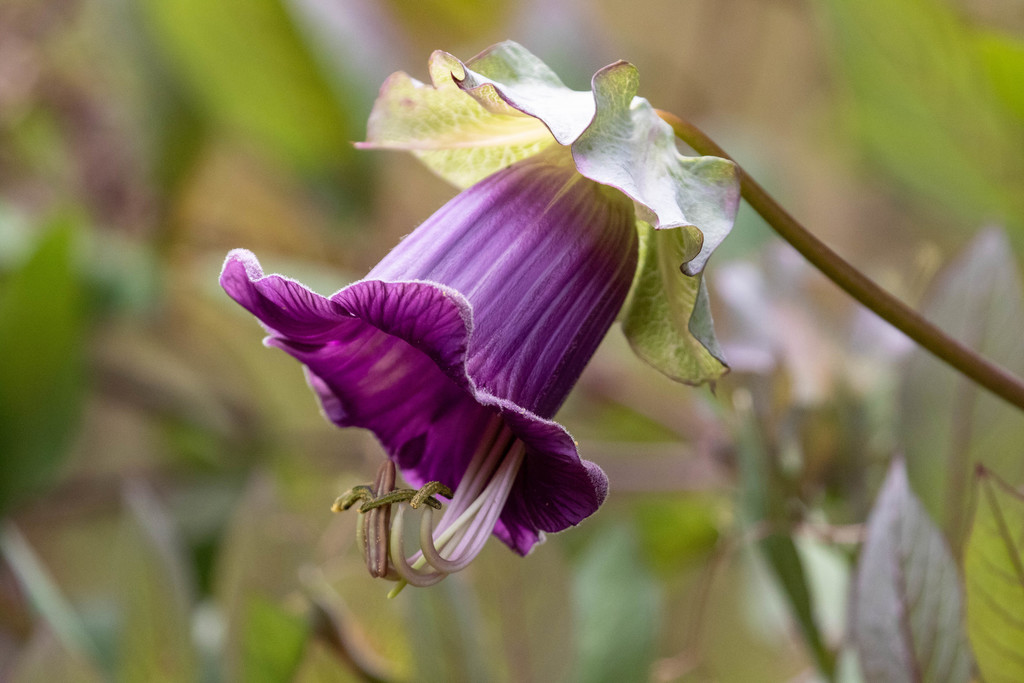
The cup and saucer vine is a fast growing climber that produces unique, bell shaped flowers. It is a fantastic choice for covering trellises or fences quickly during the summer months. You will love how the blooms start pale green and deepen into a rich purple as they mature.

At a glance
- Care level
- Moderate
- Plant type
- Perennial vine grown as an annual
- Light
- Full sun to partial shade
- Indoor light
- Bright indirect
- Water
- Every 3 to 7 days
- Mature size
- 10 to 20 feet
- Growth rate
- Fast
- Hardiness
- USDA 9 to 11
- Bloom time
- Mid summer to late autumn
Care
Provide a sturdy support structure for the vines to climb as they grow quite vigorously. Keep an eye out for aphids on the new growth and ensure the soil stays consistently moist but not soggy. If the leaves start to yellow, it might be a sign of overwatering or poor drainage.
- Watering
- Keep the soil evenly moist throughout the growing season.
- Feeding
- Feed with a balanced liquid fertilizer every two weeks during the summer.
- Pruning
- Trim back long stems to encourage bushier growth and more flowers.
- Repotting
- Since it is often grown as an annual, you likely will not need to repot it.
- Soil
- Well draining, fertile soil
- Soil pH
- 6.0 to 7.5
- Temperature
- 5 to 30°C
- Humidity
- 40 to 70%
Safety
- People
- There is no significant toxicity reported for humans, but it is best to avoid ingestion.
- Pets
- This plant is generally considered non toxic to cats and dogs.
- Children
- The long, curling tendrils can be a minor entanglement hazard for very small children.
- Contact allergens
- The foliage can cause mild skin irritation in sensitive individuals.
- Airborne allergens
- There are no notable airborne allergens associated with this plant.
- Edibility
- This plant is not considered edible and should be kept away from food preparation areas.
How to identify it
- Large bell shaped purple flowers
- Compound leaves with branched tendrils
- Fast growing vining habit
- Saucer like calyx at flower base
- Height
- 3 to 6m
- Spread
- 1 to 2m
- Leaves
- green, evergreen
- Flowers
- purple, greenish-white, 5 to 7cm
- Fruit
- green, late autumn
Problems to watch for
- AphidsCommon
- Spider MitesCommon
- Botrytis BlightUncommon
- Root RotUncommon
- WhiteflyUncommon
- Leaf ScorchRare
Check your cup and saucer vine from a photo
Pocket Botanist looks at a photo of your plant and tells you what's wrong and what to try first.
Scan with your phone's camera to get the app
Or go to pocketbotanist.app/get on your phone
Growing it
- Propagation
- seed, cuttings
- When to plant
- spring
Provide a strong, wide mesh trellis to support the vigorous growth of this vine.
Grows well with
- Morning Glory · They share similar climbing needs and create a lush vertical display.
- Sweet Pea · Both plants appreciate a sturdy trellis and provide a long season of color.
Similar species
- Cup and Saucer Vine · This is a white flowered variety of the same species.
Science
- Family
- Polemoniaceae
- Genus
- Cobaea
- Order
- Ericales
- Class
- Magnoliopsida
- Native range
- Tropical regions of Mexico and Central America.
- Conservation
- It is not of conservation concern and is widely cultivated.
It climbs over other vegetation in its native habitat to reach sunlight in the forest canopy.
- Value to wildlife
- nectar source
- Pollinators
- bees, butterflies, moths
- Uses
- vertical screening, trellis climber, container specimen
Through the year
Ecological indicators
- Salinity
- 2/9
- Soil reaction
- 6/9
- Light
- 7/9
- Temperature
- 7/9
- Moisture
- 6/9
- Nutrients
- 6/9
Taxonomy resolved against GBIF.
Questions people ask
- Is it a perennial?
- It is a tender perennial usually grown as an annual in cooler climates.
- Can I grow it in a pot?
- Yes, it thrives in large containers with a sturdy support structure.
Where the name comes from
The genus honors the Spanish Jesuit priest Bernabé Cobo, while the species name scandens refers to its climbing habit.
Good to know
- It is commonly called the cathedral bells vine due to the shape of its blossoms.
- The plant uses specialized tendrils to grip surfaces and climb rapidly.
- It is a fast grower that can reach its full height in a single season.
- The flowers are pollinated by bats in their native tropical habitat.
Keep your cup and saucer vine growing
This page is a general guide. Save your plant in Pocket Botanist and you get care reminders timed for this plant, plus a care history that shows what worked.
Scan with your phone's camera to get the app
Or go to pocketbotanist.app/get on your phone
This guide was generated with AI on and checked against GBIF taxonomy. It is general information, not horticultural or veterinary advice. Read about how we build these guides.