 Pocket Botanist
Plant guide
Opposite-leaved golden-saxifrage.
Chrysosplenium oppositifolium
Pronounced kris-oh-SPLEEN-ee-um op-po-zi-tee-fo-lee-um
Also known as Opposite-Leaved Golden-Saxifrage, opposite-leaved golden saxifrage



Scan with your phone's camera to get the app
Or go to pocketbotanist.app/get on your phone
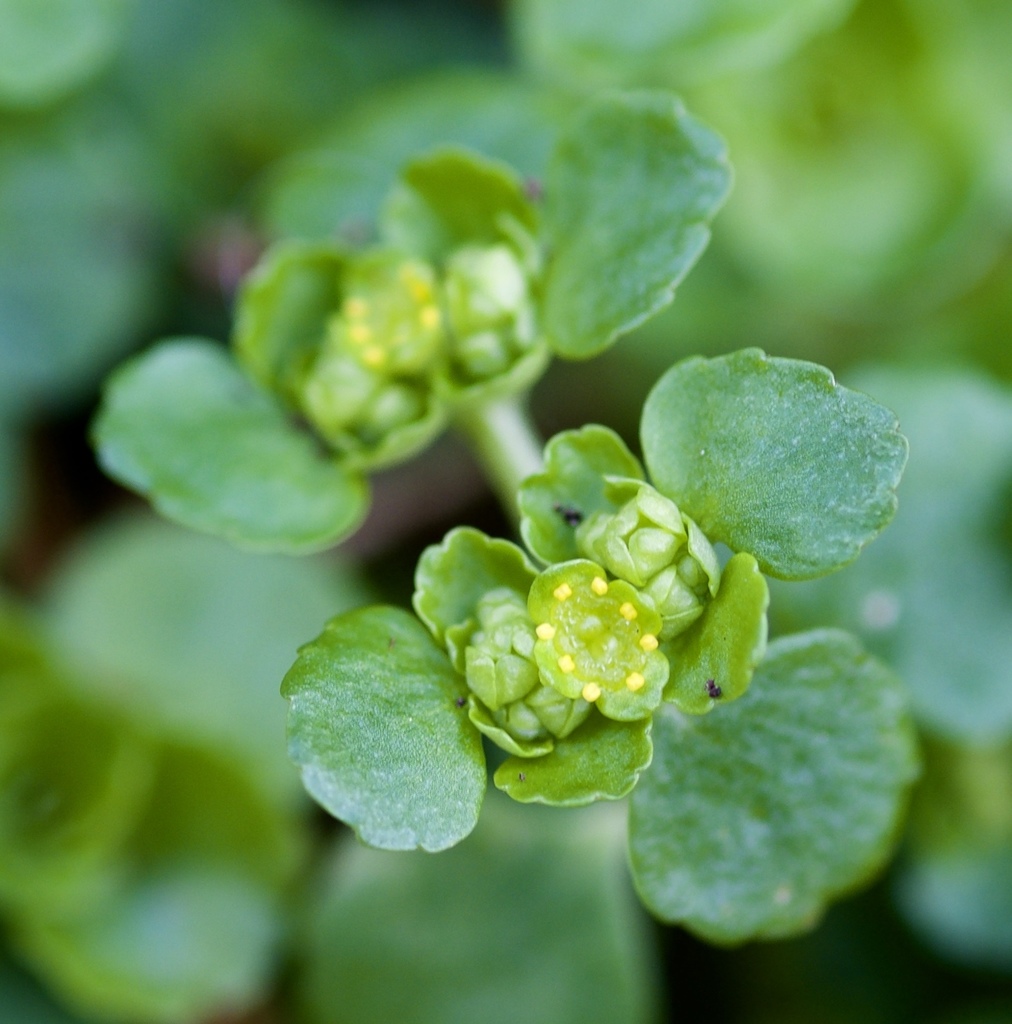
This charming little plant loves damp, shaded spots near streams or in wet woodlands. It forms low mats of bright green foliage that light up the forest floor. You will find it is a perfect choice for a bog garden or a moist, shady corner.
At a glance
- Care level
- Moderate
- Plant type
- Perennial herb
- Light
- Partial shade to full shade
- Indoor light
- Medium light
- Water
- Every 2 to 4 days
- Mature size
- 4 to 6 inches tall
- Growth rate
- Medium
- Hardiness
- USDA 4 to 8
- Bloom time
- Early to mid spring
Care
Keep the soil consistently moist, as this plant hates drying out. Watch for wilting, which is a clear sign it needs more water or higher humidity. It thrives best when protected from harsh, direct sun.
- Watering
- Keep the soil damp at all times, but avoid letting it sit in stagnant water.
- Feeding
- Apply a balanced, diluted liquid fertilizer during the active growing season.
- Pruning
- Trim back dead or straggly stems after flowering to encourage fresh growth.
- Repotting
- Refresh the soil and move to a slightly larger container when the plant becomes root-bound.
- Soil
- Moist, humus-rich, well-draining soil
- Soil pH
- Neutral to slightly acidic
- Temperature
- -20 to 25°C
- Humidity
- 60 to 90%
- Drought tolerance
- Low
- Lifespan
- Perennial, typically 3 to 5 years.
- Deer and rabbits
- Moderate
Signs it needs repotting
- Roots growing out of the drainage holes.
- Stunted growth during the active season.
Safety
- People
- There is no significant toxicity reported for this plant.
- Children
- The plant is low-growing and poses no specific risk to children, though it should not be ingested.
- Edibility
- This plant is not considered edible and should be avoided.
How to identify it
- Low growing mat forming habit
- Opposite, rounded, scalloped leaves
- Tiny, yellow-green, star shaped flowers
- Fleshy, succulent like stems
- Height
- 0.05 to 0.15m
- Spread
- 0.15 to 0.3m
- Leaves
- bright green, semi-evergreen
- Flowers
- yellow-green, 0.5 to 1cm
Problems to watch for
- Slugs and snails · These mollusks can chew holes in the succulent leaves during wet weather.
Check your opposite-leaved golden-saxifrage from a photo
Pocket Botanist looks at a photo of your plant and tells you what's wrong and what to try first.
Scan with your phone's camera to get the app
Or go to pocketbotanist.app/get on your phone
Growing it
- Propagation
- division, seed
- When to plant
- spring, autumn
- Overwintering
- The plant remains semi-evergreen in mild climates. In colder regions, it will die back to the ground and should be mulched lightly to protect the roots.
- In containers
- It grows well in shallow, wide containers that can be kept consistently moist.
Division
- 1. Carefully lift a clump of the plant in early spring.
- 2. Gently tease the stems apart to ensure each section has roots.
- 3. Replant immediately into moist, shaded soil.
Plant this in the cool, damp margins of a pond or stream where other plants might struggle with the constant moisture.
Grows well with
Similar species
- Alternate-leaved golden saxifrage · It is a close relative with similar growth habits but alternate leaf arrangement.
Science
- Family
- Saxifragaceae
- Genus
- Chrysosplenium
- Order
- Saxifragales
- Class
- Magnoliopsida
- Native range
- Western and central Europe.
- Conservation
- It is common in its native range and not currently of conservation concern.
It acts as a pioneer species in wet, shaded woodland habitats by forming dense mats that hold soil in place.
- Value to wildlife
- early season nectar source
- Pollinators
- bees, beetles
- Uses
- groundcover for damp areas, woodland garden filler
Through the year
Ecological indicators
- Salinity
- 1/9
- Soil reaction
- 6/9
- Light
- 2/9
- Temperature
- 3/9
- Moisture
- 8/9
- Nutrients
- 5/9
Taxonomy resolved against GBIF.
Questions people ask
- Does it need full sun?
- No, it prefers partial to full shade to keep its foliage from scorching.
- Can it grow in standing water?
- It loves very moist soil but prefers not to be fully submerged.
Where the name comes from
The name Chrysosplenium comes from the Greek words for gold and spleen, reflecting its yellow flowers and historical use in herbal medicine. The specific epithet oppositifolium refers to its opposite leaf arrangement.
Good to know
- It is commonly known as opposite-leaved golden saxifrage.
- The flowers lack true petals and rely on bright yellow sepals to attract pollinators.
- It spreads slowly by creeping stems that root at the nodes.
Also in
Keep your opposite-leaved golden-saxifrage growing
This page is a general guide. Save your plant in Pocket Botanist and you get care reminders timed for this plant, plus a care history that shows what worked.
Scan with your phone's camera to get the app
Or go to pocketbotanist.app/get on your phone
This guide was generated with AI on and checked against GBIF taxonomy. It is general information, not horticultural or veterinary advice. Read about how we build these guides.