 Pocket Botanist
Plant guide
Lambs quarters.
Chenopodium album
Pronounced ken-oh-POH-dee-um AL-bum
Also known as Common Lambsquarters, Fat Hen, Fat-hen, Giant Fat-hen



Scan with your phone's camera to get the app
Or go to pocketbotanist.app/get on your phone
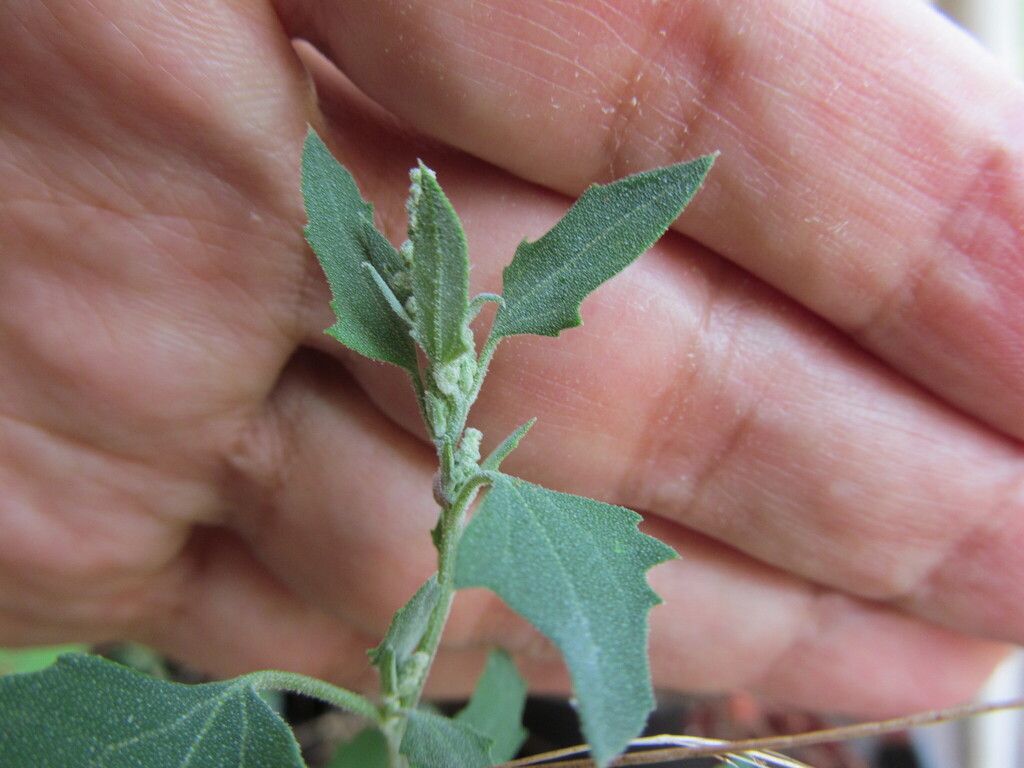
Lambs quarters is a hardy annual plant often found growing in disturbed soils and gardens. It is widely recognized for its edible leaves that taste similar to spinach. You will find it grows quite quickly during the warmer months.

At a glance
- Care level
- Easy
- Plant type
- Annual herb
- Light
- Full sun
- Indoor light
- Direct sun
- Water
- Every 3 to 7 days
- Mature size
- 3 to 6 feet
- Growth rate
- Fast
- Hardiness
- USDA 2 to 11
- Bloom time
- Mid summer to early autumn
Care
This plant thrives in full sun and prefers well drained soil. Keep an eye out for aphids or leaf miners that might enjoy the foliage. It is a prolific self seeder so pull it before it flowers if you want to control its spread.
- Watering
- Keep the soil consistently moist but not waterlogged for the best leaf production.
- Feeding
- A balanced organic fertilizer helps if the soil is poor.
- Pruning
- Pinch back the growing tips to encourage a bushier habit and more leaves.
- Repotting
- This is an annual plant that completes its life cycle in one season so it does not require repotting.
- Soil
- Loamy or sandy soil
- Soil pH
- 6.0 to 8.0
- Temperature
- -10 to 35°C
- Humidity
- 30 to 70%
- Drought tolerance
- Moderate
- Lifespan
- Annual, typically 1 year
- Deer and rabbits
- Moderate
Safety
- People
- The plant is generally safe to eat, but high concentrations of oxalates can be problematic for individuals prone to kidney stones.
- Children
- There are no specific safety concerns for children, though it is always wise to supervise foraging activities.
- Contact allergens
- Some individuals may experience mild skin irritation from handling the foliage.
- Airborne allergens
- The pollen can be a significant allergen for those sensitive to Chenopodium species.
- Edibility
- Leaves contain oxalic acid, so they should be cooked and consumed in moderation to avoid potential health issues.
How to identify it
- Diamond shaped leaves with wavy margins
- White mealy coating on leaf undersides
- Erect stems with reddish streaks
- Small green flowers in dense clusters
- Height
- 0.3 to 1.5m
- Spread
- 0.15 to 0.6m
- Leaves
- green, grayish-green, deciduous
- Flowers
- green, 0.1 to 0.3cm
- Fruit
- black, Autumn
Problems to watch for
- Downy mildew · Appears as yellow patches on leaves during periods of high humidity.
Check your lambs quarters from a photo
Pocket Botanist looks at a photo of your plant and tells you what's wrong and what to try first.
Scan with your phone's camera to get the app
Or go to pocketbotanist.app/get on your phone
Growing it
- Propagation
- seed
- When to plant
- spring
- Overwintering
- The plant dies back completely after the first hard frost, leaving only seeds behind to germinate in the spring.
- In containers
- It grows well in large containers, but it is rarely grown this way due to its status as a common weed.
Direct Sowing
- 1. Sprinkle seeds on disturbed soil in early spring.
- 2. Lightly cover with soil.
- 3. Keep moist until germination.
Let it grow in the corners of your garden to provide food for birds and beneficial insects.
Grows well with
Similar species
- Quinoa · They share the same genus and similar leaf structure.
Science
- Family
- Amaranthaceae
- Genus
- Chenopodium
- Order
- Caryophyllales
- Class
- Magnoliopsida
- Native range
- Europe and Asia, though it is now naturalized globally.
- Conservation
- It is a widespread and common weed, so there are no conservation concerns.
It is a pioneer species that quickly colonizes disturbed ground and nutrient rich soils.
- Value to wildlife
- larval host plant, seed source for birds
- Pollinators
- bees, beetles
- Uses
- culinary greens, forage crop, wildlife food
Through the year
Ecological indicators
- Salinity
- 2/9
- Soil reaction
- 6/9
- Light
- 8/9
- Temperature
- 5/9
- Moisture
- 5/9
- Nutrients
- 8/9
Taxonomy resolved against GBIF.
Questions people ask
- Is it a weed?
- Yes, it is often considered a garden weed, but it is also a valuable edible plant.
- How do I eat it?
- You can steam or sauté the young leaves just like spinach.
Where the name comes from
The name Chenopodium comes from the Greek words for goose and foot, referring to the leaf shape, while album means white.
Good to know
- It is a close relative of quinoa.
- The leaves are covered in a fine, mealy white dust.
- A single plant can produce tens of thousands of seeds.
- It thrives in disturbed soils and garden beds.
Keep your lambs quarters growing
This page is a general guide. Save your plant in Pocket Botanist and you get care reminders timed for this plant, plus a care history that shows what worked.
Scan with your phone's camera to get the app
Or go to pocketbotanist.app/get on your phone
This guide was generated with AI on and checked against GBIF taxonomy. It is general information, not horticultural or veterinary advice. Read about how we build these guides.