 Pocket Botanist
Guide botanique
Common mouse-ear chickweed.
Cerastium fontanum
Prononciation seh-RAS-tee-um fon-TAN-um
Aussi appelée Common Chickweed, Common Mouse-Ear, Common Mouse-ear Chickweed, Mouse-ear Chickweed


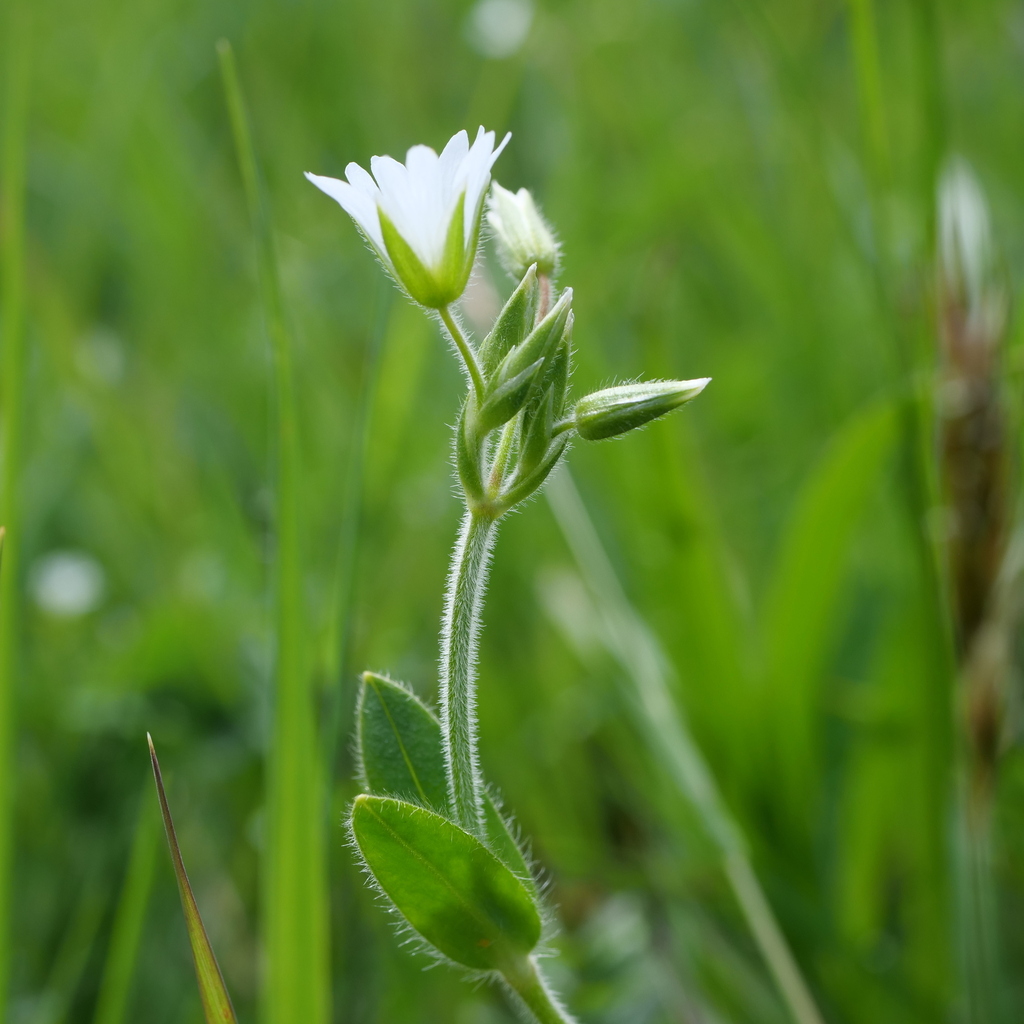
This low-growing plant is a common sight in lawns and meadows across many regions. It spreads quickly through creeping stems that root at the nodes. You will find it is quite resilient and adaptable to various soil conditions.
En un coup d'œil
- Niveau d'entretien
- Facile
- Type de plante
- Herbaceous perennial
- Lumière
- Full sun to partial shade
- Lumière en intérieur
- Soleil direct
- Arrosage
- Tous les 3 à 7 jours
- Taille adulte
- 6 to 12 inches
- Croissance
- Rapide
- Rusticité
- USDA 3 à 9
- Floraison
- Late spring to summer
Entretien
Keep the soil consistently moist to support its rapid spread. Watch for yellowing leaves which may indicate poor drainage or too much shade. It handles regular foot traffic quite well.
- Arrosage
- Water when the top inch of soil feels dry to the touch.
- Engrais
- Apply a balanced liquid fertilizer sparingly during the active growing season.
- Taille
- Trim back stems to encourage a denser habit and prevent unwanted spreading.
- Rempotage
- Repot only if the plant becomes root-bound or needs fresh soil nutrients.
- Sol
- Well-draining loamy soil
- pH du sol
- 6.0 to 7.5
- Température
- -20 à 30°C
- Humidité
- 40 à 80%
Sécurité
- Humains
- The plant is generally considered non-toxic but is not meant for human consumption.
- Enfants
- Keep away from young children as the small seeds and foliage are not food.
- Allergènes de contact
- Handling the stems may cause mild skin irritation in sensitive individuals.
- Allergènes aéroportés
- The pollen can trigger mild seasonal allergies in some people.
- Comestibilité
- This plant is not considered edible and may cause stomach upset if ingested.
Comment l'identifier
- Small opposite oval leaves
- Soft hairs on foliage
- Five white notched petals
- Low creeping growth habit
- Hauteur
- 0,05 à 0,45m
- Envergure
- 0,1 à 0,6m
- Feuilles
- green, semi-evergreen
- Fleurs
- white, 0,5 à 1cm
- Fruits
- brown, late summer
Problèmes courants
- Aphids — Small insects that cluster on stems and suck plant sap.
- Powdery mildew — A fungal growth that appears as white dust on leaves during humid weather.
La cultiver
- Multiplication
- seed, division
- Quand planter
- spring, autumn
This plant is best managed as a component of wild meadows rather than formal garden beds.
Bonnes associations
- Trèfle blanc — They often grow together in low-maintenance turf areas.
- Pissenlit — They share similar habitat preferences in disturbed meadows.
Espèces similaires
- Cerastium tomentosum — It is a popular garden relative with more showy, silvery foliage.
Science
- Famille
- Caryophyllaceae
- Genre
- Cerastium
- Ordre
- Caryophyllales
- Classe
- Magnoliopsida
- Région d'origine
- Europe and parts of Asia.
- Préservation
- This species is widespread and common, so it is not of conservation concern.
It survives by spreading rapidly through seeds and rooting stems in disturbed, moist soils.
- Intérêt pour la faune
- nectar source
- Pollinisateurs
- abeilles, papillons
- Utilisations
- ground cover, weed control, pollinator habitat
Au fil des saisons
Repères écologiques
- Salinité
- 2/9
- Réaction du sol
- 5/9
- Lumière
- 6/9
- Température
- 5/9
- Humidité
- 5/9
- Nutriments
- 5/9
Taxonomie vérifiée avec le GBIF.
Ce qu'on demande souvent
- Is this plant a weed?
- Yes, it is widely considered a common lawn weed.
- How do I control it?
- Regular mowing and maintaining a thick, healthy lawn will help suppress it.
D'où vient le nom
The genus name Cerastium comes from the Greek word for horn, referring to the shape of the seed capsules. The specific epithet fontanum means of a fountain or spring.
Bon à savoir
- It is a very successful colonizer of lawns and pastures.
- The name mouse-ear refers to the shape and hairiness of the leaves.
- It can reproduce both by seed and by rooting at the nodes.
Ta plante a mauvaise mine ?
Cette page est un guide général. Pocket Botanist diagnostique les problèmes directement à partir d'une photo de ta plante, adapte l'arrosage à sa luminosité et te prévient quand il faut t'en occuper.
Ce guide a été généré par IA et vérifié avec la taxonomie du GBIF. Il s'agit d'informations générales, et non de conseils horticoles ou vétérinaires. Découvre comment nous concevons ces guides.