 Pocket Botanist
Pflanzenratgeber
Common mouse-ear chickweed.
Cerastium fontanum
Aussprache seh-RAS-tee-um fon-TAN-um
Auch bekannt als Common Chickweed, Common Mouse-Ear, Common Mouse-ear Chickweed, Mouse-ear Chickweed


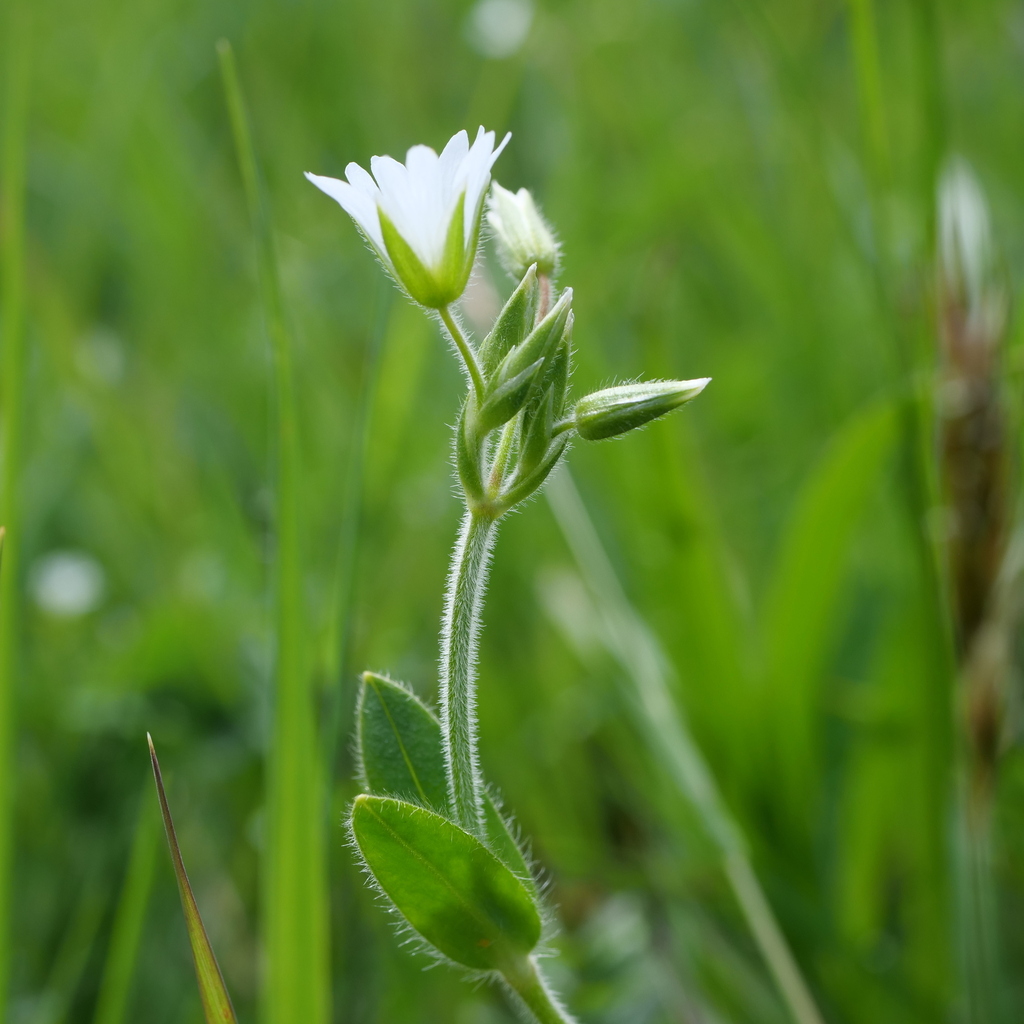
This low-growing plant is a common sight in lawns and meadows across many regions. It spreads quickly through creeping stems that root at the nodes. You will find it is quite resilient and adaptable to various soil conditions.
Auf einen Blick
- Pflegestufe
- Einfach
- Pflanzenart
- Herbaceous perennial
- Licht
- Full sun to partial shade
- Licht im Innenraum
- Direkte Sonne
- Gießen
- Alle 3 bis 7 Tage
- Endgröße
- 6 to 12 inches
- Wachstum
- Schnell
- Winterhärte
- USDA 3 bis 9
- Blütezeit
- Late spring to summer
Pflege
Keep the soil consistently moist to support its rapid spread. Watch for yellowing leaves which may indicate poor drainage or too much shade. It handles regular foot traffic quite well.
- Gießen
- Water when the top inch of soil feels dry to the touch.
- Düngen
- Apply a balanced liquid fertilizer sparingly during the active growing season.
- Schneiden
- Trim back stems to encourage a denser habit and prevent unwanted spreading.
- Umtopfen
- Repot only if the plant becomes root-bound or needs fresh soil nutrients.
- Boden
- Well-draining loamy soil
- Boden-pH
- 6.0 to 7.5
- Temperatur
- -20 bis 30°C
- Luftfeuchtigkeit
- 40 bis 80%
Sicherheit
- Menschen
- The plant is generally considered non-toxic but is not meant for human consumption.
- Kinder
- Keep away from young children as the small seeds and foliage are not food.
- Kontaktallergene
- Handling the stems may cause mild skin irritation in sensitive individuals.
- Allergene in der Luft
- The pollen can trigger mild seasonal allergies in some people.
- Essbarkeit
- This plant is not considered edible and may cause stomach upset if ingested.
So erkennst du die Pflanze
- Small opposite oval leaves
- Soft hairs on foliage
- Five white notched petals
- Low creeping growth habit
- Höhe
- 0,05 bis 0,45m
- Breite
- 0,1 bis 0,6m
- Blätter
- green, semi-evergreen
- Blüten
- white, 0,5 bis 1cm
- Früchte
- brown, late summer
Häufige Probleme
- Aphids — Small insects that cluster on stems and suck plant sap.
- Powdery mildew — A fungal growth that appears as white dust on leaves during humid weather.
Standort und Pflege
- Vermehrung
- seed, division
- Pflanzzeit
- spring, autumn
This plant is best managed as a component of wild meadows rather than formal garden beds.
Gute Pflanzpartner
Ähnliche Arten
- Cerastium tomentosum — It is a popular garden relative with more showy, silvery foliage.
Botanisches
- Familie
- Caryophyllaceae
- Gattung
- Cerastium
- Ordnung
- Caryophyllales
- Klasse
- Magnoliopsida
- Ursprüngliche Heimat
- Europe and parts of Asia.
- Artenschutz
- This species is widespread and common, so it is not of conservation concern.
It survives by spreading rapidly through seeds and rooting stems in disturbed, moist soils.
- Nutzen für Wildtiere
- nectar source
- Bestäuber
- Bienen, Schmetterlinge
- Verwendung
- ground cover, weed control, pollinator habitat
Im Jahresverlauf
Ökologische Zeigerwerte
- Salzgehalt
- 2/9
- Bodenreaktion
- 5/9
- Licht
- 6/9
- Temperatur
- 5/9
- Feuchtigkeit
- 5/9
- Nährstoffe
- 5/9
Taxonomie abgeglichen mit GBIF.
Häufige Fragen
- Is this plant a weed?
- Yes, it is widely considered a common lawn weed.
- How do I control it?
- Regular mowing and maintaining a thick, healthy lawn will help suppress it.
Woher der Name kommt
The genus name Cerastium comes from the Greek word for horn, referring to the shape of the seed capsules. The specific epithet fontanum means of a fountain or spring.
Gut zu wissen
- It is a very successful colonizer of lawns and pastures.
- The name mouse-ear refers to the shape and hairiness of the leaves.
- It can reproduce both by seed and by rooting at the nodes.
Probleme mit Common mouse-ear chickweed?
Diese Seite bietet allgemeine Infos. Pocket Botanist erkennt Probleme anhand eines Fotos deiner echten Pflanze, passt das Gießen an dein Licht und deinen Standort an und erinnert dich an die Pflege.
Dieser Ratgeber wurde mit KI erstellt und mit der GBIF-Taxonomie abgeglichen. Er dient zur allgemeinen Information und ersetzt keine gärtnerische oder tierärztliche Beratung. Hier erfährst du, wie wir diese Ratgeber erstellen.