 Pocket Botanist
Plant guide
Buttonbush.
Cephalanthus occidentalis
Pronounced sef-uh-LAN-thus ok-si-den-TAY-lis
Also known as Button-willow, Buttonbush, Common Buttonbush, Honey-bells, eastern buttonbush



Scan with your phone's camera to get the app
Or go to pocketbotanist.app/get on your phone
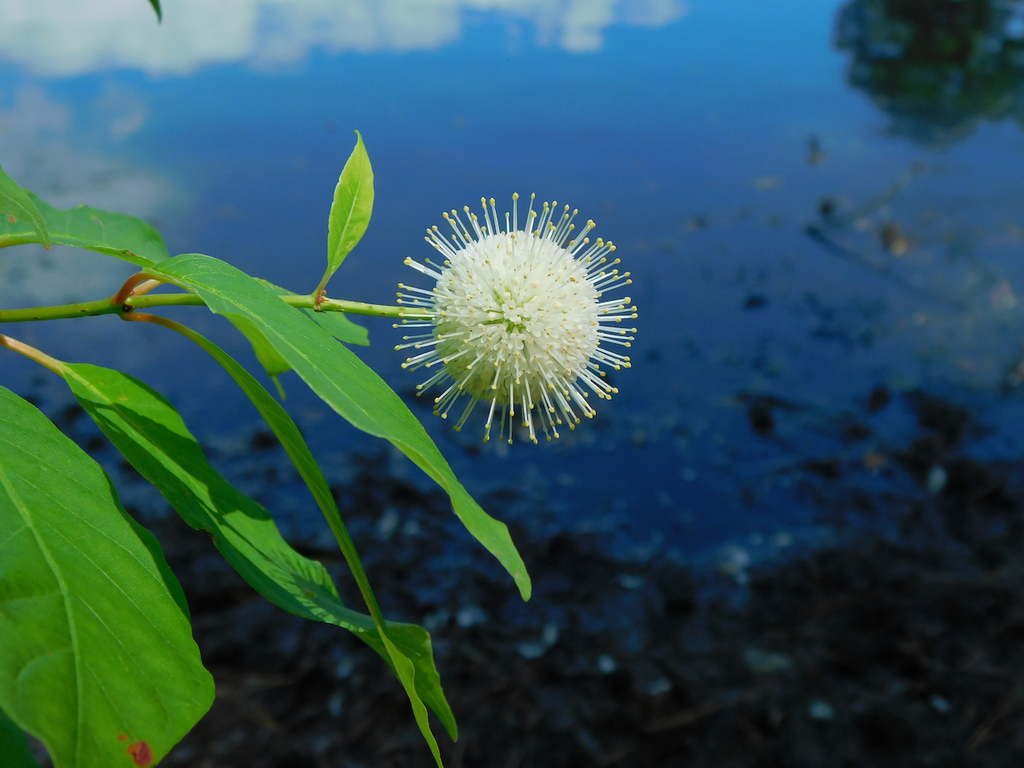
The buttonbush is a charming native shrub that loves wet feet. It produces unique, spherical white flowers that look like little pincushions. You'll find it's a real magnet for butterflies and bees in your garden.

At a glance
- Care level
- Easy
- Plant type
- Deciduous shrub
- Light
- Full sun to partial shade
- Indoor light
- Direct sun
- Water
- Every 1 to 3 days
- Mature size
- 10 to 15 feet
- Growth rate
- Fast
- Hardiness
- USDA 5 to 10
- Bloom time
- Mid to late summer
Care
Keep the soil consistently moist, as this plant naturally thrives in swampy areas. Watch for wilting if the soil dries out too much. Prune back in late winter to maintain a tidy shape.
- Watering
- Keep the soil constantly damp and never let it dry out completely.
- Feeding
- Apply a balanced fertilizer once in early spring to support new growth.
- Pruning
- Trim back in late winter to encourage bushier growth and manage size.
- Repotting
- Repot only if the plant becomes rootbound in a container.
- Soil
- Wet, boggy, or clay soils
- Soil pH
- Acidic to neutral
- Temperature
- -30 to 35°C
- Humidity
- 50 to 90%
- Drought tolerance
- Low
- Lifespan
- Perennial, typically 15 to 25 years
- Fragrance
- Strong
- Deer and rabbits
- High
Signs it needs repotting
- Roots growing out of the drainage holes.
- Water running straight through the pot without soaking in.
Safety
- People
- All parts of the plant contain cephalanthin, which can cause nausea and vomiting if ingested.
- Pets
- This plant is considered toxic to cats and dogs if ingested.
- Children
- Keep children away from the plant as the seeds and leaves are toxic if eaten.
- Contact allergens
- The foliage can cause mild skin irritation in sensitive individuals.
- Airborne allergens
- The pollen is generally not considered a significant airborne allergen.
- Edibility
- The plant is considered toxic and should not be consumed by humans or pets.
How to identify it
- Spherical white pincushion flowers
- Glossy, ovate green leaves
- Opposite or whorled leaf arrangement
- Reddish brown, peeling bark
- Nutlet fruit clusters
- Height
- 1.5 to 3.6m
- Spread
- 1.2 to 3m
- Leaves
- green, deciduous
- Flowers
- white, 2 to 4cm
- Fruit
- red, brown, Autumn
Problems to watch for
- Leaf SpotCommon
- AphidsUncommon
- CaterpillarsUncommon
- Root RotRare
Check your buttonbush from a photo
Pocket Botanist looks at a photo of your plant and tells you what's wrong and what to try first.
Scan with your phone's camera to get the app
Or go to pocketbotanist.app/get on your phone
Growing it
- Propagation
- cuttings, seed
- When to plant
- Spring, Autumn
- Overwintering
- No special winter care is needed as it is fully hardy. Simply allow the leaves to drop naturally in autumn.
- In containers
- It grows well in large containers if kept constantly moist, but it is best suited for the ground.
Softwood Cuttings
- Take 15cm cuttings in early summer.
- Dip the base in rooting hormone.
- Place in moist potting mix until rooted.
Group this shrub with other moisture loving perennials to create a lush, low maintenance water garden.
Grows well with
- Swamp Milkweed · They share a love for moist soil and attract similar pollinators.
- Cardinal Flower · This plant adds a pop of red that contrasts beautifully with the white flower heads.
Similar species
- Buttonbush · It is a closely related species with similar flower structure but narrower leaves.
Science
- Family
- Rubiaceae
- Genus
- Cephalanthus
- Order
- Gentianales
- Class
- Magnoliopsida
- Native range
- Eastern and Southern North America.
- Conservation
- This species is widespread and secure across its native range.
It naturally grows along the edges of ponds, swamps, and streams where it can access constant water.
- Value to wildlife
- nectar source, larval host plant, seeds for birds
- Pollinators
- bees, butterflies, moths, hummingbirds
- Uses
- rain gardens, wetland restoration, pollinator gardens, ornamental shrub
Through the year
Ecological indicators
- Salinity
- 2/9
- Soil reaction
- 5/9
- Light
- 7/9
- Temperature
- 6/9
- Moisture
- 9/9
- Nutrients
- 5/9
Taxonomy resolved against GBIF.
Questions people ask
- Can I grow this in a normal garden?
- Yes, as long as you provide consistent moisture and do not let the soil dry out completely.
- Does it need pruning?
- Pruning is rarely needed, but you can trim it in late winter to maintain shape.
Where the name comes from
The name Cephalanthus comes from the Greek words for head and flower, describing the round bloom clusters.
Good to know
- It thrives in standing water.
- The flowers have a sweet, honey like fragrance.
- It is a magnet for migrating butterflies.
- It is one of the few shrubs that tolerates saturated soil.
- The seeds are a vital food source for waterfowl.
Also in
Keep your buttonbush growing
This page is a general guide. Save your plant in Pocket Botanist and you get care reminders timed for this plant, plus a care history that shows what worked.
Scan with your phone's camera to get the app
Or go to pocketbotanist.app/get on your phone
This guide was generated with AI on and checked against GBIF taxonomy. It is general information, not horticultural or veterinary advice. Read about how we build these guides.