 Pocket Botanist
Plant guide
Hornbeam.
Carpinus betulus
Pronounced kar-PY-nus BET-yoo-lus
Also known as Caucasian Hornbeam, Common Hornbeam, European hornbeam, Hornbeam



Scan with your phone's camera to get the app
Or go to pocketbotanist.app/get on your phone
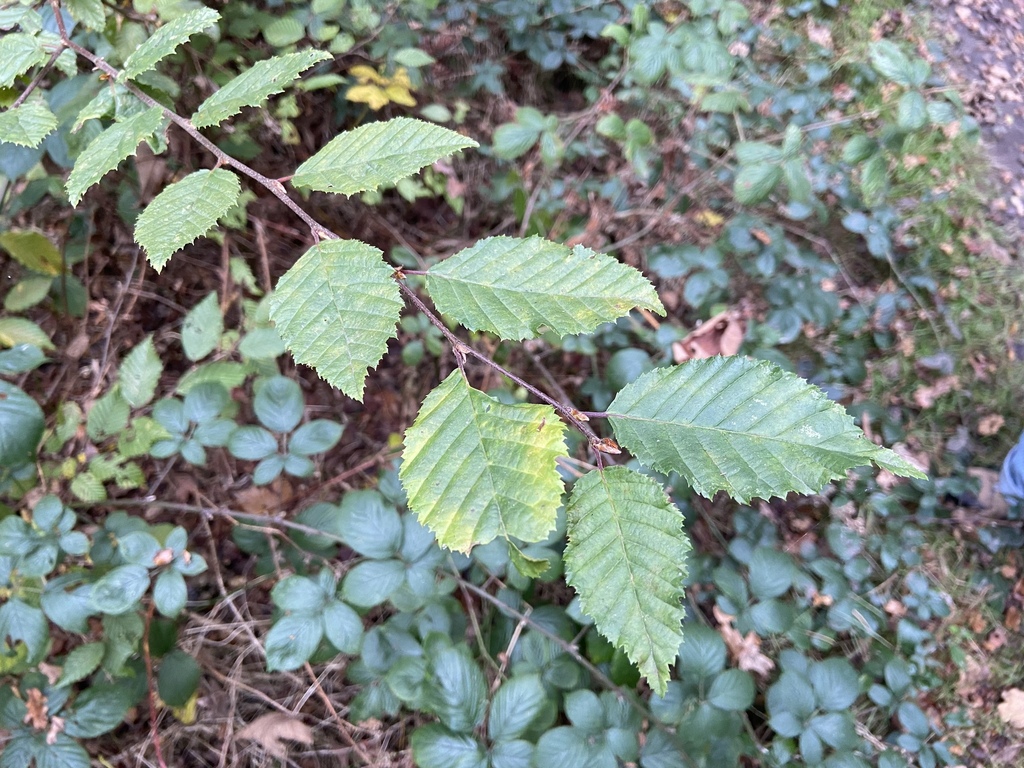
The European hornbeam is a sturdy, deciduous tree often used for formal hedging or as a stately specimen. It features a dense, oval canopy that turns a lovely golden yellow in the autumn. This tree is quite adaptable and thrives in many different soil types.

At a glance
- Care level
- Easy
- Plant type
- Deciduous tree
- Light
- Full sun to partial shade
- Indoor light
- Bright indirect
- Water
- Every 7 to 14 days
- Mature size
- 15 to 25 meters
- Growth rate
- Medium
- Hardiness
- USDA 4 to 8
- Bloom time
- Mid to late spring
Care
Keep the soil consistently moist but not waterlogged to support healthy growth. Watch for leaf scorch during extreme heat and ensure the tree is pruned while dormant to maintain its shape. Regular mulching helps retain moisture around the root zone.
- Watering
- Water deeply during dry spells to keep the root system hydrated.
- Feeding
- Apply a balanced slow release fertilizer in early spring.
- Pruning
- Prune in late winter or early spring while the tree is dormant.
- Repotting
- Repotting is only necessary for containerized specimens when they become root bound.
- Soil
- Loamy, clay, or sandy
- Soil pH
- Neutral to slightly acidic
- Temperature
- -30 to 35°C
- Humidity
- 40 to 70%
- Drought tolerance
- Moderate
- Lifespan
- Long lived, often over 100 years.
- Deer and rabbits
- Moderate
Signs it needs repotting
- Roots growing out of drainage holes.
- Water draining through too quickly.
- Stunted growth.
Safety
- People
- This plant is not considered toxic to humans.
- Children
- The small, winged nutlets can be a choking hazard if ingested by young children.
- Contact allergens
- The leaves may cause minor skin irritation in sensitive individuals.
- Airborne allergens
- The pollen is a common seasonal allergen during the spring.
- Edibility
- The seeds and leaves are not considered edible for humans.
How to identify it
- Oval leaves with serrated margins
- Prominent parallel leaf veins
- Smooth, grey, fluted bark
- Catkins appearing in spring
- Winged nutlet fruit clusters
- Height
- 12 to 20m
- Spread
- 8 to 12m
- Leaves
- dark green, yellow, bronze, deciduous
- Flowers
- greenish yellow, 2 to 5cm
- Fruit
- brown, Autumn
Problems to watch for
- AphidsCommon
- Hornbeam Leaf SpotCommon
- Leaf ScorchUncommon
- Sooty MoldUncommon
Check your hornbeam from a photo
Pocket Botanist looks at a photo of your plant and tells you what's wrong and what to try first.
Scan with your phone's camera to get the app
Or go to pocketbotanist.app/get on your phone
Growing it
- Propagation
- seed, cuttings
- When to plant
- spring, autumn
- Overwintering
- No special winter care is needed as it is fully hardy. Ensure the soil remains well drained to prevent root rot during wet winters.
- In containers
- It is not ideal for long term container growth, but can be kept in a very large tub for a few years.
Seed
- Collect seeds in autumn.
- Store in moist sand over winter.
- Sow in spring.
Plant spring bulbs underneath to take advantage of the light before the canopy fills in.
Grows well with
- English Ivy · Provides a lush ground cover beneath the tree canopy.
- Snowdrop · Blooms early before the tree fully leafs out.
Similar species
- American Hornbeam · A smaller, native North American relative with similar growth habits.
- European Beech · Shares similar landscape uses but grows much larger.
Science
- Family
- Betulaceae
- Genus
- Carpinus
- Order
- Fagales
- Class
- Magnoliopsida
- Native range
- Europe and parts of Western Asia.
- Conservation
- This tree is widespread and not of conservation concern.
It thrives in temperate forests, often forming the understory beneath taller canopy trees.
- Value to wildlife
- larval host plant, nesting site
- Pollinators
- bees, beetles
- Uses
- hedging, ornamental tree, topiary, windbreak
Through the year
Ecological indicators
- Salinity
- 1/9
- Soil reaction
- 6/9
- Light
- 5/9
- Moisture
- 5/9
- Temperature
- 5/9
- Nutrients
- 6/9
Taxonomy resolved against GBIF.
Questions people ask
- Can I grow it in a pot?
- It is best suited for the ground, but young specimens can be kept in large containers for a few years.
- How often should I prune it?
- Prune once a year in late summer to maintain its shape.
Where the name comes from
The name Carpinus comes from the Latin word for the tree, while betulus refers to its resemblance to birch trees.
Good to know
- It is often called the European hornbeam to distinguish it from American species.
- The wood is so hard it was once used to make butcher blocks.
- It holds onto its dead leaves through winter, providing privacy in hedges.
- It is a favorite for formal topiary due to its dense branching habit.
Keep your hornbeam growing
This page is a general guide. Save your plant in Pocket Botanist and you get care reminders timed for this plant, plus a care history that shows what worked.
Scan with your phone's camera to get the app
Or go to pocketbotanist.app/get on your phone
This guide was generated with AI on and checked against GBIF taxonomy. It is general information, not horticultural or veterinary advice. Read about how we build these guides.