 Pocket Botanist
Pflanzenratgeber
Siberian Pea Shrub.
Caragana arborescens
Aussprache ka-ra-GA-na ar-bo-RES-kenz
Auch bekannt als Siberian Pea-tree, Siberian pea shrub, Siberian pea tree, Siberian peashrub, Siberian peatree, caragana



The Siberian Pea Shrub is a tough, deciduous plant known for its ability to thrive in harsh, cold climates. It produces lovely yellow, pea-like flowers in the spring. You'll find it's a fantastic choice for windbreaks or privacy screens.
Auf einen Blick
- Pflegestufe
- Einfach
- Pflanzenart
- Deciduous shrub
- Licht
- Full sun
- Licht im Innenraum
- Direkte Sonne
- Gießen
- Alle 7 bis 14 Tage
- Endgröße
- 15 to 20 feet
- Wachstum
- Schnell
- Winterhärte
- USDA 2 bis 7
- Blütezeit
- Late spring
Pflege
Plant this shrub in a spot with plenty of sun and well-draining soil. Keep an eye out for aphids or spider mites, though it is generally quite resilient. It handles drought well once it's established.
- Gießen
- Water deeply during the first season, then allow the soil to dry out between waterings.
- Düngen
- Apply a balanced fertilizer once in early spring before new growth begins.
- Schneiden
- Prune immediately after flowering if you need to shape the plant or remove dead wood.
- Umtopfen
- If growing in a container, move to a larger pot every few years to accommodate root growth.
- Boden
- Well-draining, sandy, or loamy soil
- Boden-pH
- 6.0 to 8.0
- Temperatur
- -40 bis 35°C
- Luftfeuchtigkeit
- 20 bis 60%
- Trockenheitstoleranz
- Hoch
- Lebensdauer
- Perennial, typically 20 to 40 years.
- Wildverbiss-Resistenz
- Mittel
Anzeichen fürs Umtopfen
- Roots growing out of the drainage holes.
- Water running straight through the pot without soaking in.
Sicherheit
- Menschen
- The plant is not considered toxic to humans.
- Kinder
- The sharp thorns pose a physical injury risk to small children if planted in high traffic areas.
- Kontaktallergene
- The thorns can cause mechanical skin irritation if handled without gloves.
- Allergene in der Luft
- There are no notable airborne allergen risks associated with this species.
- Essbarkeit
- The seeds are edible when cooked, but raw consumption should be avoided due to potential digestive discomfort.
So erkennst du die Pflanze
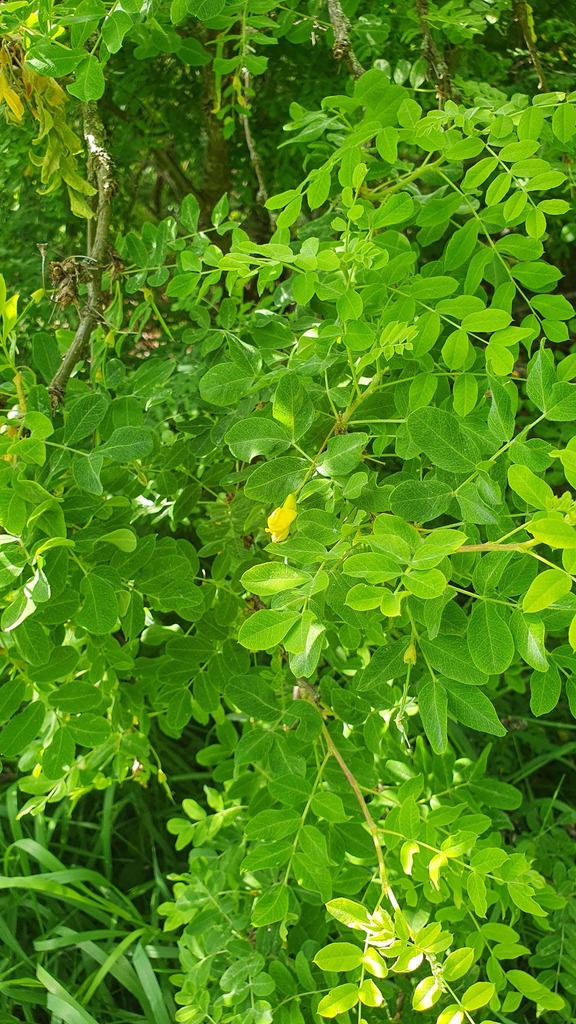
- Yellow pea-like spring flowers
- Compound leaves with small leaflets
- Smooth greenish-gray bark
- Hardy, upright shrub habit
- Höhe
- 3 bis 6m
- Breite
- 2 bis 4m
- Blätter
- bright green, deciduous
- Blüten
- yellow, 1 bis 2cm
- Früchte
- brown, Late summer
Häufige Probleme
- Blister beetles — These beetles can cause significant defoliation during midsummer.
- Powdery mildew — A fungal issue that creates a white dusty coating on leaves during humid periods.
Standort und Pflege
- Vermehrung
- seed, cuttings
- Pflanzzeit
- spring, autumn
- Überwinterung
- No special protection is needed as it is extremely cold hardy.
- Im Kübel
- It can grow in large containers, but it is much happier when planted directly in the ground.
Seed
- 1. Soak seeds in warm water for 24 hours.
- 2. Plant in well draining soil.
- 3. Keep moist until germination.
Pair this shrub with other drought tolerant plants to create a low maintenance landscape.
Gute Pflanzpartner
- Perovskia atriplicifolia — They share similar requirements for sun and well drained soil.
- Purple coneflower — This perennial adds color contrast and thrives in similar dry conditions.
Ähnliche Arten
- Caragana pygmaea — A much smaller relative that is better suited for rock gardens.
Botanisches
- Familie
- Fabaceae
- Gattung
- Caragana
- Ordnung
- Fabales
- Klasse
- Magnoliopsida
- Ursprüngliche Heimat
- Siberia and parts of Central Asia.
- Artenschutz
- It is not of conservation concern and is considered invasive in some parts of North America.
It thrives in harsh, dry, and windy environments by fixing nitrogen in the soil.
- Nutzen für Wildtiere
- nectar source
- Bestäuber
- Bienen
- Verwendung
- windbreak, hedge, soil stabilization, ornamental
Im Jahresverlauf
Ökologische Zeigerwerte
- Salzgehalt
- 4/9
- Bodenreaktion
- 6/9
- Licht
- 7/9
- Temperatur
- 3/9
- Feuchtigkeit
- 3/9
- Nährstoffe
- 2/9
Taxonomie abgeglichen mit GBIF.
Häufige Fragen
- Is it drought tolerant?
- Yes, it is very drought tolerant once established.
- Does it need pruning?
- It responds well to pruning if you want to keep it as a formal hedge.
Woher der Name kommt
The genus name Caragana comes from the Mongolian name for these shrubs, while arborescens means tree like.
Gut zu wissen
- It is often called the Siberian pea shrub because of its pea like pods.
- This plant is incredibly hardy and can survive extreme cold.
- It was historically used as a living fence on the Great Plains.
Auch in
Probleme mit Siberian Pea Shrub?
Diese Seite bietet allgemeine Infos. Pocket Botanist erkennt Probleme anhand eines Fotos deiner echten Pflanze, passt das Gießen an dein Licht und deinen Standort an und erinnert dich an die Pflege.
Dieser Ratgeber wurde mit KI erstellt und mit der GBIF-Taxonomie abgeglichen. Er dient zur allgemeinen Information und ersetzt keine gärtnerische oder tierärztliche Beratung. Hier erfährst du, wie wir diese Ratgeber erstellen.