 Pocket Botanist
Guide botanique
Siberian Pea Shrub.
Caragana arborescens
Prononciation ka-ra-GA-na ar-bo-RES-kenz
Aussi appelée Siberian Pea-tree, Siberian pea shrub, Siberian pea tree, Siberian peashrub, Siberian peatree, caragana



The Siberian Pea Shrub is a tough, deciduous plant known for its ability to thrive in harsh, cold climates. It produces lovely yellow, pea-like flowers in the spring. You'll find it's a fantastic choice for windbreaks or privacy screens.
En un coup d'œil
- Niveau d'entretien
- Facile
- Type de plante
- Deciduous shrub
- Lumière
- Full sun
- Lumière en intérieur
- Soleil direct
- Arrosage
- Tous les 7 à 14 jours
- Taille adulte
- 15 to 20 feet
- Croissance
- Rapide
- Rusticité
- USDA 2 à 7
- Floraison
- Late spring
Entretien
Plant this shrub in a spot with plenty of sun and well-draining soil. Keep an eye out for aphids or spider mites, though it is generally quite resilient. It handles drought well once it's established.
- Arrosage
- Water deeply during the first season, then allow the soil to dry out between waterings.
- Engrais
- Apply a balanced fertilizer once in early spring before new growth begins.
- Taille
- Prune immediately after flowering if you need to shape the plant or remove dead wood.
- Rempotage
- If growing in a container, move to a larger pot every few years to accommodate root growth.
- Sol
- Well-draining, sandy, or loamy soil
- pH du sol
- 6.0 to 8.0
- Température
- -40 à 35°C
- Humidité
- 20 à 60%
- Résistance à la sécheresse
- Élevée
- Durée de vie
- Perennial, typically 20 to 40 years.
- Résistance aux chevreuils et lapins
- Moyenne
Signes qu'il faut rempoter
- Roots growing out of the drainage holes.
- Water running straight through the pot without soaking in.
Sécurité
- Humains
- The plant is not considered toxic to humans.
- Enfants
- The sharp thorns pose a physical injury risk to small children if planted in high traffic areas.
- Allergènes de contact
- The thorns can cause mechanical skin irritation if handled without gloves.
- Allergènes aéroportés
- There are no notable airborne allergen risks associated with this species.
- Comestibilité
- The seeds are edible when cooked, but raw consumption should be avoided due to potential digestive discomfort.
Comment l'identifier
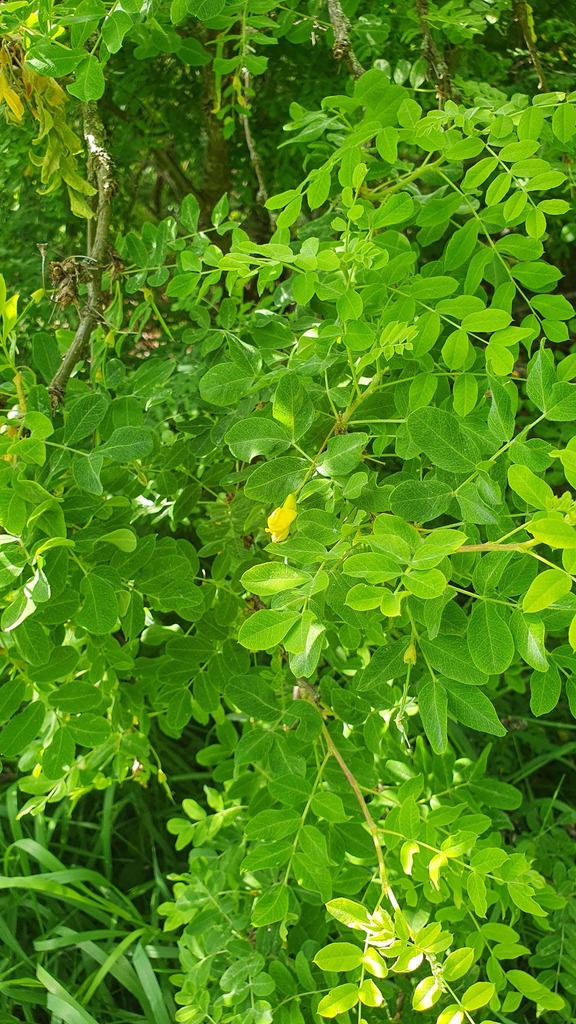
- Yellow pea-like spring flowers
- Compound leaves with small leaflets
- Smooth greenish-gray bark
- Hardy, upright shrub habit
- Hauteur
- 3 à 6m
- Envergure
- 2 à 4m
- Feuilles
- bright green, deciduous
- Fleurs
- yellow, 1 à 2cm
- Fruits
- brown, Late summer
Problèmes courants
- Blister beetles — These beetles can cause significant defoliation during midsummer.
- Powdery mildew — A fungal issue that creates a white dusty coating on leaves during humid periods.
La cultiver
- Multiplication
- seed, cuttings
- Quand planter
- spring, autumn
- Hivernage
- No special protection is needed as it is extremely cold hardy.
- En pot
- It can grow in large containers, but it is much happier when planted directly in the ground.
Seed
- 1. Soak seeds in warm water for 24 hours.
- 2. Plant in well draining soil.
- 3. Keep moist until germination.
Pair this shrub with other drought tolerant plants to create a low maintenance landscape.
Bonnes associations
- Perovskia atriplicifolia — They share similar requirements for sun and well drained soil.
- Purple coneflower — This perennial adds color contrast and thrives in similar dry conditions.
Espèces similaires
- Caragana pygmaea — A much smaller relative that is better suited for rock gardens.
Science
- Famille
- Fabaceae
- Genre
- Caragana
- Ordre
- Fabales
- Classe
- Magnoliopsida
- Région d'origine
- Siberia and parts of Central Asia.
- Préservation
- It is not of conservation concern and is considered invasive in some parts of North America.
It thrives in harsh, dry, and windy environments by fixing nitrogen in the soil.
- Intérêt pour la faune
- nectar source
- Pollinisateurs
- abeilles
- Utilisations
- windbreak, hedge, soil stabilization, ornamental
Au fil des saisons
Repères écologiques
- Salinité
- 4/9
- Réaction du sol
- 6/9
- Lumière
- 7/9
- Température
- 3/9
- Humidité
- 3/9
- Nutriments
- 2/9
Taxonomie vérifiée avec le GBIF.
Ce qu'on demande souvent
- Is it drought tolerant?
- Yes, it is very drought tolerant once established.
- Does it need pruning?
- It responds well to pruning if you want to keep it as a formal hedge.
D'où vient le nom
The genus name Caragana comes from the Mongolian name for these shrubs, while arborescens means tree like.
Bon à savoir
- It is often called the Siberian pea shrub because of its pea like pods.
- This plant is incredibly hardy and can survive extreme cold.
- It was historically used as a living fence on the Great Plains.
Aussi dans
Ta plante a mauvaise mine ?
Cette page est un guide général. Pocket Botanist diagnostique les problèmes directement à partir d'une photo de ta plante, adapte l'arrosage à sa luminosité et te prévient quand il faut t'en occuper.
Ce guide a été généré par IA et vérifié avec la taxonomie du GBIF. Il s'agit d'informations générales, et non de conseils horticoles ou vétérinaires. Découvre comment nous concevons ces guides.