 Pocket Botanist
Guía de plantas
Siberian Pea Shrub.
Caragana arborescens
Pronunciación ka-ra-GA-na ar-bo-RES-kenz
También se conoce como Siberian Pea-tree, Siberian pea shrub, Siberian pea tree, Siberian peashrub, Siberian peatree, caragana



The Siberian Pea Shrub is a tough, deciduous plant known for its ability to thrive in harsh, cold climates. It produces lovely yellow, pea-like flowers in the spring. You'll find it's a fantastic choice for windbreaks or privacy screens.
De un vistazo
- Nivel de cuidados
- Fácil
- Tipo de planta
- Deciduous shrub
- Luz
- Full sun
- Luz en interior
- Sol directo
- Riego
- Cada 7 a 14 días
- Tamaño adulto
- 15 to 20 feet
- Ritmo de crecimiento
- Rápido
- Rusticidad
- USDA 2 a 7
- Floración
- Late spring
Cuidados
Plant this shrub in a spot with plenty of sun and well-draining soil. Keep an eye out for aphids or spider mites, though it is generally quite resilient. It handles drought well once it's established.
- Riego
- Water deeply during the first season, then allow the soil to dry out between waterings.
- Abonado
- Apply a balanced fertilizer once in early spring before new growth begins.
- Poda
- Prune immediately after flowering if you need to shape the plant or remove dead wood.
- Trasplante
- If growing in a container, move to a larger pot every few years to accommodate root growth.
- Suelo
- Well-draining, sandy, or loamy soil
- pH del suelo
- 6.0 to 8.0
- Temperatura
- -40 a 35°C
- Humedad
- 20 a 60%
- Tolerancia a la sequía
- Alta
- Longevidad
- Perennial, typically 20 to 40 years.
- Resistencia a ciervos y conejos
- Moderada
Señales de que necesita trasplante
- Roots growing out of the drainage holes.
- Water running straight through the pot without soaking in.
Seguridad
- Personas
- The plant is not considered toxic to humans.
- Niños
- The sharp thorns pose a physical injury risk to small children if planted in high traffic areas.
- Alérgenos por contacto
- The thorns can cause mechanical skin irritation if handled without gloves.
- Alérgenos en el aire
- There are no notable airborne allergen risks associated with this species.
- Comestibilidad
- The seeds are edible when cooked, but raw consumption should be avoided due to potential digestive discomfort.
Cómo identificarla
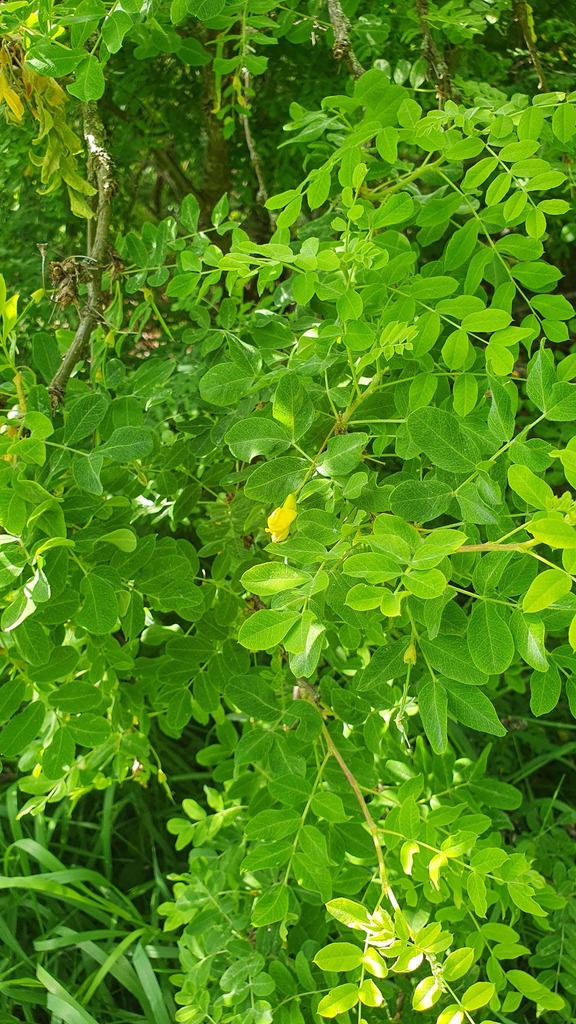
- Yellow pea-like spring flowers
- Compound leaves with small leaflets
- Smooth greenish-gray bark
- Hardy, upright shrub habit
- Altura
- 3 a 6m
- Anchura
- 2 a 4m
- Hojas
- bright green, deciduous
- Flores
- yellow, 1 a 2cm
- Frutos
- brown, Late summer
Problemas frecuentes
- Blister beetles — These beetles can cause significant defoliation during midsummer.
- Powdery mildew — A fungal issue that creates a white dusty coating on leaves during humid periods.
Cómo cultivarla
- Propagación
- seed, cuttings
- Cuándo plantar
- spring, autumn
- Cuidados en invierno
- No special protection is needed as it is extremely cold hardy.
- En maceta
- It can grow in large containers, but it is much happier when planted directly in the ground.
Seed
- 1. Soak seeds in warm water for 24 hours.
- 2. Plant in well draining soil.
- 3. Keep moist until germination.
Pair this shrub with other drought tolerant plants to create a low maintenance landscape.
Buenas compañeras
- Perovskia atriplicifolia — They share similar requirements for sun and well drained soil.
- Purple coneflower — This perennial adds color contrast and thrives in similar dry conditions.
Especies parecidas
- Caragana pygmaea — A much smaller relative that is better suited for rock gardens.
Ciencia
- Familia
- Fabaceae
- Género
- Caragana
- Orden
- Fabales
- Clase
- Magnoliopsida
- Distribución natural
- Siberia and parts of Central Asia.
- Conservación
- It is not of conservation concern and is considered invasive in some parts of North America.
It thrives in harsh, dry, and windy environments by fixing nitrogen in the soil.
- Valor para la fauna
- nectar source
- Polinizadores
- abejas
- Usos
- windbreak, hedge, soil stabilization, ornamental
A lo largo del año
Indicadores ecológicos
- Salinidad
- 4/9
- Reacción del suelo
- 6/9
- Luz
- 7/9
- Temperatura
- 3/9
- Humedad
- 3/9
- Nutrientes
- 2/9
Taxonomía cotejada con GBIF.
Lo que más preguntan
- Is it drought tolerant?
- Yes, it is very drought tolerant once established.
- Does it need pruning?
- It responds well to pruning if you want to keep it as a formal hedge.
De dónde viene el nombre
The genus name Caragana comes from the Mongolian name for these shrubs, while arborescens means tree like.
Bueno saberlo
- It is often called the Siberian pea shrub because of its pea like pods.
- This plant is incredibly hardy and can survive extreme cold.
- It was historically used as a living fence on the Great Plains.
También en
¿Tu siberian pea shrub tiene mal aspecto?
Esta página es una guía general. Pocket Botanist diagnostica problemas a partir de una foto de tu propia planta, calcula el riego según tu luz y tus condiciones, y te avisa cuando toca cuidarla.
Esta guía se ha generado con IA y se ha cotejado con la taxonomía de GBIF. Es información general, no asesoramiento botánico ni veterinario. Descubre cómo elaboramos estas guías.