 Pocket Botanist
Plant guide
Rattlesnake fern.
Botrypus virginianus
Pronounced bo-TRY-pus vir-jin-ee-AY-nus
Also known as Common Grapefern, Rattlesnake Fern, Virginia grapefern, rattlesnake grapefern



Scan with your phone's camera to get the app
Or go to pocketbotanist.app/get on your phone
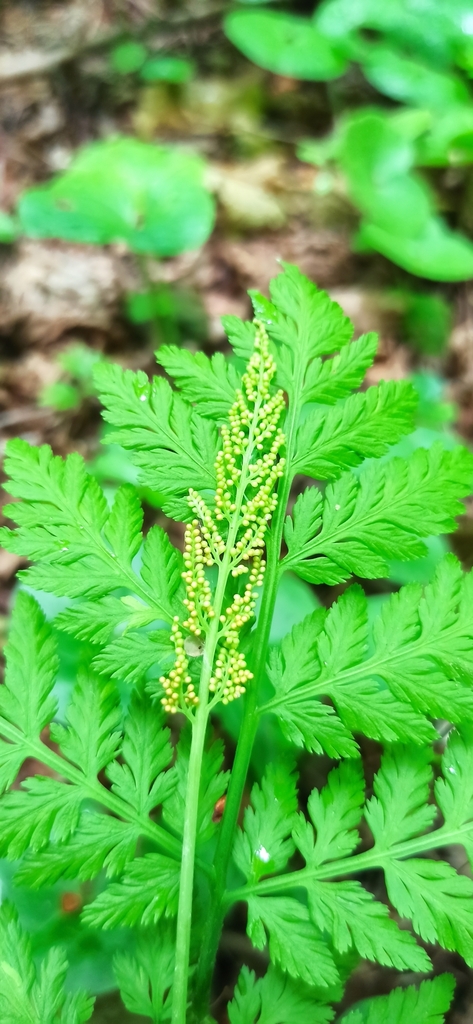
The rattlesnake fern is a charming native woodland plant that stands out with its unique, triangular fronds. It is a true forest dweller that prefers the cool, shaded environment of the woodland floor. You will love how it adds a touch of wild beauty to a shaded garden spot.
At a glance
- Care level
- Moderate
- Plant type
- Fern
- Light
- Full shade to partial shade
- Indoor light
- Low light
- Water
- Every 3 to 7 days
- Mature size
- 1 to 2 feet
- Growth rate
- Slow
- Hardiness
- USDA 3 to 8
- Bloom time
- Does not bloom, produces spores in summer.
Care
Keep the soil consistently moist but never soggy to mimic its natural forest habitat. Watch for wilting fronds, which usually indicate that the soil has dried out too much. It thrives in high humidity and cool temperatures, so avoid placing it near heat sources.
- Watering
- Keep the soil evenly moist to the touch at all times.
- Feeding
- Use a diluted, balanced liquid fertilizer during the active growing season.
- Pruning
- Remove dead or damaged fronds in late winter or early spring.
- Repotting
- Repot only when the plant has clearly outgrown its current container.
- Soil
- Rich, organic, well draining soil
- Soil pH
- 6.0 to 7.0
- Temperature
- -40 to 30°C
- Humidity
- 60 to 90%
- Drought tolerance
- Low
- Lifespan
- Perennial, typically many years if left undisturbed.
- Deer and rabbits
- High
Safety
- People
- There is no significant toxicity reported for humans.
- Children
- The plant is not known to be dangerous to children, but it should not be ingested.
- Contact allergens
- No known skin irritation.
- Airborne allergens
- Spores may cause minor respiratory irritation in sensitive individuals.
- Edibility
- This plant is not considered edible and should be avoided.
How to identify it
- Triangular, finely divided sterile frond
- Single, upright fertile stalk
- Spore clusters resemble rattlesnake rattles
- Fleshy, succulent root system
- Height
- 0.2 to 0.5m
- Spread
- 0.15 to 0.3m
- Leaves
- bright green, deciduous
- Flowers
- 0cm
Problems to watch for
- Fungal leaf spot · Small dark spots on leaves caused by excessive moisture.
Check your rattlesnake fern from a photo
Pocket Botanist looks at a photo of your plant and tells you what's wrong and what to try first.
Scan with your phone's camera to get the app
Or go to pocketbotanist.app/get on your phone
Growing it
- Propagation
- division, spores
- When to plant
- spring, autumn
- Overwintering
- The plant dies back to the ground in winter, so simply leave the leaf litter in place to protect the roots.
- In containers
- It does not perform well in containers as it requires specific woodland soil conditions.
Plant in groups to mimic the natural forest floor environment.
Grows well with
- Wild Ginger · They share similar shade and moisture requirements.
- Trillium · They are classic woodland companions that thrive in the same forest floor conditions.
Similar species
- Grape Fern · They share similar spore-bearing structures.
Science
- Family
- Ophioglossaceae
- Genus
- Botrypus
- Order
- Ophioglossales
- Class
- Polypodiopsida
- Native range
- Widespread across North America, Europe, and Asia.
- Conservation
- It is widespread and not currently of conservation concern.
It thrives in the undisturbed leaf litter of mature deciduous forests.
- Value to wildlife
- provides ground cover in shaded woodlands
- Uses
- shade garden plant, woodland restoration
Through the year
Ecological indicators
- Salinity
- 0/9
- Soil reaction
- 5/9
- Light
- 2/9
- Temperature
- 4/9
- Moisture
- 6/9
- Nutrients
- 5/9
Taxonomy resolved against GBIF.
Questions people ask
- Is this a true fern?
- Yes, it is a primitive type of fern.
- Does it need full sun?
- No, it prefers deep shade.
Where the name comes from
The name Botrypus comes from Greek for bunch of grapes, referring to the spore clusters, and virginianus refers to its discovery in Virginia.
Good to know
- It is a member of the Ophioglossaceae family.
- The plant typically has only one leaf per year.
- It is found in moist, rich woods across much of North America.
- The fertile stalk appears in late spring.
Also in
Keep your rattlesnake fern growing
This page is a general guide. Save your plant in Pocket Botanist and you get care reminders timed for this plant, plus a care history that shows what worked.
Scan with your phone's camera to get the app
Or go to pocketbotanist.app/get on your phone
This guide was generated with AI on and checked against GBIF taxonomy. It is general information, not horticultural or veterinary advice. Read about how we build these guides.