 Pocket Botanist
Plant guide
Eve's Pin Cactus.
Austrocylindropuntia subulata
Pronounced aw-stro-sy-lin-dro-pun-she-uh sub-yoo-LAY-tuh
Also known as Devil's Rope, Eve's Needle Cactus, Eve's Pin, long-spine cactus


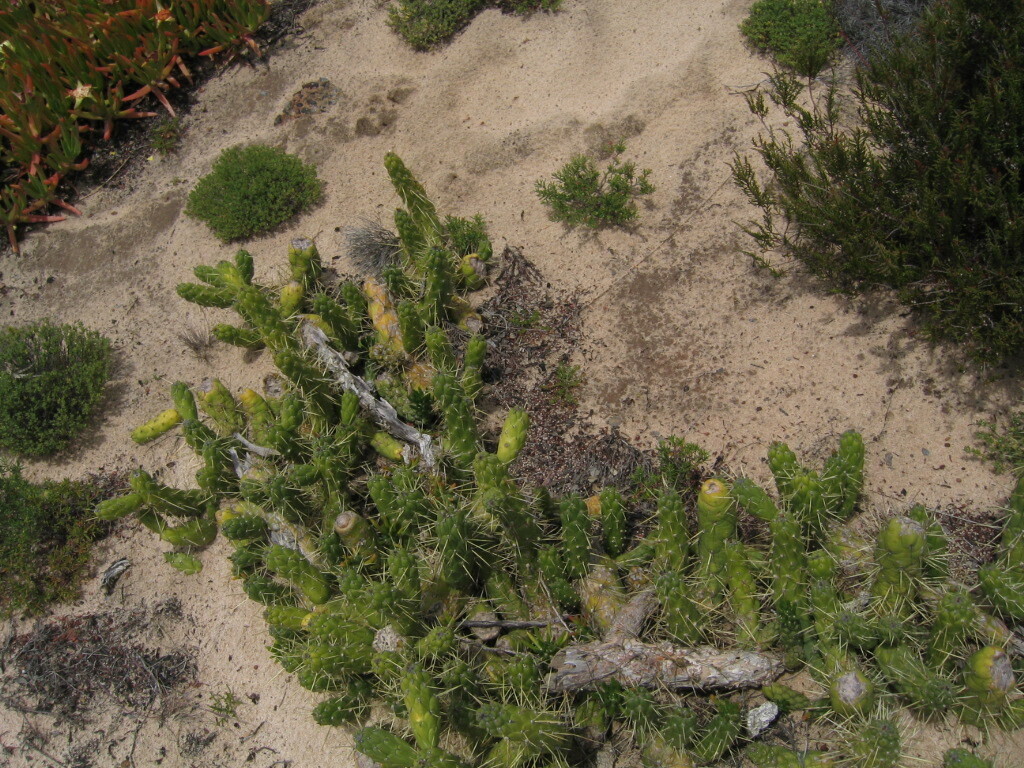
Eve's Pin Cactus is a striking, fast growing succulent that features long, cylindrical stems covered in sharp spines. It's a hardy plant that thrives in sunny spots and adds a unique architectural look to any collection. You'll love how easy it is to keep happy as long as it gets plenty of light.
At a glance
- Care level
- Easy
- Plant type
- Succulent
- Light
- Full sun
- Indoor light
- Direct sun
- Water
- Every 14 to 21 days
- Mature size
- 10 to 13 feet
- Growth rate
- Fast
- Hardiness
- USDA 9 to 11
- Bloom time
- Late spring to early summer
Care
Give this cactus as much direct sunlight as you can to keep it from stretching out. Let the soil dry out completely between waterings to prevent root rot. Watch for soft or mushy stems, which usually mean the plant is getting too much water.
- Watering
- Water only when the soil is completely dry throughout the pot.
- Feeding
- Feed with a balanced cactus fertilizer once a month during the active growing season.
- Pruning
- Prune only to remove dead growth or to control the size of the plant using thick gloves.
- Repotting
- Repot when the plant becomes top heavy or clearly outgrows its current container.
- Soil
- Well draining cactus and succulent mix
- Soil pH
- 6.0 to 7.5
- Temperature
- -7 to 40°C
- Humidity
- 10 to 40%
- Drought tolerance
- High
- Lifespan
- Perennial, typically 10 to 20 years
- Deer and rabbits
- High
Signs it needs repotting
- Roots growing out of the drainage holes.
- The plant becomes top heavy and unstable.
- Soil has broken down and no longer drains well.
Safety
- People
- The plant is not toxic if ingested, but the sharp spines and glochids cause significant mechanical injury.
- Pets
- This plant is considered non-toxic to cats and dogs, though its sharp spines can cause physical injury.
- Children
- Keep this plant well out of reach of children because the spines are extremely sharp and the glochids are difficult to remove from skin.
- Contact allergens
- The glochids are tiny, barbed hairs that easily penetrate skin and cause severe irritation.
- Airborne allergens
- There is no notable respiratory risk from this plant.
- Edibility
- The fruit is technically edible but covered in tiny, irritating glochids that make consumption dangerous without careful preparation.
How to identify it
- Long cylindrical green stems
- Sharp spines along stem ridges
- Small fleshy leaves on new growth
- Upright branching growth habit
- Height
- 1 to 4m
- Spread
- 0.5 to 1.5m
- Leaves
- green, evergreen
- Flowers
- red, pink, 5 to 8cm
- Fruit
- yellow, green, Late summer
Common problems
- Mealybugs — Small white cottony insects that suck sap from the stems.
- Root rot — Fungal decay caused by overly wet soil or poor drainage.
Growing it
- Propagation
- cuttings, seed
- When to plant
- spring, summer
- Overwintering
- Keep the plant dry during the winter months to prevent rot. If temperatures drop below freezing, move it to a sheltered, frost free location.
- In containers
- It grows well in containers, provided you use a well draining cactus mix and a pot with large drainage holes.
Stem Cuttings
- 1. Cut a healthy stem segment using clean, sharp shears.
- 2. Let the cut end callous over in a dry, shaded spot for one week.
- 3. Insert the calloused end into dry, gritty cactus soil.
- 4. Wait two weeks before giving the cutting its first light watering.
Group this cactus with other drought tolerant plants that do not require frequent soil disturbance.
Grows well with
- Agave — They share similar requirements for sun and low water.
- Sedum — These low growing succulents provide a nice textural contrast.
Similar species
- Cylindropuntia — They share a similar cylindrical stem structure.
Science
- Family
- Cactaceae
- Genus
- Austrocylindropuntia
- Order
- Caryophyllales
- Class
- Magnoliopsida
- Native range
- High altitude regions of the Andes in Peru.
- Conservation
- It is not currently listed as endangered or protected.
It survives in arid, high altitude environments by storing water in its thick, fleshy stems.
- Value to wildlife
- nectar source
- Pollinators
- bees, butterflies
- Uses
- ornamental specimen, xeriscaping, security hedge
Through the year
Ecological indicators
- Salinity
- 2/9
- Soil reaction
- 6/9
- Light
- 8/9
- Temperature
- 7/9
- Moisture
- 2/9
- Nutrients
- 3/9
Taxonomy resolved against GBIF.
Questions people ask
- How often should I water it?
- Water only when the soil has dried out completely.
- Can I grow it indoors?
- Yes, but it requires a very sunny south facing window to thrive.
Where the name comes from
The name Austrocylindropuntia means southern cylindrical Opuntia, reflecting its geographic origin and stem shape.
Good to know
- It is commonly known as the Eve's Needle cactus.
- The scientific name subulata refers to the awl shaped leaves.
- It can grow quite tall in its native habitat.
- It is a very fast grower compared to many other cacti.
Also in
Is your eve's pin cactus looking unwell?
This page is a general guide. Pocket Botanist diagnoses problems from a photo of your actual plant, works out watering for your light and conditions, and reminds you when care is due.
This guide was generated with AI and checked against GBIF taxonomy. It is general information, not horticultural or veterinary advice. Read about how we build these guides.