 Pocket Botanist
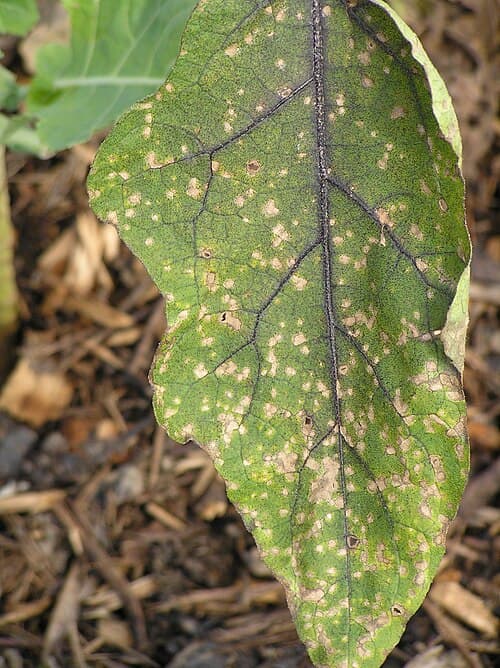

Check these first
- Inspect the undersides of the leaves for tiny beetles.
- Check if the spots have a yellow halo.
- Look for signs of moisture sitting on the leaves.
Likely causes
Flea beetles
Most likelyHow to tell: You will see tiny, round holes scattered across the leaves that look like someone used a hole puncher. The beetles themselves are small and jump away when disturbed.
What to do: Spray the foliage with neem oil or insecticidal soap every 7 days. Make sure to cover both the tops and bottoms of the leaves thoroughly.
Fungal leaf spot
Most likelyHow to tell: These spots are often brown or black with a yellow halo around them. They tend to appear when the leaves stay wet for too long.
What to do: Remove the affected leaves immediately to stop the spread. Improve air circulation around the plant and avoid getting water on the foliage when you irrigate.
Find out what's wrong with your deadly nightshade
The list above covers the usual causes. Pocket Botanist looks at a photo of your actual plant and tells you the likely cause, how serious it is, and what to try first. Identification and a health check are free.



Scan with your phone's camera to get the app
Or go to pocketbotanist.app/get on your phone
When to worry
Worry if the holes cover more than half the leaf surface or if the plant starts losing vigor. A few small holes are common in outdoor settings.
Stopping it coming back
Keep the area around your plant clear of debris and ensure it has plenty of space for air to move between stems.
Deadly nightshade: spots? Check yours with a photo
Every plant is a little different. Take a photo of your deadly nightshade and Pocket Botanist tells you which cause is most likely, how serious it is, and what to try first. A few checks a day are free. Save the plant and you get care reminders timed for it.
Scan with your phone's camera to get the app
Or go to pocketbotanist.app/get on your phone
Get the app · Or check it from a photo now, free
Questions people ask
- Are these spots dangerous to me?
- The spots themselves are just a sign of plant stress, but remember that all parts of the deadly nightshade are toxic if ingested. Always wash your hands after handling the plant.
- Can I just cut off the spotted leaves?
- Yes, pruning away damaged foliage helps the plant focus its energy on new growth. Just use clean scissors and dispose of the leaves in the trash.
Guides to these causes
More problems with Deadly nightshade
- Why are there holes in my deadly nightshade leaves?
- Why is my deadly nightshade wilting?
- Why is my deadly nightshade growing so leggy?
- Why are my deadly nightshade leaves turning yellow?
- Why is my deadly nightshade dropping its leaves?
- Why is my Atropa belladonna not flowering?
- Why is my Atropa belladonna showing signs of root rot?
- Why are my Atropa belladonna leaves curling?
Back to the Deadly nightshade guide
This article was generated with AI on from the plant’s care profile and is general information, not horticultural advice. Read about how we build these guides.