 Pocket Botanist
Plant guide
Common asparagus fern.
Asparagus setaceus
Pronounced as-PAIR-uh-gus seh-TAY-see-us
Also known as = Asparagus setaceus (Kunth) Jessop, Asparagus Fern, Climbing asparagus, Common Asparagus Fern, Emerald asparagus fern, Evergreen Creeper, Feathery Asparagus, Ferny Asparagus



Scan with your phone's camera to get the app
Or go to pocketbotanist.app/get on your phone

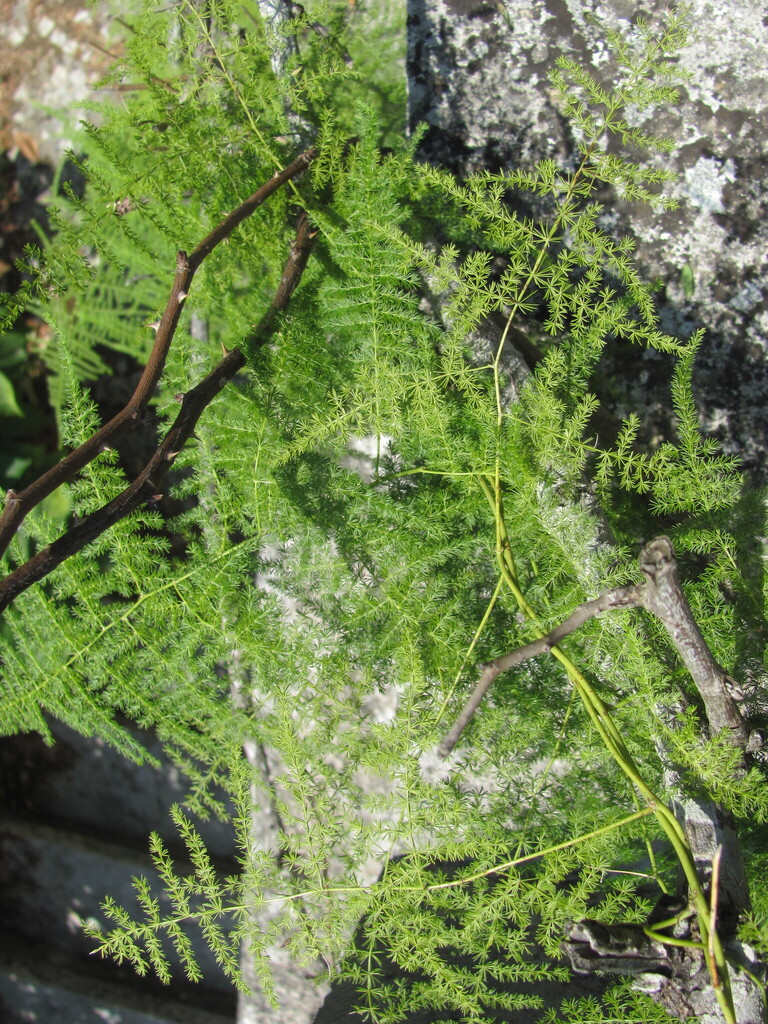
This elegant plant is actually a member of the asparagus family (Asparagaceae), not a true fern. It features delicate, needle like foliage that creates a soft, airy look in any room. You will love how its feathery stems trail beautifully from a hanging basket or shelf.
At a glance
- Care level
- Moderate
- Plant type
- Perennial vine
- Light
- Bright indirect light is best, as direct sun will scorch the delicate needles.
- Indoor light
- Bright indirect
- Water
- Every 5 to 10 days
- Mature size
- 3 to 10 feet
- Growth rate
- Fast
- Hardiness
- USDA 9 to 11
- Bloom time
- Late spring to early summer
Care
Keep the soil consistently moist but never soggy to prevent root issues. Watch for yellowing needles, which often signal that the plant is too dry or needs more humidity. Mist the foliage regularly to keep it looking lush and vibrant.
- Watering
- Water when the top inch of soil feels slightly dry to the touch.
- Feeding
- Feed with a balanced liquid fertilizer diluted to half strength during the growing season.
- Pruning
- Trim back any brown or straggly stems to encourage fuller, bushier growth.
- Repotting
- Move to a slightly larger pot when the tuberous roots begin to push the plant upward.
- Soil
- Well draining peat based potting mix
- Soil pH
- 6.5 to 7.5
- Temperature
- 10 to 24°C
- Humidity
- 50 to 70%
- Drought tolerance
- Low
- Lifespan
- Perennial, typically 5 to 10 years
- Deer and rabbits
- Moderate
Signs it needs repotting
- Roots growing out of the drainage holes
- Water running straight through the pot without soaking in
Safety
- People
- The berries can cause stomach upset and vomiting if eaten, and the sap may irritate sensitive skin.
- Pets
- This plant is toxic to cats and dogs if ingested, causing gastrointestinal upset or skin irritation.
- Children
- Keep this plant away from small children because the small, dark berries look like candy but are poisonous.
- Contact allergens
- Handling the stems can cause contact dermatitis in some individuals due to the sap.
- Airborne allergens
- The pollen is generally not considered a significant allergen.
- Edibility
- The berries are toxic if ingested and should never be consumed.
How to identify it
- Fine needle like cladodes
- Wiry branching stems
- Small white star shaped flowers
- Tiny green to black berries
- Tuberous root system
- Height
- 1 to 3m
- Spread
- 0.3 to 0.6m
- Leaves
- bright green, evergreen
- Flowers
- white, 0.5 to 1cm
- Fruit
- black, Autumn
Problems to watch for
- Spider mites · These tiny pests thrive in dry air and cause yellowing foliage.
- Root rot · Overwatering leads to soggy soil and decaying roots.
Check your common asparagus fern from a photo
Pocket Botanist looks at a photo of your plant and tells you what's wrong and what to try first.
Scan with your phone's camera to get the app
Or go to pocketbotanist.app/get on your phone
Growing it
- Propagation
- division, seed
- When to plant
- spring, summer
- Overwintering
- Move the plant indoors before the first frost. Keep it in a bright spot away from cold drafts and reduce watering slightly during the winter months.
- In containers
- It grows very well in containers, provided the pot has excellent drainage and is at least 15 cm wide.
Division
- 1. Carefully remove the plant from its pot.
- 2. Gently tease the root ball apart into smaller sections.
- 3. Replant each section into fresh, well-draining potting mix.
Group plants with similar water needs together to maintain a consistent microclimate.
Grows well with
- Peace Lily · They share similar requirements for indirect light and consistent moisture.
- Pothos · Both plants thrive in similar indoor humidity levels.
Similar species
- Asparagus densiflorus · It has a similar growth habit but with denser, more robust stems.
Science
- Family
- Asparagaceae
- Genus
- Asparagus
- Order
- Asparagales
- Class
- Liliopsida
- Native range
- Southern and Eastern Africa
- Conservation
- Not currently of conservation concern.
It grows in the understory of forests where it uses its climbing habit to reach filtered sunlight.
- Value to wildlife
- nectar source
- Pollinators
- bees
- Uses
- houseplant, floral arrangements, hanging baskets
Through the year
Ecological indicators
- Salinity
- 2/9
- Soil reaction
- 6/9
- Light
- 4/9
- Temperature
- 7/9
- Moisture
- 6/9
- Nutrients
- 5/9
Taxonomy resolved against GBIF.
Questions people ask
- Why are the needles falling off?
- This usually happens when the plant is too dry or lacks sufficient humidity.
- Does it need direct sun?
- It prefers bright, indirect light and will scorch in harsh direct sun.
Where the name comes from
The name Asparagus comes from the Greek word for sprout, while setaceus refers to its bristle-like foliage.
Good to know
- It is often called lace fern because of its delicate, feathery appearance.
- It grows as a climbing vine in its natural habitat.
- The tiny leaves are actually modified stems called cladodes.
Also in
Keep your common asparagus fern growing
This page is a general guide. Save your plant in Pocket Botanist and you get care reminders timed for this plant, plus a care history that shows what worked.
Scan with your phone's camera to get the app
Or go to pocketbotanist.app/get on your phone
This guide was generated with AI on and checked against GBIF taxonomy. It is general information, not horticultural or veterinary advice. Read about how we build these guides.