 Pocket Botanist
Plant guide
Asparagus fern.
Asparagus densiflorus
Pronounced uh-SPAR-uh-gus den-sih-FLOR-us
Also known as Asparagus Fern, Foxtail Asparagus, Sprenger's Asparagus, Sprenger's asparagus fern, foxtail asparagus-fern, foxtail fern, plume asparagus-fern



This plant is a lovely, feathery addition to any indoor space. It is not a true fern, but it certainly looks like one with its soft, needle like foliage. It thrives in bright spots and adds a nice touch of texture to hanging baskets.
At a glance
- Care level
- Easy
- Plant type
- Perennial
- Light
- Bright indirect light is best, though it can handle some morning sun.
- Indoor light
- Bright indirect
- Water
- Every 5 to 10 days
- Mature size
- 60 to 90 cm tall and wide
- Growth rate
- Fast
- Hardiness
- USDA 9 to 11
- Bloom time
- Mid to late summer
Care
Keep the soil consistently moist but never soggy to prevent root rot. Watch for yellowing needles, which often signal that the plant is too dry or needs more light. Prune back any brown or straggly stems to encourage fresh, bushy growth.
- Watering
- Water when the top inch of soil feels dry to the touch.
- Feeding
- Feed with a balanced liquid fertilizer during the active growing season.
- Pruning
- Trim back old or yellowing stems to keep the plant looking tidy.
- Repotting
- Repot when the tuberous roots begin to push the plant out of its container.
- Soil
- Well draining, peat based potting mix
- Soil pH
- 6.5 to 7.5
- Temperature
- 10 to 28°C
- Humidity
- 40 to 60%
- Drought tolerance
- Moderate
- Lifespan
- Perennial, typically 5 to 10 years
- Fragrance
- Light
- Deer and rabbits
- Moderate
Signs it needs repotting
- Roots growing out of the drainage holes.
- Water sitting on the surface for too long.
- Plant growth has slowed significantly.
Safety
- People
- All parts of the plant, especially the berries, can cause gastrointestinal distress if ingested.
- Pets
- The berries and foliage are toxic to cats and dogs if ingested.
- Children
- Keep this plant away from small children because the berries look like small, edible red ornaments.
- Contact allergens
- The sap can cause skin irritation or dermatitis in sensitive individuals.
- Airborne allergens
- There is no significant risk of airborne allergens.
- Edibility
- The berries are toxic to humans and should never be consumed.
How to identify it
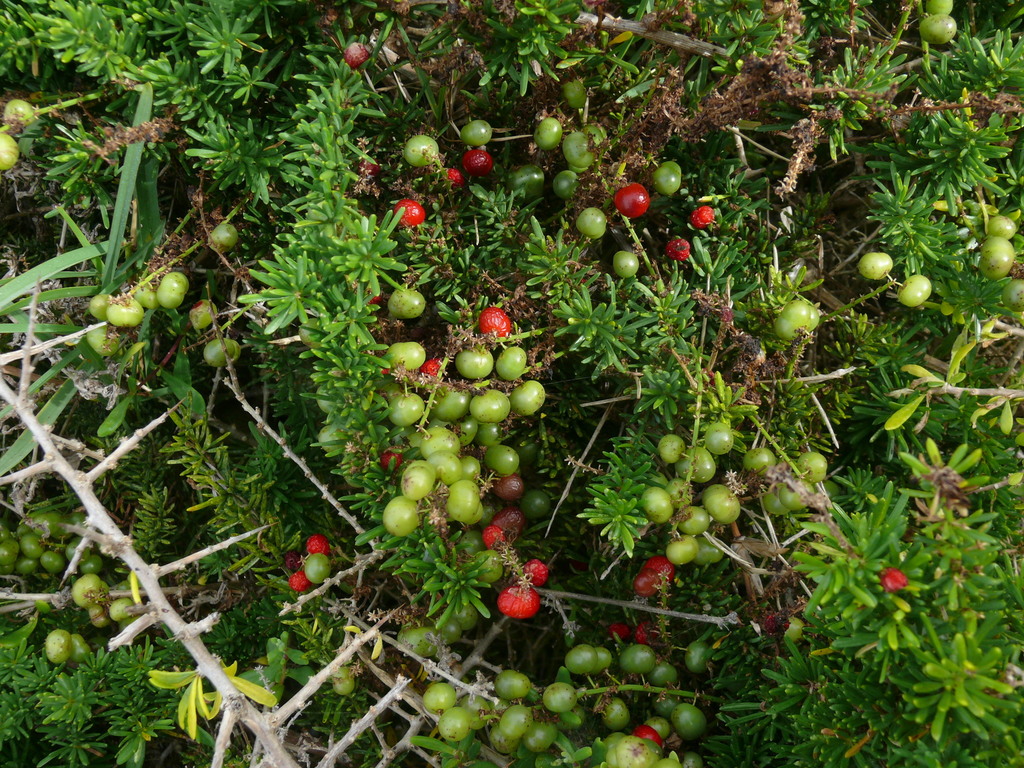
- Feathery, needle like cladodes
- Arching, trailing stems
- Small, white or pinkish flowers
- Bright red berries on mature plants
- Tuberous, fleshy root system
- Height
- 0.3 to 0.6m
- Spread
- 0.6 to 0.9m
- Leaves
- bright green, evergreen
- Flowers
- white, pale pink, 0.5 to 1cm
- Fruit
- bright red, Autumn
Problems to watch for
- Brown Leaf EdgesCommon
- Frond BrowningCommon
- Root RotCommon
- Spider MitesCommon
- ChlorosisUncommon
- Fungus GnatsUncommon
- MealybugsUncommon
- Scale InsectsUncommon
By symptom
Check your asparagus fern from a photo
Pocket Botanist looks at a photo of your plant and tells you what's wrong and what to try first.
Growing it
- Propagation
- division, seed
- When to plant
- Spring, Early summer
- Overwintering
- Move containers indoors before the first frost. Reduce watering during the winter months as growth slows down.
- In containers
- It is excellent for containers and hanging baskets, provided the pot has good drainage.
Division
- 1. Carefully remove the plant from its pot.
- 2. Use a sharp, clean knife to divide the root ball into sections.
- 3. Replant each section into fresh, well-draining potting mix.
Group this plant with others that enjoy consistent moisture to make watering routines easier.
Grows well with
- Peace Lily — They share similar light and humidity requirements.
- Spider Plant — Both plants thrive in similar indoor environments.
Similar species
- Asparagus setaceus — It has a much finer, lacy texture than densiflorus.
Science
- Family
- Asparagaceae
- Genus
- Asparagus
- Order
- Asparagales
- Class
- Liliopsida
- Native range
- Southern Africa
- Conservation
- This species is considered invasive in several parts of the world, including Australia and parts of the United States.
It grows in a variety of habitats, from coastal dunes to forest edges, where its tubers allow it to persist through drought.
- Value to wildlife
- nectar source
- Pollinators
- bees
- Uses
- hanging baskets, ground cover, indoor houseplant
Through the year
Ecological indicators
- Nutrients
- 5/9
- Salinity
- 3/9
- Moisture
- 4/9
- Soil reaction
- 5/9
- Light
- 5/9
- Temperature
- 7/9
Taxonomy resolved against GBIF.
Questions people ask
- Why are the leaves turning yellow?
- This is often a sign of either too much direct sun or inconsistent watering.
- Can I grow this in a dark corner?
- It prefers bright, indirect light and will become leggy in deep shade.
Where the name comes from
The name densiflorus means densely flowered, referring to the way the small blooms cluster along the stems.
Good to know
- It has tuberous roots that store water, helping it survive dry spells.
- The needle-like structures are actually modified stems called cladodes.
- It is highly adaptable and can grow in both sun and shade.
Also in
Keep your asparagus fern growing
This page is a general guide. Save your plant in Pocket Botanist and you get care reminders timed for this plant, plus a care history that shows what worked.
This guide was generated with AI and checked against GBIF taxonomy. It is general information, not horticultural or veterinary advice. Read about how we build these guides.