 Pocket Botanist
Plant guide
Giant reed.
Arundo donax
Pronounced uh-RUN-doh DOH-naks
Also known as Arundo grass, Bamboo reed, Cow cane, Donax cane, Giant cane, River cane, Spanish cane/reed, Wild cane, Reedgrass, Bamboo Reed, Cana brava, Elephant Grass, Giant Reed, Reed


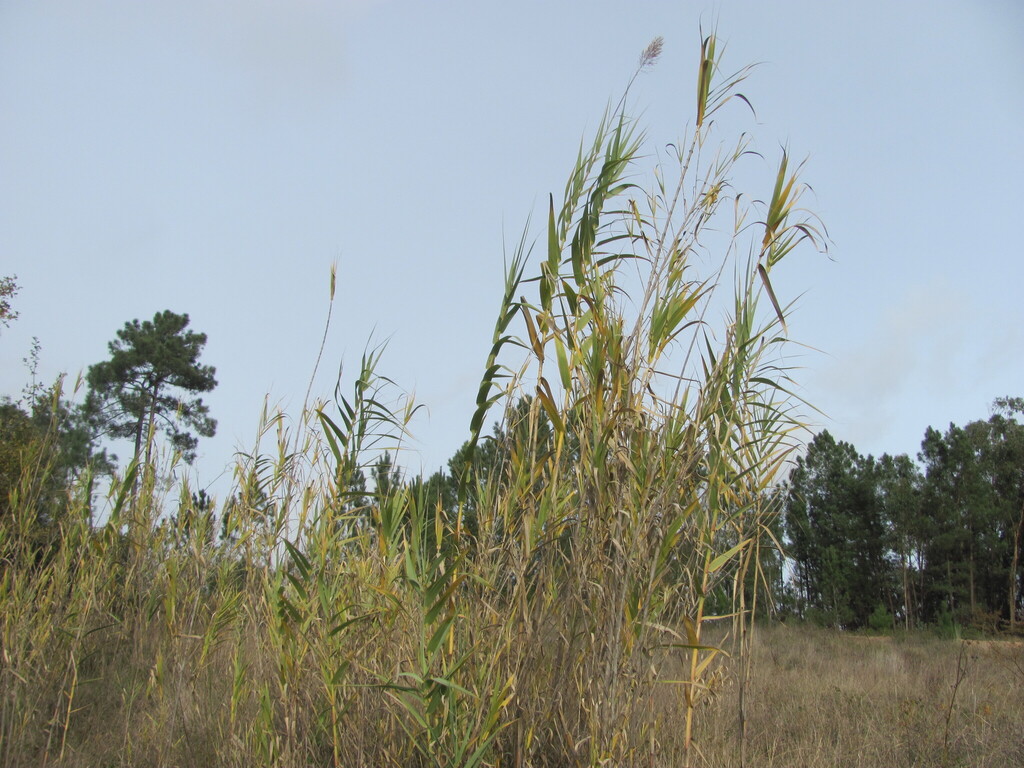
The giant reed is a tall, bamboo like perennial grass that thrives in moist, sunny environments. It spreads rapidly through underground rhizomes, making it a vigorous grower in the right conditions. You will often see it forming dense stands near water sources.
At a glance
- Care level
- Easy
- Plant type
- Perennial grass
- Light
- Full sun
- Indoor light
- direct
- Water
- Every 3 to 7 days
- Mature size
- 6 to 10 meters
- Growth rate
- fast
- Hardiness
- USDA 6 to 10
- Bloom time
- Late summer to autumn
Care
Provide plenty of space as this plant spreads aggressively. Keep the soil consistently moist, especially during the growing season. Watch for signs of invasive spread into unwanted areas and manage accordingly.
- Watering
- Keep the soil consistently moist, as this plant loves water.
- Feeding
- Apply a balanced fertilizer once during the spring.
- Pruning
- Cut back dead or damaged stems in late winter to encourage fresh growth.
- Repotting
- Repot only if necessary, as this plant prefers to be established.
- Soil
- Loamy, moist, well draining soil
- Soil pH
- 6.0 to 8.0
- Temperature
- -10 to 40°C
- Humidity
- 40 to 70%
Safety
- Pets
- It is generally considered non toxic to cats and dogs.
How to identify it
- Tall, bamboo like hollow stems
- Large, alternate lance shaped leaves
- Plume like flower clusters at tips
- Rapidly spreading rhizomatous root system
- Height
- 3 to 10m
- Spread
- 1 to 3m
- Leaves
- green, blue-green, deciduous
- Flowers
- white, tan, 30 to 60cm
Growing it
- Propagation
- division, rhizome cuttings
- When to plant
- spring, autumn
Science
- Family
- Poaceae
- Genus
- Arundo
- Order
- Poales
- Class
- Liliopsida
Through the year
Taxonomy resolved against GBIF.
Is your giant reed looking unwell?
This page is a general guide. Pocket Botanist diagnoses problems from a photo of your actual plant, works out watering for your light and conditions, and reminds you when care is due.
This guide was generated with AI and checked against GBIF taxonomy. It is general information, not horticultural or veterinary advice. Read about how we build these guides.