 Pocket Botanist
Plant guide
Wild Jack.
Artocarpus hirsutus
Pronounced ar-toh-KAR-pus her-SOO-tus
Also known as Hairy Bread-Fruit Tree, Hirsute Artocarpus, Wild Jack Fruit, wild jack



Scan with your phone's camera to get the app
Or go to pocketbotanist.app/get on your phone
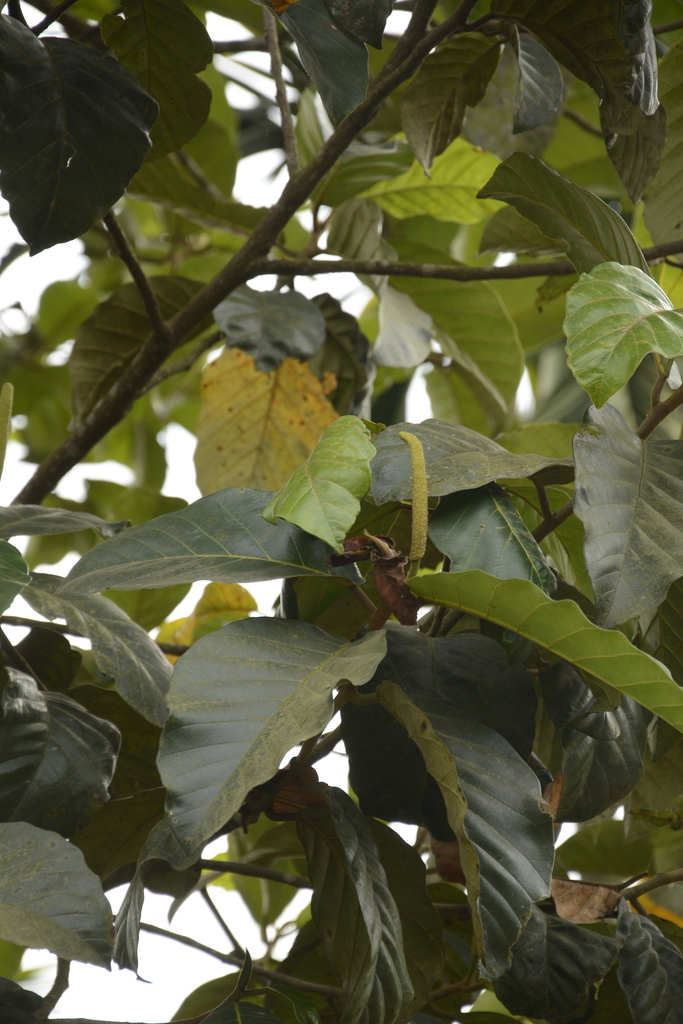
The wild jack is a beautiful tropical evergreen tree native to the Western Ghats of India. It produces edible, sweet fruit and is highly valued for its durable timber. You will find it thrives best in warm, humid climates with plenty of space to grow.
At a glance
- Care level
- Moderate
- Plant type
- Tropical evergreen tree
- Light
- Full sun to partial shade
- Indoor light
- Bright indirect
- Water
- Every 3 to 7 days
- Mature size
- 20 to 30 meters
- Growth rate
- Medium
- Hardiness
- USDA 10 to 12
- Bloom time
- Late winter to early spring
Care
Keep the soil consistently moist but never waterlogged to ensure the roots stay healthy. Watch for yellowing leaves which might signal overwatering or poor drainage. It appreciates high humidity and protection from harsh, drying winds.
- Watering
- Water deeply when the top inch of soil feels dry to the touch.
- Feeding
- Apply a balanced organic fertilizer during the active growing season.
- Pruning
- Remove dead or crossing branches once a year to maintain tree shape.
- Repotting
- Repot only when the tree has clearly outgrown its container.
- Soil
- Deep, fertile, well draining soil
- Soil pH
- 6.0 to 7.5
- Temperature
- 15 to 35°C
- Humidity
- 70 to 95%
Safety
- People
- The milky latex sap can cause skin irritation in sensitive individuals.
- Pets
- The milky sap can cause irritation if ingested or touched by pets.
- Children
- The fruit contains large seeds that pose a choking hazard to small children.
- Contact allergens
- The latex sap may cause contact dermatitis.
- Airborne allergens
- Pollen may cause mild respiratory irritation during the flowering season.
- Edibility
- The seeds must be cooked thoroughly before consumption to neutralize potential irritants.
How to identify it
- Large, leathery, dark green leaves
- Hairy, bristly texture on young twigs
- Rough, spiky, round to oblong fruit
- Milky white latex sap in stems
- Sturdy, upright, evergreen growth habit
- Height
- 15 to 25m
- Spread
- 8 to 15m
- Leaves
- dark green, evergreen
- Flowers
- yellowish green, 2 to 5cm
- Fruit
- yellow, brown, Summer to early autumn
Problems to watch for
- Fruit rot · Fungal infection occurring during periods of excessive humidity.
- Stem borer · Larvae tunnel into the trunk, weakening the structural integrity of the tree.
Check your wild jack from a photo
Pocket Botanist looks at a photo of your plant and tells you what's wrong and what to try first.
Scan with your phone's camera to get the app
Or go to pocketbotanist.app/get on your phone
Growing it
- Propagation
- seed, cuttings
- When to plant
- spring, early monsoon
Plant shade loving spices beneath the canopy to utilize the vertical space efficiently.
Grows well with
- Cardamom · It thrives in the dappled shade provided by the canopy.
- Black Pepper · This vine often uses the tree trunk as a natural support.
Similar species
- Jackfruit · It is a close relative with much larger, smoother fruits.
Science
- Family
- Moraceae
- Genus
- Artocarpus
- Order
- Rosales
- Class
- Magnoliopsida
- Native range
- Western Ghats of India
- Conservation
- It is considered a vulnerable species in parts of its native range due to habitat loss.
This tree thrives in the high rainfall, humid environment of tropical evergreen forests.
- Value to wildlife
- nectar source, fruit source for birds and mammals
- Pollinators
- bees, beetles
- Uses
- culinary fruit, timber production, ornamental shade tree
Through the year
Ecological indicators
- Salinity
- 1/9
- Soil reaction
- 6/9
- Light
- 7/9
- Temperature
- 9/9
- Moisture
- 8/9
- Nutrients
- 6/9
Taxonomy resolved against GBIF.
Questions people ask
- Can I grow this in a pot?
- It is generally too large for long term container growth.
- How do I eat the fruit?
- The seeds are typically roasted or boiled, while the fleshy pulp is eaten raw or cooked.
Where the name comes from
The name Artocarpus comes from the Greek words for bread and fruit, while hirsutus refers to the hairy texture of the fruit rind.
Good to know
- The tree is commonly known as the Wild Jackfruit.
- Its timber is highly valued for its durability and resistance to termites.
- The fruits are covered in stiff, hair like bristles, which gives the species its name hirsutus.
- It is a keystone species in the evergreen forests of the Western Ghats.
Also in
Keep your wild jack growing
This page is a general guide. Save your plant in Pocket Botanist and you get care reminders timed for this plant, plus a care history that shows what worked.
Scan with your phone's camera to get the app
Or go to pocketbotanist.app/get on your phone
This guide was generated with AI on and checked against GBIF taxonomy. It is general information, not horticultural or veterinary advice. Read about how we build these guides.