 Pocket Botanist
Guía de plantas
Bearberry.
Arctostaphylos uva-ursi
Pronunciación ark-toh-STAF-ih-loss yoo-vuh-ER-see
También se conoce como Bear-grape, Bearberry, Manzanita de oso, Hog-cranberry, Kinnikinnick, Mealberry, Mountain-box



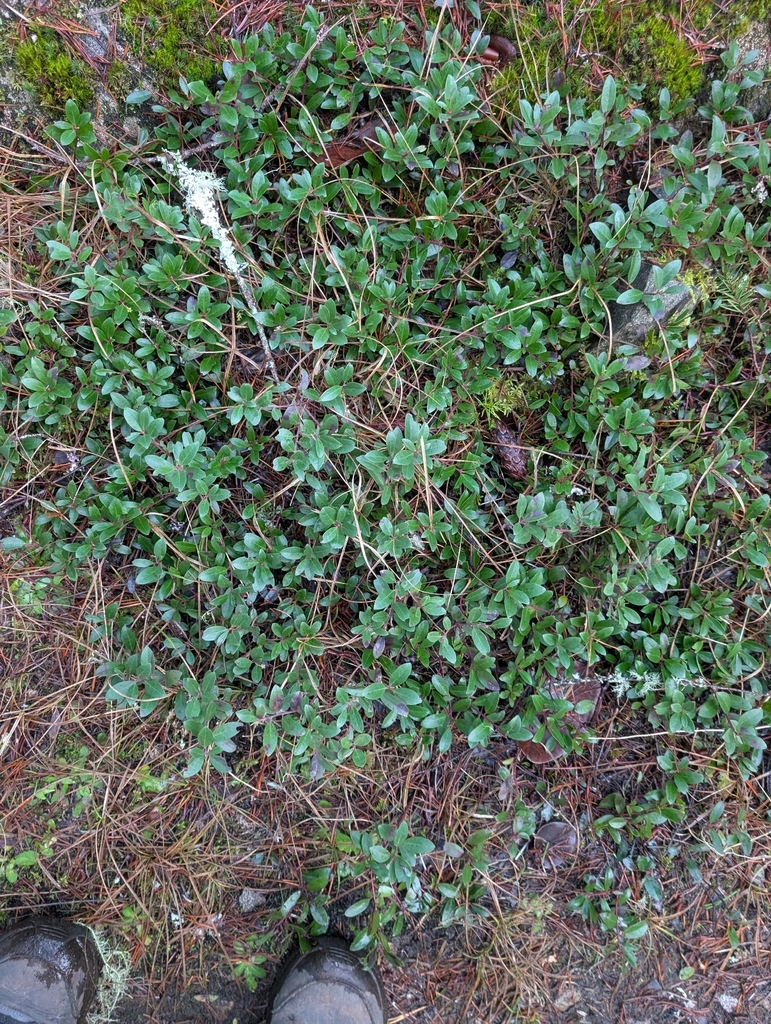
El arándano rojo es un arbusto perenne resistente y de bajo crecimiento que forma una densa alfombra en el suelo. Es famoso por sus hojas verdes brillantes y sus bayas rojas brillantes que persisten durante el invierno. Esta planta es una opción fantástica para cubrir el suelo en suelos rocosos o arenosos.
De un vistazo
- Nivel de cuidados
- Media
- Tipo de planta
- Arbusto perenne
- Luz
- Pleno sol a sombra parcial
- Luz en interior
- Sol directo
- Riego
- Cada 7 a 14 días
- Tamaño adulto
- 6 a 12 pulgadas de alto
- Ritmo de crecimiento
- Lento
- Rusticidad
- USDA 2 a 7
- Floración
- Mid to late spring
Cuidados
Plante este arbusto en un suelo bien drenado y asegúrese de que reciba mucha luz solar para prosperar. Esté atento a las hojas amarillentas, que a menudo indican que el suelo está demasiado húmedo. Prefiere climas fríos y no le gusta la alta humedad ni los suelos arcillosos pesados.
- Riego
- Riegue profundamente hasta que esté establecido, luego permita que el suelo se seque entre riegos.
- Abonado
- Aplique una dosis ligera de fertilizante para plantas acidófilas una vez a principios de primavera.
- Poda
- Pode ligeramente a finales de invierno o principios de primavera para mantener la forma y eliminar los tallos muertos.
- Trasplante
- Trasplante solo si la planta se queda sin espacio en la maceta o si necesita renovar la mezcla de suelo ácido.
- Suelo
- Suelo ácido arenoso o rocoso
- pH del suelo
- 4.5 a 6.0
- Temperatura
- -40 a 30°C
- Humedad
- 40 a 70%
- Tolerancia a la sequía
- Alta
- Longevidad
- Perennial, can live for many decades.
- Resistencia a ciervos y conejos
- Alta
Señales de que necesita trasplante
- Roots growing out of drainage holes
- Water running straight through the pot
- Stunted growth
Seguridad
- Personas
- The leaves contain arbutin, which can be toxic if ingested in significant amounts.
- Niños
- The bright red berries may look tempting to small children, but they are not tasty and should not be eaten.
- Alérgenos por contacto
- The foliage is generally non-irritating, though some sensitive individuals may experience mild skin reactions.
- Alérgenos en el aire
- It is not considered a significant source of airborne allergens.
- Comestibilidad
- The berries are technically edible but are mealy, bland, and can cause stomach upset if consumed in large quantities.
Cómo identificarla
- Hojas coriáceas de color verde oscuro brillante
- Flores pequeñas en forma de campana, blancas o rosadas
- Bayas redondas de color rojo brillante
- Tallos leñosos rastreros de bajo crecimiento
- Altura
- 0,05 a 0,3m
- Anchura
- 1 a 3m
- Hojas
- dark green, bronze, evergreen
- Flores
- white, pink, 0,5 a 0,8cm
- Frutos
- bright red, Late summer to autumn
Problemas frecuentes
- Leaf spot — Fungal spots appear on leaves during periods of high humidity.
- Root rot — Occurs when the soil stays too wet and lacks proper drainage.
Cómo cultivarla
- Propagación
- cuttings, seed, layering
- Cuándo plantar
- spring, autumn
- Cuidados en invierno
- It is extremely cold-hardy and requires no special winter protection in its native range.
- En maceta
- It grows well in wide, shallow containers that provide excellent drainage.
Semi-hardwood cuttings
- Take 10 cm cuttings in late summer.
- Remove lower leaves and dip the base in rooting hormone.
- Place in a well-draining sandy mix.
- Keep in a bright, cool location until rooted.
Pair this plant with other acid-loving, low-water species to create a low-maintenance, drought-tolerant landscape.
Buenas compañeras
- Arándano azul de arbusto alto — They share similar acidic soil requirements.
- Wintergreen — Both are low-growing, acid-loving evergreens.
Especies parecidas
- Arctostaphylos — They belong to the same genus but are generally much larger shrubs.
Ciencia
- Familia
- Ericaceae
- Género
- Arctostaphylos
- Orden
- Ericales
- Clase
- Magnoliopsida
- Distribución natural
- Northern Hemisphere, including North America, Europe, and Asia.
- Conservación
- It is not endangered, but wild collection should be avoided to protect local ecosystems.
It is a hardy pioneer species that excels at colonizing barren, sandy, or rocky soils.
- Valor para la fauna
- nectar source, provides winter food for birds
- Polinizadores
- abejas, mariposas, colibríes
- Usos
- groundcover, rock gardens, erosion control, traditional herbal tea
A lo largo del año
Indicadores ecológicos
- Salinidad
- 4/9
- Reacción del suelo
- 3/9
- Luz
- 7/9
- Temperatura
- 3/9
- Humedad
- 3/9
- Nutrientes
- 2/9
Taxonomía cotejada con GBIF.
Lo que más preguntan
- Does it need full sun?
- It prefers full sun but will tolerate partial shade.
- How fast does it spread?
- It is a slow to moderate grower that forms a dense mat over time.
De dónde viene el nombre
Arctostaphylos comes from the Greek words for bear and grape, while uva-ursi is the Latin translation of the same meaning.
Bueno saberlo
- The name uva-ursi is Latin for bear grape because bears enjoy eating the fruit.
- It is a classic choice for stabilizing sandy slopes.
- The leaves have been used historically in traditional medicine for urinary health.
- It thrives in poor, acidic soils where many other plants struggle.
También en
¿Tu bearberry tiene mal aspecto?
Esta página es una guía general. Pocket Botanist diagnostica problemas a partir de una foto de tu propia planta, calcula el riego según tu luz y tus condiciones, y te avisa cuando toca cuidarla.
Esta guía se ha generado con IA y se ha cotejado con la taxonomía de GBIF. Es información general, no asesoramiento botánico ni veterinario. Descubre cómo elaboramos estas guías.