 Pocket Botanist
Plant guide
Monkey puzzle tree.
Araucaria araucana
Pronounced ar-aw-KAIR-ee-uh ar-aw-KAY-nuh
Also known as Chile pine, Chilean pine, Chilean-pine, Monkey Puzzle, Monkey-Puzzle



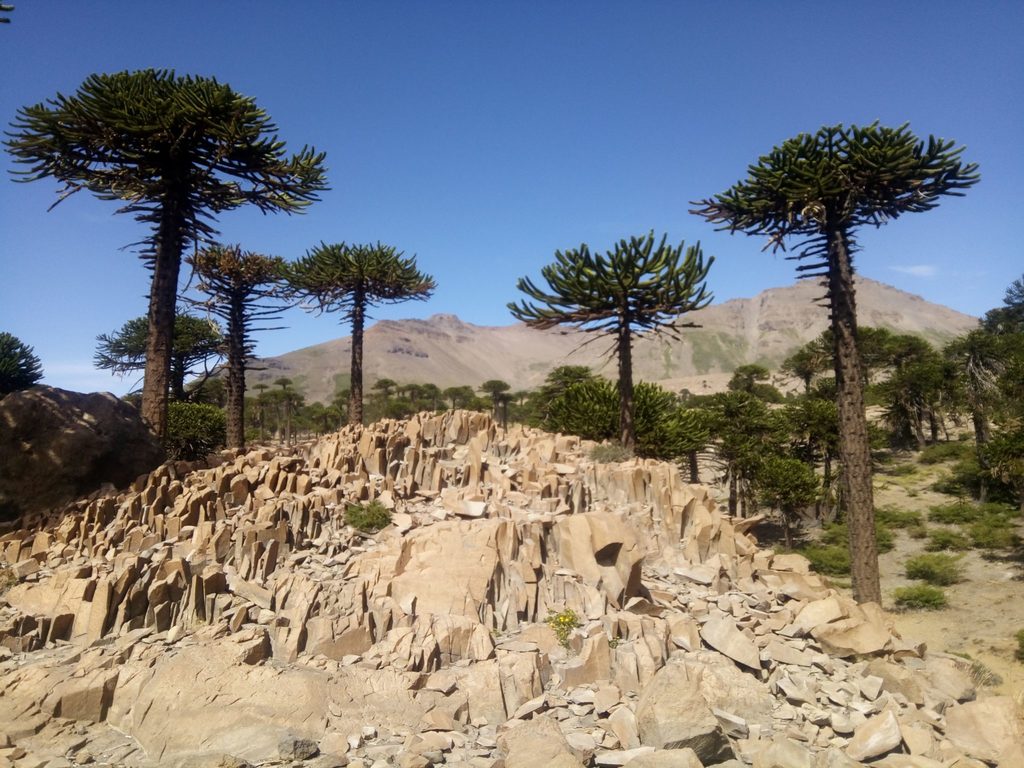
The monkey puzzle is a striking evergreen conifer known for its unique, architectural appearance. It grows quite slowly and makes a bold statement in large landscapes. You will love its prehistoric look and sharp, spiraling leaves.
At a glance
- Care level
- Moderate
- Plant type
- Coniferous evergreen tree
- Light
- Full sun to partial shade
- Indoor light
- Bright indirect
- Water
- Every 7 to 14 days
- Mature size
- 50 to 80 feet
- Growth rate
- Slow
- Hardiness
- USDA 7 to 10
- Bloom time
- Rarely flowers in cultivation.
Care
Plant this tree in a spot with plenty of space to accommodate its wide spread. Keep the soil consistently moist but well drained to prevent root issues. Watch for yellowing needles, which often signal that the soil is too dry or poorly drained.
- Watering
- Water deeply during dry spells to keep the root zone hydrated.
- Feeding
- Apply a balanced, slow release fertilizer in early spring.
- Pruning
- Only prune to remove dead or damaged branches since it maintains a natural shape.
- Repotting
- Repot only when the tree is young and clearly outgrowing its container.
- Soil
- Deep, fertile, well drained soil
- Soil pH
- Slightly acidic to neutral
- Temperature
- -15 to 30°C
- Humidity
- 40 to 70%
- Drought tolerance
- Moderate
- Lifespan
- Perennial, can live for over 1,000 years.
- Deer and rabbits
- High
Signs it needs repotting
- Roots growing out of the drainage holes.
- Water running straight through the pot without soaking in.
- The tree appears stunted despite good care.
Safety
- People
- The plant is not toxic, but the sharp, rigid leaves can cause significant physical injury.
- Children
- Keep children away from the base of the tree as the fallen leaves are extremely sharp and dangerous.
- Contact allergens
- The stiff, pointed leaves can cause skin punctures and irritation upon contact.
- Airborne allergens
- The pollen may cause mild respiratory irritation in sensitive individuals.
- Edibility
- The large seeds are edible when cooked but should not be consumed raw.
How to identify it
- Sharp, triangular, dark green leaves
- Thick, snake like branches
- Rough, greyish brown bark
- Symmetrical, pyramidal growth habit
- Large, woody, spherical cones
- Height
- 10 to 25m
- Spread
- 3 to 8m
- Leaves
- dark green, evergreen
- Flowers
- yellow, brown, 5 to 15cm
- Fruit
- brown, Autumn
Common problems
- Scale insects — Small sap sucking insects that can cause yellowing and needle drop.
- Root rot — Fungal infection caused by poorly drained soil.
Growing it
- Propagation
- seed, cuttings
- When to plant
- spring, autumn
- Overwintering
- Young trees may need protection from severe frost with burlap wraps. Ensure the soil remains well drained to prevent root damage during wet winters.
- In containers
- It grows well in large containers for many years, but ensure the pot is heavy enough to prevent tipping.
Seed
- 1. Harvest fresh seeds in autumn.
- 2. Sow immediately in well drained potting mix.
- 3. Keep the pot in a cool, bright location.
- 4. Germination can take several months.
Plant low growing woodland perennials beneath the tree to utilize the space without competing for deep root resources.
Grows well with
Similar species
- Norfolk Island Pine — It has a similar structural appearance but is not cold hardy.
Science
- Family
- Araucariaceae
- Genus
- Araucaria
- Order
- Pinales
- Class
- Pinopsida
- Native range
- Central and southern Chile and western Argentina.
- Conservation
- This species is listed as endangered in its native range due to habitat loss and overharvesting.
It grows in volcanic soils in the Andes mountains where it survives cold winters and heavy snow.
- Value to wildlife
- provides seeds for birds
- Pollinators
- beetles
- Uses
- ornamental specimen, edible seeds
Through the year
Ecological indicators
- Salinity
- 2/9
- Soil reaction
- 5/9
- Light
- 7/9
- Temperature
- 4/9
- Moisture
- 5/9
- Nutrients
- 4/9
Taxonomy resolved against GBIF.
Questions people ask
- How fast does it grow?
- It is a very slow growing tree, often adding only a few inches per year.
- Can I grow it in a pot?
- It can be kept in a large container for many years, but it will eventually outgrow it.
Where the name comes from
The scientific name refers to the Araucano people of Chile, who rely on the tree for food.
Good to know
- It is commonly called the monkey puzzle tree because it is said to puzzle a monkey to climb it.
- The tree can live for over 1,000 years in the wild.
- It is the national tree of Chile.
- The leaves are arranged in a unique spiral pattern around the branches.
Also in
Is your monkey puzzle tree looking unwell?
This page is a general guide. Pocket Botanist diagnoses problems from a photo of your actual plant, works out watering for your light and conditions, and reminds you when care is due.
This guide was generated with AI and checked against GBIF taxonomy. It is general information, not horticultural or veterinary advice. Read about how we build these guides.