 Pocket Botanist
Guía de plantas
Monkey puzzle tree.
Araucaria araucana
Pronunciación ar-aw-KAIR-ee-uh ar-aw-KAY-nuh
También se conoce como Pino chileno, Pino de Chile, Puzzle monkey



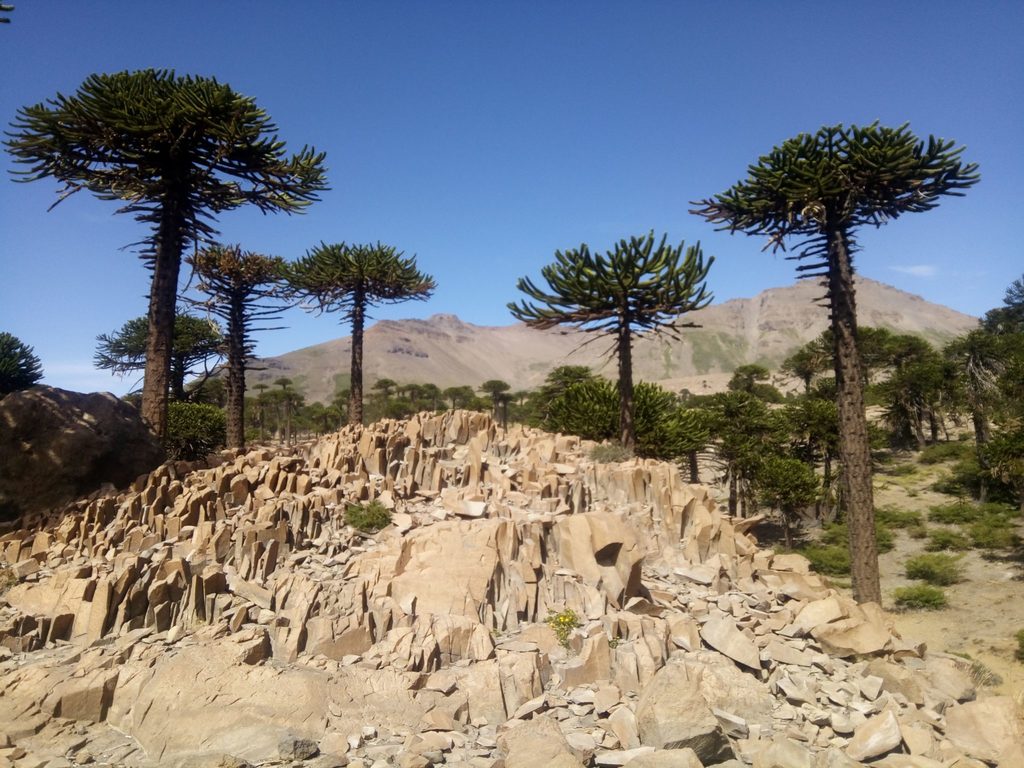
La araucaria es una conífera perenne llamativa, conocida por su aspecto único y arquitectónico. Crece bastante lentamente y causa una gran impresión en paisajes amplios. Te encantará su aspecto prehistórico y sus hojas afiladas y en espiral.
De un vistazo
- Nivel de cuidados
- Media
- Tipo de planta
- Árbol conífera perenne
- Luz
- Pleno sol a sombra parcial
- Luz en interior
- Luz indirecta brillante
- Riego
- Cada 7 a 14 días
- Tamaño adulto
- 50 a 80 pies
- Ritmo de crecimiento
- Lento
- Rusticidad
- USDA 7 a 10
- Floración
- Rarely flowers in cultivation.
Cuidados
Planta este árbol en un lugar con mucho espacio para acomodar su amplia extensión. Mantén la tierra constantemente húmeda pero bien drenada para prevenir problemas en las raíces. Estate atento a las agujas amarillas, que a menudo señalan que la tierra está demasiado seca o mal drenada.
- Riego
- Riega profundamente durante las sequías para mantener la zona de las raíces hidratada.
- Abonado
- Aplica un fertilizante equilibrado de liberación lenta a principios de primavera.
- Poda
- Poda solo para eliminar ramas muertas o dañadas, ya que mantiene una forma natural.
- Trasplante
- Trasplanta solo cuando el árbol es joven y claramente está superando su contenedor.
- Suelo
- Tierra profunda, fértil y bien drenada
- pH del suelo
- Ligeramente ácido a neutro
- Temperatura
- -15 a 30°C
- Humedad
- 40 a 70%
- Tolerancia a la sequía
- Moderada
- Longevidad
- Perennial, can live for over 1,000 years.
- Resistencia a ciervos y conejos
- Alta
Señales de que necesita trasplante
- Roots growing out of the drainage holes.
- Water running straight through the pot without soaking in.
- The tree appears stunted despite good care.
Seguridad
- Personas
- The plant is not toxic, but the sharp, rigid leaves can cause significant physical injury.
- Niños
- Keep children away from the base of the tree as the fallen leaves are extremely sharp and dangerous.
- Alérgenos por contacto
- The stiff, pointed leaves can cause skin punctures and irritation upon contact.
- Alérgenos en el aire
- The pollen may cause mild respiratory irritation in sensitive individuals.
- Comestibilidad
- The large seeds are edible when cooked but should not be consumed raw.
Cómo identificarla
- Hojas afiladas, triangulares y de color verde oscuro
- Ramas gruesas, parecidas a serpientes
- Corteza rugosa, de color grisáceo a marrón
- Hábito de crecimiento simétrico y piramidal
- Piñas leñosas, esféricas y grandes
- Altura
- 10 a 25m
- Anchura
- 3 a 8m
- Hojas
- dark green, evergreen
- Flores
- yellow, brown, 5 a 15cm
- Frutos
- brown, Autumn
Problemas frecuentes
- Scale insects — Small sap sucking insects that can cause yellowing and needle drop.
- Root rot — Fungal infection caused by poorly drained soil.
Cómo cultivarla
- Propagación
- seed, cuttings
- Cuándo plantar
- spring, autumn
- Cuidados en invierno
- Young trees may need protection from severe frost with burlap wraps. Ensure the soil remains well drained to prevent root damage during wet winters.
- En maceta
- It grows well in large containers for many years, but ensure the pot is heavy enough to prevent tipping.
Seed
- 1. Harvest fresh seeds in autumn.
- 2. Sow immediately in well drained potting mix.
- 3. Keep the pot in a cool, bright location.
- 4. Germination can take several months.
Plant low growing woodland perennials beneath the tree to utilize the space without competing for deep root resources.
Buenas compañeras
- Hosta — These shade tolerant plants thrive under the canopy of the tree.
- Western sword fern — Ferns appreciate the cool, moist environment created by the tree's shade.
Especies parecidas
- Araucaria heterophylla — It has a similar structural appearance but is not cold hardy.
Ciencia
- Familia
- Araucariaceae
- Género
- Araucaria
- Orden
- Pinales
- Clase
- Pinopsida
- Distribución natural
- Central and southern Chile and western Argentina.
- Conservación
- This species is listed as endangered in its native range due to habitat loss and overharvesting.
It grows in volcanic soils in the Andes mountains where it survives cold winters and heavy snow.
- Valor para la fauna
- provides seeds for birds
- Polinizadores
- escarabajos
- Usos
- ornamental specimen, edible seeds
A lo largo del año
Indicadores ecológicos
- Salinidad
- 2/9
- Reacción del suelo
- 5/9
- Luz
- 7/9
- Temperatura
- 4/9
- Humedad
- 5/9
- Nutrientes
- 4/9
Taxonomía cotejada con GBIF.
Lo que más preguntan
- How fast does it grow?
- It is a very slow growing tree, often adding only a few inches per year.
- Can I grow it in a pot?
- It can be kept in a large container for many years, but it will eventually outgrow it.
De dónde viene el nombre
The scientific name refers to the Araucano people of Chile, who rely on the tree for food.
Bueno saberlo
- It is commonly called the monkey puzzle tree because it is said to puzzle a monkey to climb it.
- The tree can live for over 1,000 years in the wild.
- It is the national tree of Chile.
- The leaves are arranged in a unique spiral pattern around the branches.
También en
¿Tu monkey puzzle tree tiene mal aspecto?
Esta página es una guía general. Pocket Botanist diagnostica problemas a partir de una foto de tu propia planta, calcula el riego según tu luz y tus condiciones, y te avisa cuando toca cuidarla.
Esta guía se ha generado con IA y se ha cotejado con la taxonomía de GBIF. Es información general, no asesoramiento botánico ni veterinario. Descubre cómo elaboramos estas guías.