 Pocket Botanist
Guide botanique
Araucaria du Chili.
Araucaria araucana
Prononciation ar-aw-KAIR-ee-uh ar-aw-KAY-nuh
Aussi appelée Pin du Chili, Pin d'Araucarie, Chilean-pine, Pin de singe, Pin singe



L'Araucaria du Chili est un conifère persistant saisissant, connu pour son apparence architecturale unique. Il pousse assez lentement et fait une déclaration audacieuse dans les grands paysages. Vous adorerez son look préhistorique et ses feuilles acérées disposées en spirale.
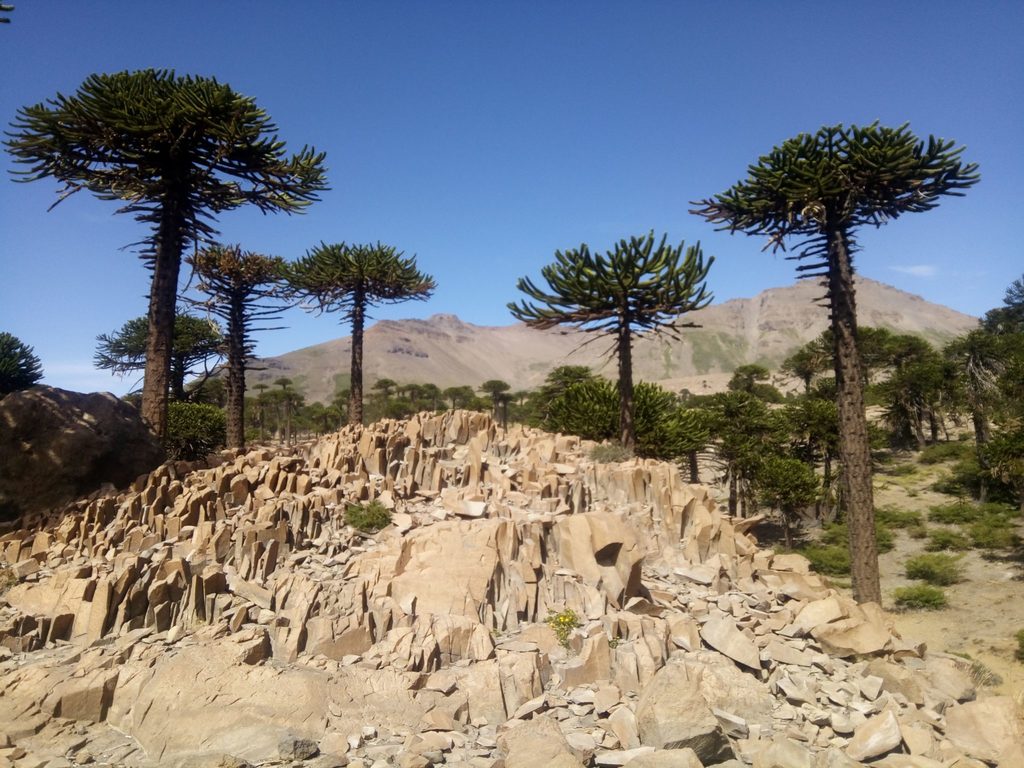
En un coup d'œil
- Niveau d'entretien
- Moyenne
- Type de plante
- Arbre conifère persistant
- Lumière
- Plein soleil à mi-ombre
- Lumière en intérieur
- Lumière vive indirecte
- Arrosage
- Tous les 7 à 14 jours
- Taille adulte
- 50 à 80 pieds
- Croissance
- Lente
- Rusticité
- USDA 7 à 10
- Floraison
- Rarely flowers in cultivation.
Entretien
Plantez cet arbre dans un endroit avec beaucoup d'espace pour accueillir son large étalement. Gardez le sol constamment humide mais bien drainé pour éviter les problèmes de racines. Surveillez le jaunissement des aiguilles, ce qui signale souvent que le sol est trop sec ou mal drainé.
- Arrosage
- Arrosez profondément pendant les périodes sèches pour garder la zone racinaire hydratée.
- Engrais
- Appliquez un engrais équilibré à libération lente au début du printemps.
- Taille
- Taillez uniquement pour enlever les branches mortes ou endommagées, car il conserve sa forme naturelle.
- Rempotage
- Rempotez uniquement lorsque l'arbre est jeune et dépasse clairement son conteneur.
- Sol
- Sol profond, fertile et bien drainé
- pH du sol
- Légèrement acide à neutre
- Température
- -15 à 30°C
- Humidité
- 40 à 70%
- Résistance à la sécheresse
- Moyenne
- Durée de vie
- Perennial, can live for over 1,000 years.
- Résistance aux chevreuils et lapins
- Élevée
Signes qu'il faut rempoter
- Roots growing out of the drainage holes.
- Water running straight through the pot without soaking in.
- The tree appears stunted despite good care.
Sécurité
- Humains
- The plant is not toxic, but the sharp, rigid leaves can cause significant physical injury.
- Enfants
- Keep children away from the base of the tree as the fallen leaves are extremely sharp and dangerous.
- Allergènes de contact
- The stiff, pointed leaves can cause skin punctures and irritation upon contact.
- Allergènes aéroportés
- The pollen may cause mild respiratory irritation in sensitive individuals.
- Comestibilité
- The large seeds are edible when cooked but should not be consumed raw.
Comment l'identifier
- Feuilles acérées, triangulaires, vert foncé
- Branches épaisses, semblables à des serpents
- Écorce rugueuse, grisâtre brun
- Port de croissance symétrique, pyramidal
- Grosses pommes de pin ligneuses et sphériques
- Hauteur
- 10 à 25m
- Envergure
- 3 à 8m
- Feuilles
- dark green, evergreen
- Fleurs
- yellow, brown, 5 à 15cm
- Fruits
- brown, Autumn
Problèmes courants
- Scale insects — Small sap sucking insects that can cause yellowing and needle drop.
- Root rot — Fungal infection caused by poorly drained soil.
La cultiver
- Multiplication
- seed, cuttings
- Quand planter
- spring, autumn
- Hivernage
- Young trees may need protection from severe frost with burlap wraps. Ensure the soil remains well drained to prevent root damage during wet winters.
- En pot
- It grows well in large containers for many years, but ensure the pot is heavy enough to prevent tipping.
Seed
- 1. Harvest fresh seeds in autumn.
- 2. Sow immediately in well drained potting mix.
- 3. Keep the pot in a cool, bright location.
- 4. Germination can take several months.
Plant low growing woodland perennials beneath the tree to utilize the space without competing for deep root resources.
Bonnes associations
- Hosta — These shade tolerant plants thrive under the canopy of the tree.
- Western sword fern — Ferns appreciate the cool, moist environment created by the tree's shade.
Espèces similaires
- Araucaria heterophylla — It has a similar structural appearance but is not cold hardy.
Science
- Famille
- Araucariaceae
- Genre
- Araucaria
- Ordre
- Pinales
- Classe
- Pinopsida
- Région d'origine
- Central and southern Chile and western Argentina.
- Préservation
- This species is listed as endangered in its native range due to habitat loss and overharvesting.
It grows in volcanic soils in the Andes mountains where it survives cold winters and heavy snow.
- Intérêt pour la faune
- provides seeds for birds
- Pollinisateurs
- coléoptères
- Utilisations
- ornamental specimen, edible seeds
Au fil des saisons
Repères écologiques
- Salinité
- 2/9
- Réaction du sol
- 5/9
- Lumière
- 7/9
- Température
- 4/9
- Humidité
- 5/9
- Nutriments
- 4/9
Taxonomie vérifiée avec le GBIF.
Ce qu'on demande souvent
- How fast does it grow?
- It is a very slow growing tree, often adding only a few inches per year.
- Can I grow it in a pot?
- It can be kept in a large container for many years, but it will eventually outgrow it.
D'où vient le nom
The scientific name refers to the Araucano people of Chile, who rely on the tree for food.
Bon à savoir
- It is commonly called the monkey puzzle tree because it is said to puzzle a monkey to climb it.
- The tree can live for over 1,000 years in the wild.
- It is the national tree of Chile.
- The leaves are arranged in a unique spiral pattern around the branches.
Aussi dans
Ta plante a mauvaise mine ?
Cette page est un guide général. Pocket Botanist diagnostique les problèmes directement à partir d'une photo de ta plante, adapte l'arrosage à sa luminosité et te prévient quand il faut t'en occuper.
Ce guide a été généré par IA et vérifié avec la taxonomie du GBIF. Il s'agit d'informations générales, et non de conseils horticoles ou vétérinaires. Découvre comment nous concevons ces guides.